
Automatic Solventless Laminating Machine: Revolutionizing Flexible Packaging Efficiency
2026-11-16
If flexible packaging is your battleground, solventless lamination isn't just an upgrade—it's a quiet revolution. And at the heart of this shift? XIAOPAI's automatic solventless laminating machine, turning what used to be a bottleneck into a breakthrough.
Cutting Solvents, Not Corners: Inside the Lamination Process
Ask any laminator about the solvents in their adhesive mix and you'll get a familiar shrug. For decades, toluene, ethyl acetate, and MEK have been the quiet workhorses of the process—thinning resins just enough to spread evenly, then vanishing in the drying tunnel. But tighter air-quality rules and rising raw material costs have pushed shops to ask a harder question: can we cut the solvent load without cutting into bond strength? The short answer is yes, if you're willing to rethink the entire wet end, not just swap one chemical for another.
The real work happens in the coater. Instead of simply diluting a standard adhesive further, many lines now run higher-solids formulations that rely on precise roller gaps and slower line speeds to achieve the same coating weight. A few operators we've talked to describe it as retraining your hands—you watch the bead, feel the web tension, and adjust the doctor blade by a hair. One plant reduced solvent consumption by 22% in a single quarter just by switching to a structured mixing schedule and recovering condensation from the dryer's first zone. No magic additive, just tighter control.
But the proof is always in the peel test. To keep corners intact, quality teams have started pulling samples every half hour instead of twice a shift, and they're checking not just average bond strength but failure mode. A clean fiber-tearing peel means the adhesive is doing its job; a clean film separation means it's not. When a lamination line cuts solvents the right way, the finished roll lays flatter, smells less like a paint booth, and still holds up to a fingernail scratch at the edge. That's the kind of change you won't see on a spec sheet—but you'll feel it on the shop floor.
Why Solventless Laminating Outperforms Traditional Methods on Film Variety
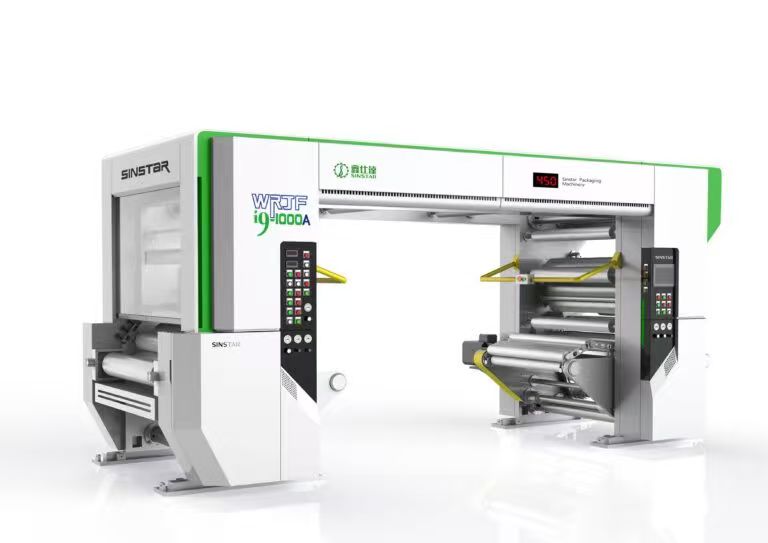
Solventless laminating sidesteps the single biggest constraint of traditional solvent-based systems: the need to evaporate and recover chemical carriers. Because the adhesive is applied at 100% solids, there is no solvent interaction with the film surface. That matters most when running metallized, coated, or ultra-thin substrates, which often swell, haze, or lose barrier properties after contact with solvent. The absence of aggressive carriers means a PET/PE structure, a high-barrier EVOH layer, or a delicate bio-film can go through the same line without reformulating the adhesive package.
Heat exposure tells a similar story. Traditional methods require large drying ovens to flash off solvents, and that long residence time at elevated temperature can distort heat-sensitive films, shift sealant layers, or relax oriented polymers. Solventless systems cure at room temperature or under modest warmth, so the film's original tensile and optical properties stay intact. In practice, converters can move between BOPP, CPP, aluminum foil, and nylon far more freely, often with a single adhesive grade rather than a shelf full of film-specific products.
The result is less trial work when introducing new structures. Without solvent compatibility charts and drying profiles to revalidate, a shift from a thick rigid film to a thin flexible web becomes a mechanical adjustment, not a chemical project. That operational flexibility is why solventless lines tend to see higher film variety in daily production while traditional solvent lines stay anchored to a narrower set of proven substrates.
The Automation Advantage: Fewer Touchpoints, Fewer Defects
Every manual step in a process is a chance for something to go wrong. When a human copies data from one system to another, re-enters a customer's address, or manually triggers a deployment, the risk of error creeps in. Automation removes those fragile handoffs. Instead of relying on people to remember, re-type, or double-check, a well-designed automated workflow moves information directly from source to destination without interruption. The result is not just faster work but cleaner work, where the final output no longer depends on someone having a sharp day.
Defects often hide in the gaps between systems. A field left blank, a value rounded incorrectly, a file named with yesterday's date, these small failures pile up and eventually become customer complaints or production incidents. By reducing the number of touchpoints, automation shrinks the surface area where those gaps can appear. A single automated handoff replaces five manual ones, and that alone eliminates most of the rework. Teams that treat automation as a quality practice, not just a speed tool, consistently see fewer defects in their daily output.
The advantage compounds over time. Manual processes are usually performed differently by different people, depending on experience, mood, or training. Automation enforces one consistent path. Once that path is proven, it runs the same way every single time, whether it is the first run of the day or the five hundredth. That consistency is the real foundation of quality. Fewer touchpoints mean fewer opportunities for variation, and fewer variations mean fewer defects slipping through to the end user.
Energy and Waste Metrics That Matter for Flexible Packaging Plants
Tracking energy use per unit of film converted often exposes surprising inefficiencies in extrusion, laminating, and curing stages. A plant might run the same line at different speeds depending on shift patterns, yet most standard reports flatten these variations into a monthly average that hides real spikes. Instead of relying solely on kWh per kilogram as a broad benchmark, managers should isolate idle power draw, start-up waste from roll changes, and the energy cost of re-processing edge trim. These smaller slices reveal where operators can adjust settings without waiting for a capital project.
Waste metrics in flexible packaging frequently stop at scrap weight, but that number alone misleads because it mixes high-value printed laminate with low-value clear film. Breaking waste into categories such as set-up rolls, splice remnants, and rejected printed material shows which losses are recoverable and which are not. For example, a plant that reduces changeover time on a laminator may produce less spliced waste, but if the same line generates excessive solvent-laden air, the environmental burden shifts rather than disappears. Pairing solid waste with solvent recovery rates and ink sludge disposal gives a more honest picture of true yield loss.
Energy intensity also shifts with product mix, so comparing one month to the next without normalizing for barrier film versus monolayer structures leads to false conclusions. A useful approach is to track energy per square meter per micron of total thickness, which adjusts for both width and gauge. Similarly, waste should be measured as a percentage of input resin plus substrates, not just output weight, to catch losses that occur before the first quality check. Operators who see these normalized numbers on a daily board tend to respond faster than when they only get a quarterly summary.
How Quick Changeovers Keep Small-Batch Jobs Profitable
Most shops assume small batches lose money because setup time eats the margin. That math changes once changeovers drop from a couple of hours to under ten minutes. The trick is moving every possible step outside the machine cycle while it still runs the previous job. Pre-stage fixtures, preset tools, and use quick-release clamps instead of bolts that need wrenching. When the last part falls, the operator swaps the fixture, loads the next program, and is cutting metal again before the spindle has cooled down. That kind of speed lets you take a 20-piece order without dreading the downtime between jobs.
One practical approach is to film a changeover and list every motion as either internal or external. Anything that can happen while the machine runs, like fetching raw material or staging a cart with the next job's tooling, gets moved out of the critical path. Then standardize the remaining internal tasks so they follow the same sequence every time. Shops that adopt this often see setup costs fall by half in the first month, not because they bought expensive equipment, but because they stopped doing prep work after the machine stopped. The payoff shows up in quoting: a job that once needed a three-hour setup now needs twenty minutes, which makes a small order not just viable but genuinely profitable.
From Roll to Pouch: Tracing the Efficiency Gains Across the Line
On a typical roll-to-pouch line, the efficiency story starts long before the finished pouch lands in a carton. The moment film leaves the unwind stand, small losses in tension control or web tracking compound downstream. Converting from a continuous roll to individual pouches works best when the forming, filling (if integrated), sealing, and cutting steps are timed as one sequence rather than a series of handoffs. Operators who once spent shift time correcting film wander now see more stable registration and fewer emergency stops simply because the line no longer fights its own material.
Those gains become visible in the numbers that matter at the end of the shift: shorter changeover intervals, less edge trim, and a lower reject rate at the final inspection. Tracing output from the splicer to the pouch discharge belt often uncovers hidden bottlenecks—an undersized cooling station, inconsistent seal-bar pressure, or a knife that dulls faster than expected. Fixing those points does more than raise speed; it lets the whole line run longer between interventions, which is where real capacity comes from.
FAQ
It bonds two or more flexible substrates together using a solvent-free adhesive. The machine applies a metered layer of adhesive to one web, then combines it with the other under controlled tension and nip pressure. Because no solvents are involved, there is no drying tunnel or solvent recovery system, which shortens the line and cuts energy use.
The main reason is elimination of volatile organic compounds. Traditional solvent-based lamination releases VOCs during drying and can leave residual solvents in the package, which is a concern for food and pharmaceutical applications. Solventless adhesives cure through chemical reaction, so final laminates can meet stricter migration limits and odor requirements without lengthy post-curing ventilation.
Automatic systems monitor and adjust key parameters like coating weight, web tension, and nip pressure in real time. This reduces human error, shortens setup between jobs, and allows consistent running at higher speeds. Many machines also store job recipes, so repeat orders can be started with minimal trial and error, directly increasing daily output.
It handles common laminating combinations such as BOPP, PET, PE, CPP, aluminum foil, and metallized films. The machine is especially effective for high-barrier structures like PET/AL/PE or BOPP/CPP, where fast wetting and uniform adhesive distribution prevent tunneling and orange peel effects. It can also run thin extensible films if the tension control is well tuned.
The most common pain point is slower initial bond development. Solventless adhesives need time and sometimes heat to reach full strength, which can delay slitting or pouch making if the converter tries to rush the process. Also, because there is no solvent to lower viscosity, the adhesive system requires precise temperature control and good metering to avoid coating defects on high-speed runs.
Daily cleaning of the metering rolls and mixing head is essential, since cured adhesive is extremely difficult to remove. Operators should also check filters and hoses for pressure changes that indicate partial blockages. Regular calibration of the coating station and tension sensors prevents drift, and keeping the adhesive supply at the recommended temperature avoids viscosity swings that cause inconsistent coating.
It removes solvent emissions entirely, which improves workplace air quality and avoids incineration or recovery equipment. The process also uses less energy because there is no drying oven, and the adhesive consumption is usually lower per square meter than solvent-based alternatives. Converters can reduce their carbon footprint while still producing laminates with strong bond and clarity.
Focus on coating accuracy, web path design, and how quickly the machine can switch between jobs. A short web path reduces waste during splicing and stops. Also check whether the control system allows independent adjustment of unwind and rewind tension zones, and whether the supplier offers local service support for software updates and roller refurbishment. These details matter more than maximum speed in daily production.
Conclusion
Automatic solventless laminating machines are reshaping flexible packaging by eliminating solvent handling without sacrificing bond integrity. Inside the lamination process, two-component adhesives are precisely metered and transferred to a wide range of films—from thin metallized barriers to stretchable PE—so converters can run jobs that traditional solvent-based lines struggle with. The automation advantage becomes clear in reduced manual touchpoints: closed-loop tension control, automatic gap adjustment, and real-time coating weight monitoring keep defects like tunneling and delamination from taking hold. Fewer human interventions mean less contamination risk and more consistent roll-to-roll output.
The operational gains extend beyond lamination itself. Energy and waste metrics shift sharply because there are no solvent drying ovens to heat, no VOC abatement systems to maintain, and virtually no retained solvent to dispose of. Quick changeovers—often under fifteen minutes with recipe-driven setups—make short-run and small-batch jobs genuinely profitable, a rare feat in conventional laminating. Tracing the line from roll to pouch, the absence of solvent-related curing bottlenecks and the machine’s ability to switch between adhesive coat weights and web widths without lengthy recalibration compress lead times. The result is a leaner, cleaner converting floor that responds faster to brand owners demanding shorter delivery windows and broader packaging structures.
Contact Us
Contact Person: Kellen Chen
Email: [email protected]
Tel/WhatsApp: 8613806536768
Website: https://www.cnxiaopai.com