Best Pallet Jack Choices for Safer and Faster Warehouse Material Handling
2026-11-25
Every minute spent wrestling with a stubborn pallet jack is a minute lost from your team’s productivity — and a potential risk to their safety. Whether you’re moving heavy loads across a busy dock or navigating narrow warehouse aisles, the right equipment makes all the difference. In this guide, we’ll break down the pallet jack features that actually matter for smoother, safer material handling. From ergonomic controls to durable chassis design, we’ll help you spot the options worth your investment. And when reliability is non-negotiable, many operations turn to HANGCHA for proven performance under pressure. Ready to move smarter? Let’s get rolling.
What a Stable Pallet Jack Feels Like Under Load
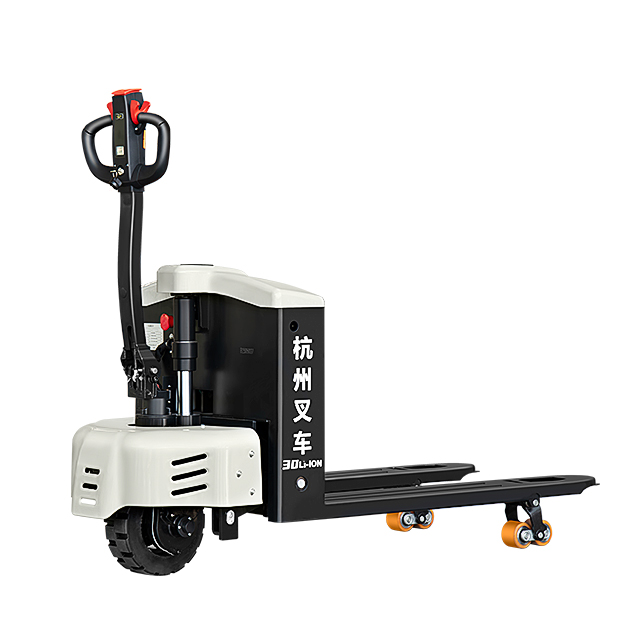
A stable pallet jack under load has a grounded, almost sluggish confidence. The handle doesn't chatter or wander; it stays firm in your grip while the chassis settles evenly onto both fork tips. You feel the weight transferring through the pump piston in short, crisp strokes, each one lifting the load a fraction of an inch without any sideways lean or creaking from the frame. If you stop pumping for a moment, the load holds its height without drifting, which tells you the hydraulic seals and check valve are doing their job.
When you begin to pull, the initial resistance feels smooth rather than jerky. The steering wheels bite into the floor and turn with a predictable arc, so the load follows your line instead of swinging wide. On imperfect concrete or worn warehouse flooring, you'll notice the difference immediately: a stable jack transmits small vibrations but never feels like it's about to tip or bind. The handle stays neutral, not fighting your hands, and the return spring brings it back upright without slamming.
Under full rated capacity, the frame should flex only slightly at the fork heels. There's a sense of tension held in check, not a wobble. If you push the jack sideways while loaded, the load wheels resist rather than scrub. That quiet, planted feeling is what separates a well-built pallet jack from a cheap one, and it's most obvious when you're making tight turns in a crowded aisle.
Manual or Electric When the Shift Is Nonstop
When the shift doesn't stop, the question is not which tool feels better in your hand but which one holds up past the sixth or seventh hour. A manual driver won't run out of power, and that alone keeps it on the line. But after a few hundred repetitions, grip strength fades and fastener torque starts to wander. It's a silent kind of drift that inspection catches later.
Electric options hold torque and speed steady, which makes them useful for high-repeat stations. The catch is managing power. A battery pack that dies without a spare nearby is a bigger delay than a tired hand. Crews on continuous shifts usually build charging stations into the line itself and rotate packs on a fixed count rather than waiting for the tool to slow down.
The choice shifts again at shift change. Electric tools need someone checking settings and swapping batteries, while manual tools can be wiped and handed over in seconds. If the torque spec changes often or the work involves odd angles, manual gives more control. If the volume is high and the spec is locked, electric keeps the pace even. Most long-run operations end up with both close by, because stopping to search for the right tool costs more than any power source decision.
Fork Length and Capacity Before the First Pallet Moves
Before the first pallet is lifted, a quick walk-around check can reveal whether the forks are actually suited to the load. If the blades extend well past the far side of the pallet, they can catch on racking, stretch wrap, or the load behind the one being moved. If they fall short, the pallet tends to bow at the unsupported edge and may crack or dump product once the mast tilts. Matching fork length to the pallet depth is not a rough guess; it is the difference between a controlled pick and a slow-motion accident.
Capacity is just as easy to misread when the data plate is treated as a fixed promise. That rated number assumes a specific load center, usually 24 inches, and a particular height and attachment setup. Move the load center farther out because the pallet is longer or the goods are unevenly stacked, and the truck behaves as if the load is heavier. A quick glance at the capacity chart for the actual fork spread, mast height, and any side-shift or clamp attachment will often show a lower safe limit than the painted figure suggests.
Once the load is on the forks, lift it only a few inches and pause before traveling. Watch the fork tips for excessive spring, listen for creaking from the pallet boards, and check whether the rear wheels stay planted under braking conditions. If the mast sways or the steering feels light, lower the load and recheck the weight distribution, fork spacing, and actual capacity at that load center. That small pause early in the shift prevents the kind of damage that only becomes obvious when the pallet is already moving.
The Comfort Features That Show Up After Hour Three
The first hour never tells the truth. Cheap padding gives up early, leaving you squirming to find a new position by mid-afternoon. After hour three, the real differences surface: the cushion hasn’t collapsed under the sit bones, the backrest still follows the spine instead of fighting it, and the fabric doesn’t trap a layer of damp heat against the shirt.
Little things start to matter more than big showroom impressions. A seam that sits flat, an armrest that doesn’t drift, a headrest that catches the neck without forcing it forward. These aren’t features you spot on a spec sheet. They only announce themselves when the clock has moved well past the point where most seats would have become a distraction.
A Five-Minute Pre-Shift Routine That Prevents Slowdowns
Most slowdowns don't start with a broken machine or a sudden emergency. They creep in during the first few minutes of a shift, when hands are still cold, tools aren't where they should be, and the rhythm from yesterday hasn't quite kicked in. A short, deliberate pre-shift routine can close that gap before it opens. It doesn't need to be elaborate or time-consuming; it just needs to touch the right pressure points that keep a team moving at full speed.
Start with a two-minute walkthrough of the work area. Check the obvious but easy-to-forget details: Are the main pathways clear? Is the first round of materials within arm's reach? Are any warning lights already blinking? Instead of waiting for someone to report a hiccup, you're spotting it before the line even starts. Then spend one minute aligning the team. Say it plainly: what we're making, what the target is, and what usually trips us up at this point in the day. No motivational speeches needed — just a clear picture of the next hour.
The last two minutes are for small fixes. Refill a low supply, tighten a loose guard, move a cart that's blocking a sensor. These aren't heroic acts. They're the kind of tiny corrections that, left undone, turn into five-minute stalls later. When the shift starts and everyone hits the floor already warmed up and pointed in the same direction, the slowdowns that used to appear at 8:05 simply don't get a chance to form.
Budget Choices That Do Not Skimp on Control
Most budgeting advice treats lower cost as a trade-off: you either get polished dashboards with rigid categories or a bare-bones spreadsheet that demands constant manual work. That split is unnecessary. A sensible budget choice should keep the price reasonable while still letting you set granular rules for where every dollar goes.
The real test of control is whether the tool adapts to your financial rhythm. You might want to cap dining out at a weekly amount, split a single purchase across multiple categories, or pause a savings goal for one month without rebuilding the whole plan. If a budget option cannot handle those small adjustments, it is not saving you money—it is costing you flexibility.
Before committing, look past the sticker price and check how much say you retain over transactions, alerts, and reporting. The best affordable options treat automation as a starting point, not a cage. They group expenses for you but still let you rename, recategorize, or override anything that feels off. That is how you keep control without overpaying for features you will never touch.
FAQ
Look beyond the forks and wheels. A safer unit usually has a lower center of gravity, a responsive brake or reverse belly button on electric models, and guards around the operator's hands. On manual jacks, sealed hydraulics and textured handles matter more than people expect.
For short trips and light loads, manual jacks are fine. The shift happens when workers move multiple loads across long dock-to-rack routes or handle recurring double-stacked pallets. Electric units take the strain off the operator, which reduces slowdowns and mistakes in the last hour of a shift.
A 5,500-pound rating covers most grocery, retail, and light industrial pallets. If your team regularly moves coiled steel, paper rolls, or double-stacked beverage pallets, stepping up to 6,000 to 8,000 pounds prevents pump failure and frame flex over time.
Thumb-controlled lift and lower, padded handle grips, and a shorter pump stroke per lift make a noticeable difference. On powered jacks, adjustable speed controls and a low step height save energy. Small ergonomic details tend to have a bigger daily impact than raw speed.
Yes, but it comes from smoother acceleration and controlled braking rather than top speed. Electric jacks with progressive throttle response and automatic braking on turns allow faster confident movement. Adding clear floor markings and standardized pallet staging does more for throughput than buying a faster jack alone.
Debris wrapped around axle threads, low hydraulic fluid, and worn load rollers are the usual culprits. A ten-minute weekly check of wheels, forks, and chain or control cables catches most failures before they stop a shift.
Smooth sealed concrete works with polyurethane wheels and standard fork tips. Rough or cracked floors call for larger nylon or steel-reinforced wheels and more ground clearance. If dock plates or ramps are involved, a powered jack with better torque control prevents sledding and fork gouging.
Conclusion
A pallet jack that feels planted under load does more than prevent spills; it lets the operator keep a steady pace through narrow aisles and dock transitions. Before choosing between manual and electric, match the unit to the actual shift rhythm. Short, intermittent moves rarely justify the extra weight and charging time of an electric model, while a nonstop receiving or staging operation often pays for that upgrade within months. Check fork length and capacity against the pallets already in use, not just the largest possible spec. A 48-inch fork that cannot enter a closed-bottom pallet or a capacity rating that leaves no margin for uneven loads becomes a daily bottleneck and a safety risk.
Comfort stops being a nice-to-have around hour three, when repeated pulling, steering, and lifting start to show up in the operator's shoulders and lower back. Look for low rolling resistance, a return-to-neutral handle, and controls that do not require a tight grip or awkward wrist angle. A five-minute pre-shift check of wheels, hydraulic function, and load guards catches small problems before they become mid-shift slowdowns. Even on a tighter budget, the better value usually comes from a simpler design with responsive steering and predictable braking, not from extra features that do little for daily control. Solid choices in this range tend to hold adjustment longer, keep maintenance simple, and make every pallet move feel deliberate rather than rushed.
Contact Us
Contact Person: Liuxue
Email: [email protected]
Tel/WhatsApp: +86-19084200370
Website: https://www.hf-ec.com/