
Blown Film Masterbatch Ranking: Your Guide to the Best Performing Options
2026-10-28
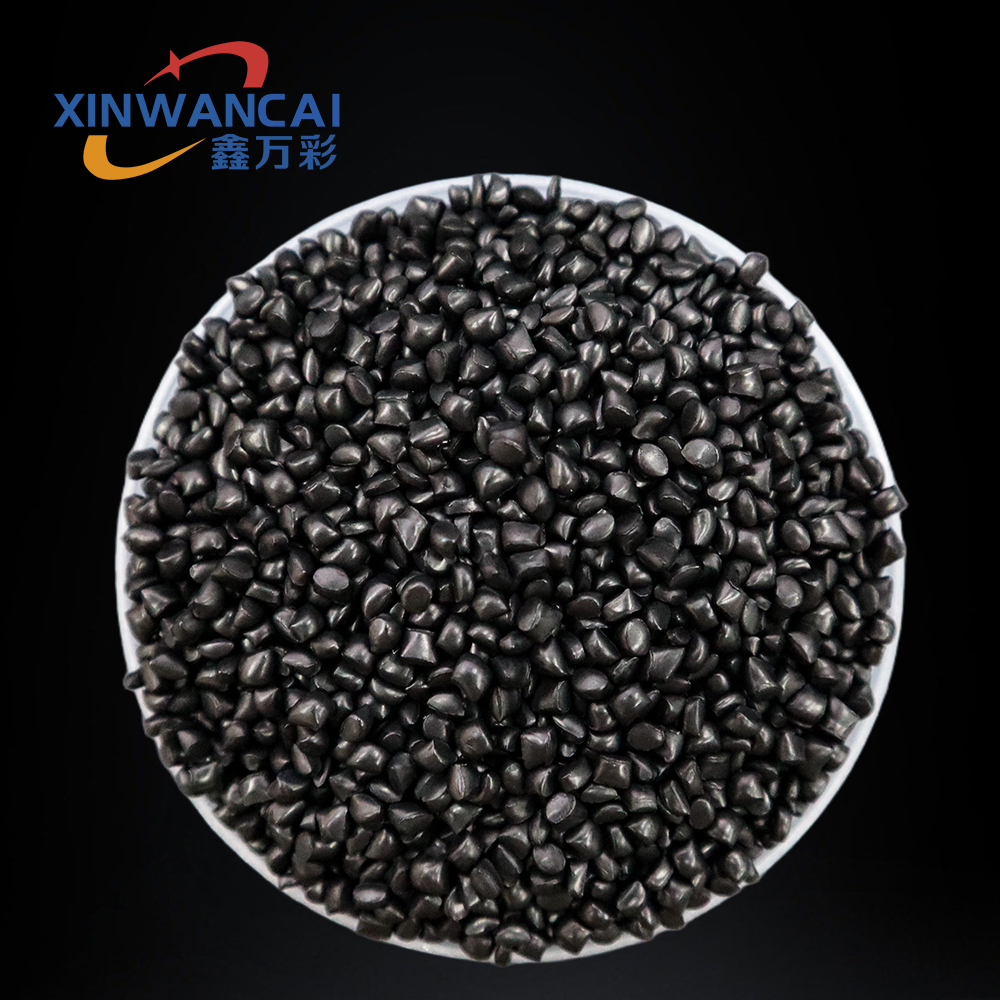
Choosing the wrong blown film masterbatch can quietly sabotage your line speed, film clarity, and scrap rate—yet most rankings recycle the same spec sheets. This guide takes a different approach, focusing on real-world performance across dispersion, LDPE compatibility, and processing stability. We’ve sorted through the noise to highlight options that actually hold up under pressure. If you’re tired of guessing which masterbatch will keep your bubble steady and your costs down, this ranking is your starting point. And while testing many alternatives, one name kept proving its worth in demanding runs: Xinwancai.
Where Most Blown Film Masterbatch Rankings Fall Short
Most published rankings for blown film masterbatch lean heavily on datasheet values and supplier claims, treating the product as if it exists in a vacuum. In practice, the same black masterbatch with a nominal 40% carbon loading can behave completely differently in a 70/30 LDPE/LLDPE blend versus a pure LLDPE skin layer. Lab dispersion tests on twin-screw extruders rarely predict the number of gels or the rate of screen pack pressure buildup on a real blown film line.
Another blind spot is the lack of film gauge and structure context. A masterbatch that performs fine in a 25-micron stretch film may create sharkskin or die lip buildup when pushed through a 90-micron heavy-duty sack line. Rankings that ignore melt index mismatch between carrier resin and host resin give a false sense of transferability.
The most useful comparisons would track on-line filter pressure rise, surface defect area, and die condition after an eight-hour run, but those numbers almost never make it into public lists. As a result, the rankings end up rewarding polished brochures rather than measurable extrusion behavior, leaving processors to do their own trial work anyway.
How We Evaluated Candidates Beyond Basic Spec Sheets
When a stack of resumes lands on the desk, spec sheets only tell part of the story. We pushed past the usual checkbox of years and tools, instead paying attention to how a candidate thinks through a problem when the path isn't already mapped. That meant reviewing code samples not for syntax polish but for the decisions behind them—why this data structure, why that trade-off, where the rough edges were left and why that might be exactly right.
Conversations mattered more than certificates. We asked candidates to walk us through a feature they built that didn't go as planned, and listened for honesty about what they'd change. We watched for curiosity when discussing unfamiliar parts of our stack, and whether they could connect their past work to problems we hadn't solved yet. A generic answer about "passion for technology" scored lower than a specific story about debugging a race condition at 2 a.m. and the lesson that stuck.
We also looked at how they fit the team's actual working rhythm—not culture fit in the buzzword sense, but whether they'd challenge an assumption without turning it into a debate, and whether they could explain a complex idea to someone outside their specialty. The best candidates didn't just recite what they've done; they showed how they'd approach what's next, even when the job description didn't spell it out.
Polymer Fit: The Overlooked Variable in Masterbatch Choice
When formulators evaluate masterbatches, they often focus on pigment loading, dispersion quality, and processing temperature. Yet the compatibility between the carrier resin and the host polymer can quietly make or break a production run. A masterbatch built on a polyethylene carrier might seem harmless in a polypropylene part, but subtle differences in melt viscosity and crystallization behavior can lead to visible streaks, delamination, or even drops in mechanical strength. The assumption that “close enough” works is usually the first hidden cost in a supposedly affordable batch.
The real trouble shows up during high-shear mixing or thin-wall injection molding. If the carrier resin solidifies at a different rate than the base polymer, pigment concentrates can migrate to the surface, creating a chalky or mottled appearance. In films, mismatched crystallinity often translates into poor tear resistance or inconsistent barrier properties. Rather than testing a dozen additives to fix the surface, it is often cheaper to switch to a masterbatch whose carrier shares the same polymer family—or at least one with overlapping melt flow and thermal expansion profiles.
Practical evaluations should start with a simple press-out test: melt a small amount of masterbatch into the target resin, then stretch or flex the cooled sample. If the interface whitens or the pigment particles cluster, the polymer fit is already wrong. Chemical affinity matters just as much as viscosity. For example, nylon-based masterbatches often fail in polyolefin systems not because of temperature limits, but because polar and non-polar backbones refuse to blend at the molecular level. Checking the carrier chemistry before chasing rheology modifiers saves weeks of trial and error.
Field Failures That Separate Reliable Options from the Rest
Most products look solid on a spec sheet but start to diverge once they meet real field conditions. Temperature swings, vibration, dust ingress, and inconsistent power delivery expose weaknesses that lab testing rarely replicates. Seals crack after a few thermal cycles, connectors loosen under constant movement, and firmware locks up when a sensor reading drops out for half a second. These aren't rare edge cases in demanding environments; they're routine. The options that keep working are usually the ones whose design accounted for accumulated stress rather than just passing a single qualification test.
A second dividing line is how failures are handled after they happen. Reliable kit tends to leave a trace: error logs point to a specific module, or a failing part can be swapped in minutes. Less dependable options fail intermittently with no clear signature, forcing you to replace the whole unit or chase ghost faults across a site. Maintenance teams quickly learn which choices respect their time. Over a year of field use, the true cost of downtime and troubleshooting swamps the initial purchase price, so the failure pattern itself becomes the most honest comparison.
Cost Efficiency Without Sacrificing Film Quality
Too many productions assume that trimming a budget automatically means visible compromises on screen. That mindset misses where the real waste usually hides: bloated rental periods, overstaffed days for simple shots, unused equipment bundles, and post-production rounds that could have been avoided with clearer pre-production decisions. When you plan around the actual demands of each scene instead of defaulting to the same package every time, the savings show up without anyone on set feeling shortchanged.
The key is shifting money from things the audience never notices to the handful of visual choices that actually carry the film. A cheaper location scouted with intent can outperform an expensive one that fights the lighting. A lean camera package paired with the right lenses and filtration often does more for texture than a flagship body with glass nobody asked for. None of that reads as “budget” on screen; it reads as deliberate.
What gets protected is the quality of the image and the clarity of the story. The line items that shrink are the ones that were never pulling their weight. That discipline tends to make crews sharper, schedules tighter, and the final frame stronger, because every dollar has to justify itself in terms of what the viewer will actually feel.
The Final Picks: Masterbatches That Performed Under Pressure
Some masterbatches look great on paper but fall apart the moment line speeds climb or temperatures swing. We pushed every candidate through repeated cycles, watched dispersion under a microscope, and checked color consistency after long runs. The ones that made this list weren't just "good enough" — they held their shade, kept viscosity stable, and didn't leave streaks or specks when things got messy.
A few standouts surprised us by outperforming products twice their price, especially in thin-wall molding and high-shear extrusion. Others earned their spot by staying predictable: no sudden viscosity drops, no plate-out, no off-color batches at 3 a.m. If you're tired of tweaking settings to compensate for inconsistent pigment loading, these are the masterbatches worth keeping on the shelf.
FAQ
A top-tier masterbatch stands out mainly through dispersion quality, which shows up as fewer gel specks and lower melt filtration pressure. Thermal stability at typical blown film processing temperatures, usually 180 to 240 degrees Celsius, matters just as much because it prevents color shifts and volatile buildup on the die lip. The best options also preserve film mechanical properties such as dart impact and tear strength rather than weakening them, and they maintain consistent opacity or color strength from lot to lot.
White masterbatches with high titanium dioxide loading and black masterbatches built on finely milled carbon black generally dominate the rankings because they cover the largest production volumes. However, specialized additive masterbatches for slip, antiblock, and processing aid functions often rank higher in value because they solve specific film defects like blocking, poor bubble stability, or high die lip buildup. The common thread among the best is a carrier resin that matches the base polymer and a narrow particle size distribution.
The carrier resin acts as a delivery vehicle for the pigment or additive, so its melt flow and compatibility with the main polymer directly affect how evenly the masterbatch disperses. For polyethylene blown film, low density polyethylene or ethylene vinyl acetate carriers tend to work well because they melt at similar temperatures and do not create localized viscosity gaps. A mismatch in carrier resin often leads to visible streaks, uneven film thickness, and reduced bubble stability, even if the pigment itself is high quality.
Melt filtration pressure reflects how many large agglomerates remain in the masterbatch, and those agglomerates translate into screen pack clogging and film defects. A masterbatch that maintains a low and stable pressure rise over a set test period indicates good dispersion and fewer hard particles, which means less downtime for screen changes and a smoother film surface. In ranking exercises, processors often weigh filtration pressure heavily because it predicts real production efficiency better than lab color readings alone.
Masterbatches can absolutely improve processing stability, especially those formulated with polymer processing aids or fluoropolymer-based additives. These products lower melt fracture, reduce die lip buildup, and allow faster line speeds before bubble instability appears. Even some pigment masterbatches with optimized carrier resins and dispersants can have a mild stabilizing effect by reducing torque fluctuations in the extruder, so they are not limited to purely aesthetic contributions.
A poorly chosen white masterbatch usually hurts optical properties first, causing lower opacity, off-white undertones, or uneven light transmission. Beyond optics, mechanical properties suffer because poor dispersion creates stress concentration points that reduce dart drop impact and Elmendorf tear strength. Surface quality also degrades with visible white specks or pinholes, and print adhesion can become uneven if the titanium dioxide particles protrude or agglomerate near the film surface.
The lowest price per kilogram rarely wins when total cost of ownership is considered. A slightly more expensive masterbatch with higher pigment loading may allow a lower let-down ratio, while better dispersion can cut screen pack changes and reduce scrap from film defects. The ranking should include real costs such as downtime for filter changes, lost output from bubble breaks, and downgraded film rolls, not just the purchase price of the masterbatch.
Yes, several developments are shifting the rankings. High-concentration masterbatches with 70 percent or more active ingredient reduce inventory and feeding variability. Dust-free compacted granules and micro-pellets improve handling and dosing accuracy. Some suppliers now offer multi-functional masterbatches that combine color with slip or antiblock in one product, which simplifies the formulation and reduces the chance of incompatible additive interactions. These newer formats often outperform traditional single-function masterbatches in high-speed blown film lines.
Conclusion
Many blown film masterbatch rankings fall short because they lean on tidy lab data and ignore the messier realities of production. The most overlooked variable is polymer fit: a masterbatch that disperses beautifully in LDPE can create gels, die lines, or uneven color in LLDPE or metallocene grades. Our evaluation went beyond basic spec sheets, looking at how candidates actually behave on blown film lines under different temperatures, screw designs, and output rates. We also tracked field failures that don't show up in a datasheet—screen pack plugging, inconsistent letdown ratios, color streaks after a few hours of continuous running, and buildup at the die lip. These are the issues that separate reliable options from ones that only look good on paper.
Cost efficiency still matters, but not when it means sacrificing film quality. We ranked masterbatches that genuinely held gauge uniformity, clarity, and tensile strength while reducing overall formulation cost through lower letdown percentages or fewer line stoppages. The final picks are products that performed under pressure—sustained runs at high line speeds, challenging resin blends, and tight production windows—without falling apart. In the end, the best blown film masterbatch is not the one with the flashiest specification sheet. It is the one that fits your specific polymer system, avoids costly field failures, and balances price with real, measurable film performance. That kind of ranking requires more than a lab comparison; it requires watching how a masterbatch behaves when the line is running hot and the clock is ticking.
Contact Us
Contact Person: JACK
Email: [email protected]
Tel/WhatsApp: 86 18650130917
Website: https://www.xinwancai.com/