China APAM Anionic Polyacrylamide: A Complete Guide to Its Properties and Industrial Applications
2026-07-04
In the vast world of industrial polymers, few compounds are as versatile and indispensable as Anionic Polyacrylamide (APAM). From clarifying wastewater to enhancing paper strength, China's APAM has become a cornerstone of modern manufacturing. But what exactly gives this polymer its remarkable properties, and how is it reshaping industries worldwide? This guide dives deep into the science and applications of APAM, while spotlighting EVO as your trusted partner for high-performance solutions. Prepare to uncover the secrets behind one of industry's most valuable tools.
What Makes APAM Essential for Modern Water Treatment
Anionic polyacrylamide, or APAM, has quietly become a backbone of modern water treatment due to its unmatched flocculation efficiency. Its long-chain molecular structure carries negative charges that attract and neutralize positively charged suspended particles in water—like clay, silt, and organic debris—forming dense, fast-settling flocs. This isn't just chemistry; it's a practical game-changer for plants dealing with high turbidity loads, where traditional coagulants alone struggle to meet clarity targets without excessive sludge production.
What sets APAM apart is its versatility in varying water chemistries. Unlike some treatment aids that require tight pH control or fail in cold conditions, APAM performs consistently across a broad pH range and remains effective even when water temperatures drop. This reliability reduces the need for constant chemical adjustments, making operations simpler and more cost-effective. It also integrates smoothly with existing coagulation and sedimentation setups, allowing facilities to boost throughput without major infrastructure overhauls.
Environmental and economic pressures further cement APAM's role. With stricter discharge regulations and growing freshwater scarcity, industries can't afford inefficient treatment. APAM minimizes sludge volume and enhances water recovery rates, directly cutting disposal costs and easing the strain on natural resources. Its ability to produce clearer effluent also protects downstream membrane systems from fouling, extending their lifespan and reducing maintenance headaches—a compelling advantage that keeps APAM at the heart of forward-looking water treatment strategies.
Key Properties That Define Anionic Polyacrylamide Performance
The behavior of anionic polyacrylamide in real-world applications hinges on a few interconnected molecular traits that are often oversimplified. Molecular weight does more than influence viscosity—it dictates how polymer chains bridge between particles, with ultra-high molecular weights creating long-range floc networks in dilute slurries, while lower weights excel in compact sludge dewatering where shear resistance matters more. Charge density, expressed as the degree of anionicity, is rarely a fixed number; it tunes the polymer's affinity for cationic surfaces and controls the balance between patch flocculation and polymer relaxation times. A manufacturer’s quoted percent hydrolysis only tells part of the story—how those carboxyl groups are distributed along the backbone can shift performance from rapid settling to stable dispersion, making synthesis conditions equally critical.
Beyond the standard spec sheet, practical performance is shaped by the polymer's response to ionic environments and shear. High salinity or divalent ion loads screen the charges on the chain, causing collapse at low charge densities while overcharging at high ones, which either wastes product or reverses flocculation altogether. The way a polymer uncoils under flow—its shear sensitivity—defines whether it maintains activity through centrifugal pumps or breaks down to oligomers that slime equipment. Recent work points to the role of manufacturing residual monomers and branching, which can introduce unexpected anionic microenvironments that either scavenge metal ions or create weak points that accelerate mechanical degradation in aging dosing solutions.
Perhaps the most overlooked property is how these macromolecules interact with dissolved organic matter and competing colloids. A high-charge APAM that flocculates kaolin perfectly in a jar test can fail miserably in a lagoon with humic acids, as the carboxylates complex with organics instead of destabilizing clays. The molecular weight distribution width, often ignored in favor of a single average, determines whether a dose finds that narrow window between under-treatment and restabilization in variable effluents. Recognizing these nuances shifts product selection from a generic grade pick to an engineered match, where subtle adjustments in comonomer sequence or post-reaction hydrolysis can exploit specific water chemistry signatures for order-of-magnitude improvements in throughput and clarity.
How APAM Enhances Oil Recovery in Challenging Reservoirs
APAM, or anionic polyacrylamide, transforms the way water interacts with reservoir rock in difficult oil fields. Its long-chain molecules give the injected water a higher viscosity, so the fluid moves more like the oil it’s meant to displace. This evens out the front between water and oil, stopping early breakthrough that leaves half the resource trapped. In reservoirs with strong permeability contrasts—where water would normally race through high-perm streaks—the polymer solution instead builds a uniform drive, pushing oil from layers that conventional waterflooding never touches.
The real edge comes from APAM’s resistance to harsh downhole conditions. In high-temperature, high-salinity environments that degrade standard polymers, specially designed APAM grades maintain their molecular weight thanks to sulfonated or hydrophobic groups. They reduce adsorption on clay-rich surfaces through a negative charge that repels sandstone and shales alike, lowering chemical loss and keeping the treatment economical. This tolerance opens up reservoirs once written off as too hostile for chemical EOR.
Beyond mobility control, APAM improves microscopic displacement. By increasing water viscosity, it generates greater shear stress at pore throats, mobilizing trapped droplets other methods miss. In heavy oil formations, the polymer’s elastic turbulence further disturbs immobilized oil films. Field results from mature basins show production bumps of 5–15% OOIP, and the delivered fluid often comes out cleaner—less water cut, more oil per barrel of lift. For operators facing declining output from challenging assets, that shift in efficiency changes the economic arithmetic entirely.
Paper and Textile Industries: APAM's Role in Process Optimization
In paper manufacturing, APAM tackles the persistent challenge of fiber and filler retention during sheet formation. Its long-chain molecular structure bridges fine particles and fibers, creating larger flocs that drain more effectively on the wire. This means mills can run at higher speeds without sacrificing formation quality, while also cutting down on the volume of solids escaping into white water. The result is a measurable bump in first-pass retention and a noticeable reduction in the load on save-all systems, directly impacting production economics.
Textile processors rely on APAM to refine warp sizing, where it forms a tough yet flexible film on yarn surfaces. This film reduces hairiness and strengthens the yarn just enough to survive the punishing friction of high-speed looms. Fewer warp breaks translate into fewer machine stops and higher weaving efficiency—an advantage that pays off immediately in a competitive factory environment. Beyond the loom, APAM helps clean up dyehouse effluent by tying together dispersed colorants and auxiliaries into settleable aggregates, simplifying a notoriously messy waste stream.
The common thread across these industries is APAM’s ability to make wet-end chemistry more predictable and less wasteful. By fine-tuning polymer dosage and molecular weight to the specific stock or sizing recipe, operators gain a low-capital lever to pull when aiming for consistent product quality. This isn’t about chasing theoretical maximums; it’s about squeezing more out of existing assets—cleaner machine clothing, reduced freshwater intake, and a tighter grip on raw material costs without overhauling the entire line.
Handling and Safety: Best Practices for Industrial Users
Every industrial workplace comes with its own set of risks, but the way materials are moved and stored often sits at the heart of most accidents. Start by auditing your daily routines—when was the last time someone actually checked the condition of lifting straps or verified that shelving units could handle the load they carry? These aren't just boxes to tick; they're active habits that keep people out of harm's way. Pair that with clear, non-negotiable protocols for substance handling, and you slash the chance of a preventable injury significantly.
Beyond equipment checks, real safety lives in how teams communicate under pressure. A forklift operator weaving through a busy floor needs more than just a horn—they need coworkers who instinctively keep the zone clear and make eye contact before crossing paths. Train your crews to use simple, universal hand signals and call out irregularities loud enough for everyone nearby. When spills, leaks, or stray obstructions happen, the gap between a near miss and a hospitalization often comes down to whether someone felt empowered to speak up immediately.
Lastly, make those safety drills mimic the ugly, unpredictable side of real incidents. Don't settle for a planned fire drill where everyone shuffles out in quiet lines; toss in a scenario where a drum tips over or a conveyor jams while someone's arm is too close. Rotate roles so the newest hire has to coordinate the response, and afterward, pick apart what went sideways without pointing fingers. That kind of rehearsal builds a culture where safe handling isn't just a policy—it's second nature.
Comparing APAM Grades: Choosing the Right One for Your Application
Each APAM grade brings a distinct combination of molecular weight and charge density to the table, and these two factors largely dictate how it behaves in a given system. Low molecular weight grades with moderate anionic content tend to disperse quickly and work well in low-shear environments, while high molecular weight variants produce long-chain bridges that excel at flocculating fine particles under more turbulent conditions. The real challenge lies in matching these properties to your slurry’s pH, solids concentration, and mixing intensity—what performs beautifully in a lab beaker might fall flat in a full-scale thickener with uneven shear rates.
Charge density is another dial you’ll need to fine-tune. A highly anionic grade can neutralize positive surface charges on particles, but in a system with already negative zeta potential, it may simply increase repulsion and worsen settling. Sometimes a slightly lower charge density, paired with higher molecular weight, yields tighter flocs that hold up better to pumping and transfer. Running a quick jar test across two or three candidate grades often reveals these nuances more clearly than any datasheet can, especially when you reintroduce actual process water instead of clean lab water.
Don’t ignore the practical side of handling, either. High molecular weight powders require careful aging and mixing to avoid fisheyes and incomplete dissolution, whereas emulsion or liquid forms may trade ease of use for shorter shelf stability or higher unit cost. A grade that demands excessive make-down time or special storage can quietly erode the gains it brings in settling performance. The “right” APAM, then, isn’t just about chemistry—it’s a balance between process fit, operator workflow, and total cost that keeps the whole operation running smoothly.
FAQ
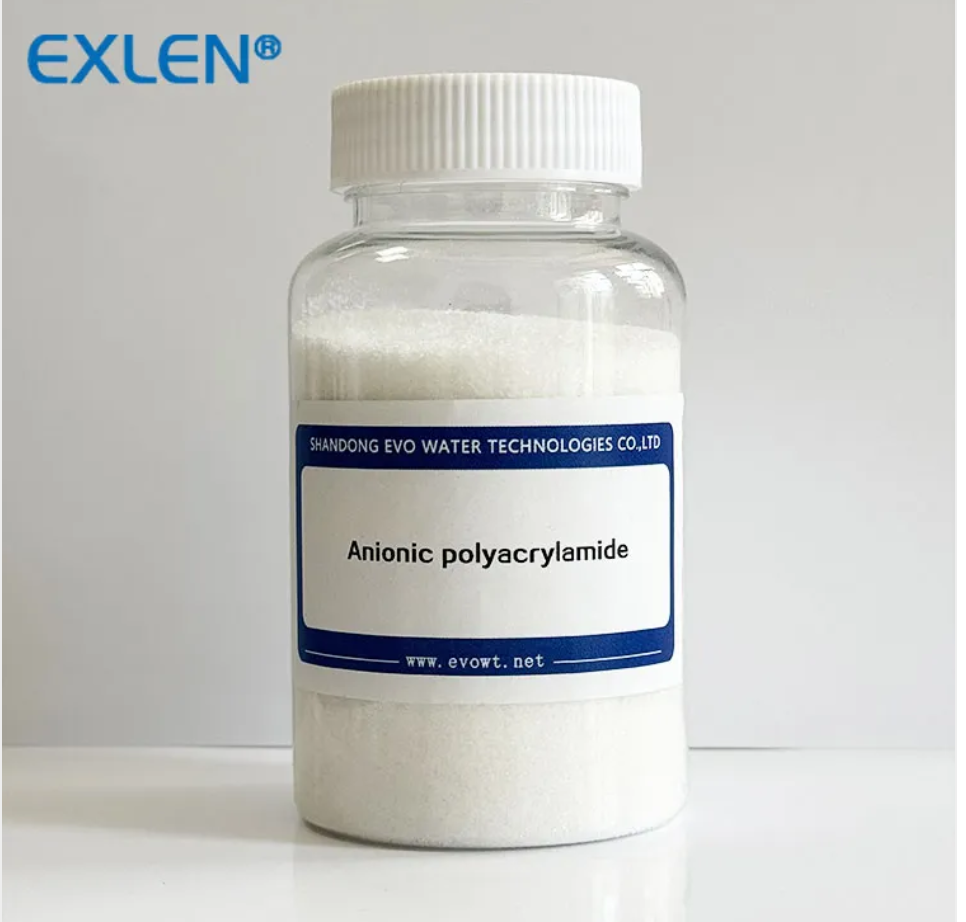
APAM, or Anionic Polyacrylamide, is a water-soluble polymer produced in China, widely recognized for its high molecular weight and strong negative charge. It appears as a white granular powder and is primarily used for flocculation, sedimentation, and thickening processes across various industries.
The molecular weight largely determines the flocculation efficiency. Higher molecular weight grades create larger, denser flocs that settle faster, making them ideal for mining and wastewater treatment. Lower molecular weights are better suited for applications like papermaking where shear stability is key.
It’s extensively used in water treatment, oil drilling, paper manufacturing, textile sizing, and mineral processing. In water treatment, it helps remove suspended solids; in oilfields, it enhances oil recovery and reduces friction; in papermaking, it improves retention and drainage.
The degree of hydrolysis controls the charge density along the polymer chain. Higher hydrolysis means more anionic groups, boosting electrostatic repulsion and adsorption on positively charged particles. This directly affects floc strength and clarity in processes like sludge dewatering.
Yes, certain food-grade or certified APAM products are suitable for drinking water clarification, provided they meet strict residual monomer limits and national standards. They assist in removing turbidity and organic matter without introducing harmful byproducts.
Keep it in a cool, dry place away from direct sunlight and moisture, as it is hygroscopic. Shelf life is typically two years when stored properly. Solutions should be prepared fresh and used within 24 hours to avoid viscosity loss.
While cationic types bind directly to negatively charged sludge particles, APAM works best on sludge with a net positive charge or when used in combination with inorganic coagulants. It often produces a firmer floc structure and lower moisture content in certain mining tailings and organic-rich slurries.
Avoid inhaling the dust and prevent skin or eye contact. Use gloves, goggles, and a dust mask. If dissolved, the gel is very slippery, so clean any spills immediately to prevent accidents. It is not classified as hazardous but good industrial hygiene is recommended.
Conclusion
China's APAM, or anionic polyacrylamide, has established itself as a cornerstone in modern industrial operations, owing to its exceptional flocculation, thickening, and drag reduction capabilities. In water treatment, its high molecular weight and charge density enable rapid destabilization of suspended solids, forming dense flocs that settle quickly, thus drastically reducing sludge volume and chemical consumption. Beyond municipal and industrial wastewater, APAM proves indispensable in mining and mineral processing, where it clarifies process water and aids in tailings dewatering, all while maintaining performance across a wide pH range and varying ionic strengths. The polymer's tailored anionic charge, combined with controlled hydrolysis and molecular weight distribution, facilitates superior dissolution and shear stability, ensuring consistent results even under demanding conditions.
In enhanced oil recovery, APAM's viscoelastic properties improve sweep efficiency and mobilize residual oil in heterogeneous reservoirs by reducing water channeling and adjusting the mobility ratio, particularly in mature fields. Similarly, the paper and textile industries leverage APAM as a retention aid and sizing agent, enhancing fiber bonding, filler retention, and fabric stiffness while minimizing fiber loss and pollution loads. Safe handling practices, including proper dust control, moisture avoidance, and gradual dissolution with adequate mixing, are critical to prevent gel formation and occupational hazards. Selecting the appropriate APAM grade—balancing molecular weight, charge density, and particle size—depends on specific process requirements, from low-shear flocculation to high-shear pumping. Ultimately, Chinese APAM continues to evolve as a versatile, cost-effective solution driving efficiency and sustainability across diverse sectors.
Contact Us
Contact Person: Fiona Su
Email: [email protected]
Tel/WhatsApp: 8619963724144
Website: https://www.evo-chemical.com/