
China Sandpaper Quality Factors Every Buyer Should Evaluate
2026-11-17
Ordering sandpaper from China shouldn't feel like guessing blind. While many buyers focus only on grit size, real performance depends on less obvious details: backing weight, grain bonding, heat resistance, and how consistently a batch behaves from the first sheet to the last. For importers, distributors, and industrial users, evaluating these factors early can mean the difference between a reliable supply chain and costly rework. As a leading manufacturer, SHENZHEN SUN ABRASIVES has seen how the right technical checks save buyers time and money. This guide breaks down the quality factors that matter most when sourcing sandpaper from China, so you can compare suppliers with confidence instead of relying on samples alone.
Grit Accuracy That Holds Up in Practice
Precision claims fall apart the moment a grit spreader hits uneven ground, changes speed, or faces a gust of wind. What separates dependable performance from paper specs is how the machine holds its pattern when conditions get messy. Real field accuracy depends on calibration that stays locked, distribution that doesn't drift, and sensors that don't panic when dust and vibration climb. Testing under lab-perfect settings tells you little about the spread you'll get on a crowned road or a curved lot.
The gear that actually holds up is built around closed-loop feedback. Instead of assuming the auger speed matches the chart, the system reads actual flow at the spinner and corrects on the fly. That means a sudden change in material density or a slight clog doesn't turn into a bald stripe down the middle of the lane. Operators notice the difference in the edges of the spread pattern staying crisp, not feathering out into wasted material or missed patches.
Over long shifts, small errors compound. A spreader that starts the day accurate but drifts by 8% after four hours creates real cost over a season. Holding accuracy in practice means the calibration routine is simple enough to repeat daily, the mounting points stay rigid, and the wear parts don't shift the pattern as they break in. That's the kind of consistency you can't see in a brochure, but you can measure in the pile of material left at the end of the week.
Backing Material Choices Most Buyers Overlook
Most shoppers spend a lot of time comparing pile height or fiber, then accept whatever backing comes attached. That is where a quiet problem starts. A thin woven polypropylene backing feels fine on a showroom sample, but on hard flooring it lets the rug slide, curls at the edges after a few months, and does almost nothing to protect the floor from grit trapped underneath.
Felt and natural latex backings get overlooked because they add cost and weight, but they change how a rug behaves in daily use. Felt gives a rug enough body to lie flat without a separate pad, softens footfall, and keeps vacuuming from sucking the corners off the floor. A good latex backing holds the fibers in place longer and adds a slightly grippy surface that reduces slipping on tile and wood.
The biggest mistake is treating the backing as an afterthought. If a rug will sit on smooth flooring, in a hallway, or under a dining table, the backing is doing structural work. Pull back a corner before buying, check whether the backing is brittle, papery, or already shedding. A better backing often means the difference between a rug that still looks settled after a year and one that constantly needs to be kicked back into place.
Bonding Agents and Why They Decide Lifespan
Most lifespan estimates for bonded assemblies fall apart at the interface, not in the substrate. A bonding agent can look strong on a data sheet, but its real durability is set by how it handles moisture, temperature swings, and repeated micro-movement. Epoxies tend to hold up well under load but can become brittle, while polyurethanes absorb movement yet may soften in high humidity. The bond line is where trapped stress concentrates, and once edge adhesion starts to lift, the failure creeps inward.
Surface preparation usually matters more than the adhesive itself. Oils, dust, and weak surface layers prevent the agent from wetting the substrate, leaving small voids that turn into crack starters. Film thickness also plays an outsized role: too thin starves the joint, too thick creates a weak internal plane. In practice, the lifespan is determined by the weakest point in that thin layer, so application details like open time, cure temperature, and pressure become the actual spec.
Consistency Between Batches After the First Sample
The first sample often sets expectations, but it rarely tells the whole story. Once that initial batch is approved, attention shifts to whether the next run can match it in feel, performance, and appearance. Suppliers who track subtle shifts in raw material lots and keep detailed processing notes tend to catch drift before it becomes visible to the customer.
Batch consistency depends less on a single checkpoint and more on how the production line is disciplined between runs. Small adjustments in temperature, mixing speed, or curing time can accumulate into noticeable differences. A reliable operation treats the first sample as a reference point, not a guarantee, and audits each subsequent batch against the same measured properties.
When problems do surface, the root cause is usually tied to an unrecorded change rather than a major equipment failure. Reviewing side-by-side panels, tensile results, or color readings from several batches often reveals a pattern that a single test would miss. This kind of ongoing comparison makes consistency a normal outcome instead of an occasional success.
Heat and Clogging Behavior During Long Runs
During extended runs, the hot end rarely stays at a steady thermal state even when the controller reports stable temperatures. Heat creeps upward into the heat break and cold zone, especially if the part cooling fan is partially obstructed or ambient temperature climbs over time. That gradual shift shortens the effective melting zone and can turn normally firm filament into a soft plug well before it reaches the nozzle.
Clogging usually announces itself slowly. Small charred particles, dust, or degraded polymer residues settle along the nozzle wall and narrow the flow path. With each hour of continuous extrusion, back pressure increases, and the extruder motor works harder to maintain the same volumetric output. The first visible signs are intermittent under-extrusion, rounded corners, or a faint clicking from the drive gear rather than a sudden stoppage.
Long prints also expose issues that shorter jobs hide, such as nozzle wear on abrasive materials or thermal cycling loosening the heat break. A useful practice is to log extruder tension and hot-end temperature drift at regular intervals, then compare those values against the first thirty minutes of the run. When the baseline shifts in one direction without returning, the most productive response is to pause and inspect the filament path before the blockage becomes hard to clear.
Price Per Square Meter vs. Actual Usable Life
Most buyers fixate on the cost per square meter without ever asking how many years of comfort that concrete and steel actually delivers. A cheap build can inflate maintenance bills within the first decade, while a slightly higher upfront price often buys decades of quieter plumbing, fewer cracks, and lower repair frequency. Measuring only the sales tag misses the real arithmetic of owning a space over time.
Think of it as paying rent to your own building. If the roof needs rebuilding every eight years or the facade stains after three monsoons, the bargain fades fast. A well-constructed structure spreads its cost across a longer, steadier life, making each occupied year less expensive than the headline rate suggests. The usable life is where the price per square meter quietly earns or loses its value.
So before signing, extend the comparison beyond the floor area. Ask how the building handles thermal stress, water ingress, and daily wear. Two projects may list the same square meter price, yet one will feel modern and solid at year fifteen while the other feels exhausted at year five. That gap is the true cost difference, hidden in plain sight.
FAQ
Grit consistency is easy to miss until a few strokes leave random deep marks. A reliable supplier should be able to show how tightly the particle size is controlled, not just what the label says. Running a quick hand-sanding test on a softwood offcut often reveals uneven cutting faster than reading a data sheet.
Fold a corner of the sheet and run it between your fingers; if the paper cracks or the abrasive flakes off along the crease, the backing is likely too brittle for detailed work. Another practical check is to use the paper on a contoured edge. Cheaper backings tear early around curves while better ones stay intact.
Aluminium oxide is usually the safer general-purpose choice for wood because it keeps cutting as the grains fracture slightly, while silicon carbide suits harder surfaces such as metal or glass and works well with water or lubricants. Matching the abrasive to the material prevents both clogging and premature wear.
It changes how long the paper stays usable. True wet-and-dry paper uses a waterproof resin system so the sheet does not separate or soften when soaked. A fast test is to wet a small strip and rub it lightly; if the backing wrinkles and the grit turns slippery, the sheet will not hold up in wet sanding jobs.
The bond holds the abrasive to the backing and controls how fast worn grains release. A weak or uneven resin layer makes fresh grain pull away before it cuts, while a heavily loaded surface traps dust and generates heat. Softer resin systems can be useful for fine finishing, but they need anti-clogging additives to avoid early loading.
Low pricing often hides variation between production runs. A small test batch lets you sand actual workpieces for cut rate, scratch pattern, and edge wear before committing to volume. It also gives you a baseline to compare future shipments, since suppliers can shift raw materials without changing the product code.
Lighter paper flexes easily and follows profiles well, but it may tear under heavy pressure; heavier paper provides more support for aggressive sanding yet can feel stiff on delicate contours. For fine finishing, a medium to light backing often produces a more uniform scratch pattern because the sheet conforms to the surface instead of bridging over it.
Conclusion
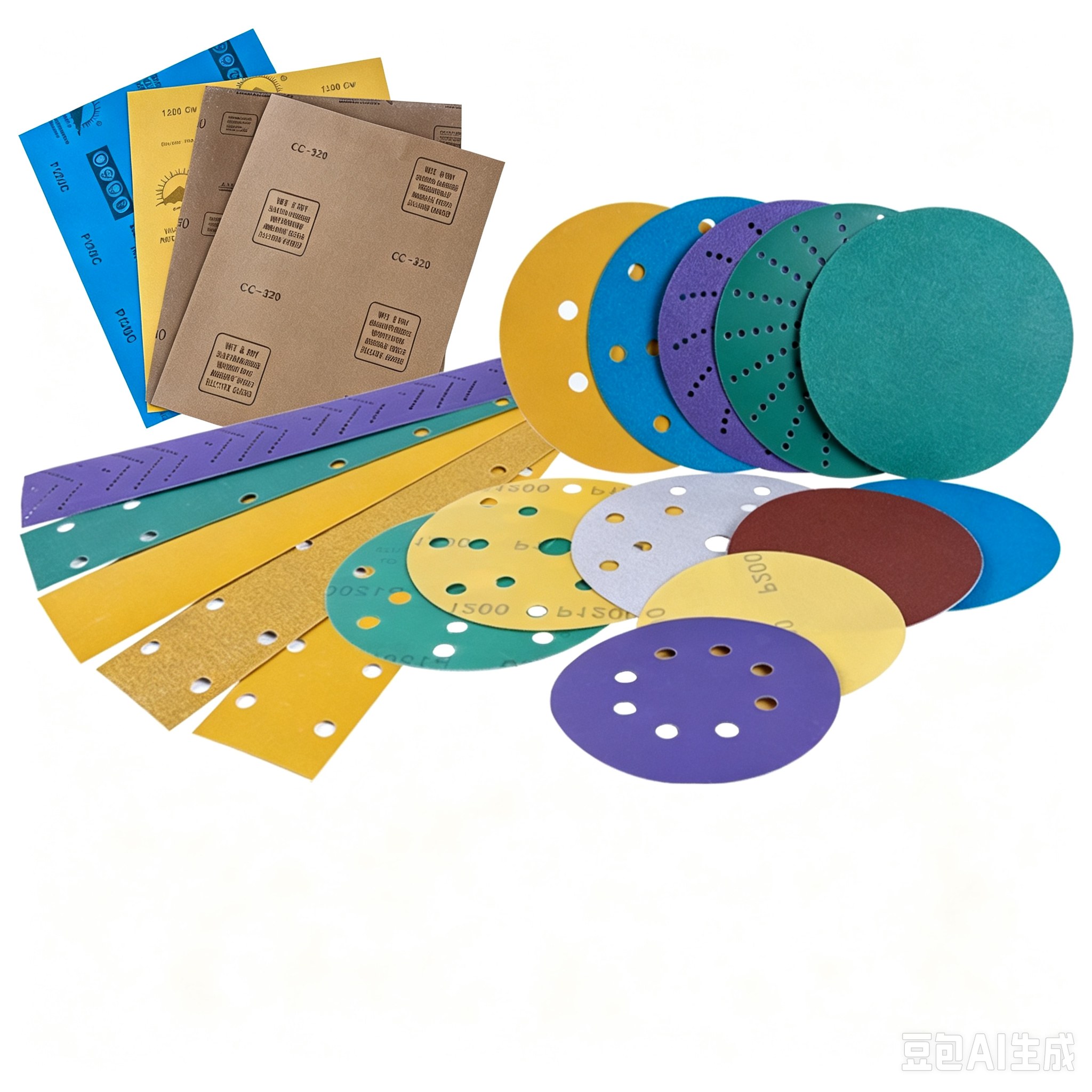
Most buyers fixate on the grit number printed on the backing and assume it will hold up once pressure is applied, but that assumption often falls apart on low-cost sheets. A dependable China sandpaper should keep its stated grit under load, with minimal grain shedding or premature dulling during the first few minutes of work. Backing material deserves equal attention because a stiff paper sheet behaves very differently from a flexible cloth or film backing; choosing the wrong one leads to edge tearing, poor conformity on curved profiles, or sudden failure on narrow edges. The bonding agent is another quiet factor that decides lifespan, since a weak resin or adhesive allows abrasive grain to break away instead of fracturing gradually to expose fresh cutting edges.
After approving a sample, buyers should still push for batch-to-batch consistency. A trial sheet can pass every test while later shipments cut slower, clog sooner, or wear unevenly because raw material sources or curing conditions drifted. Factories with fixed material inputs and clear process controls tend to repeat results more reliably. Heat and clogging behavior during long runs also separates practical abrasives from ones that glaze over or burn the workpiece; open-coat constructions and anti-loading treatments make a tangible difference on soft woods, paints, and aluminum. Finally, price per square meter means little without measuring actual usable life. A sheet that costs a bit more but keeps cutting longer often reduces total abrasive spend, labor time, and rework, which is the real comparison a serious buyer should make.
Contact Us
Contact Person: Amanda Wang
Email: [email protected]
Tel/WhatsApp: +86-13602569854
Website: https://www.sunabrasives.com.cn