
Cleanroom Equipment Factory: A Look Inside Precision Manufacturing for Critical Environments
2026-09-01
One speck of dust. That's all it takes to compromise a batch of injectable medicine or a microchip. Inside a cleanroom equipment factory, the stakes are measured in microns, and every weld, gasket, and airflow path is scrutinized with the kind of obsession that separates life-saving technology from costly failure. At GENO Pharmatech, that obsession is built into every piece of equipment that leaves the floor. In this article, we pull back the curtain on how precision manufacturing for critical environments actually happens—and why the equipment itself is only as good as the cleanroom it serves.
The Fine Art of Building for Particle-Free Spaces
The phrase fine art fits awkwardly until you watch a cleanroom take shape. Every surface, fastener, and sealant is chosen for how little it sheds, outgasses, or traps motes. The real skill lies in subtraction: removing ledges where dust can rest, eliminating threaded fittings that grind particles loose during installation, and sequencing construction so each sealed layer is tested before the next is added.
Airflow design is less about pushing air hard and more about shaping it gently. Iso-velocity profiles, low-return configurations, and pressure cascades are tuned until a smoke pencil reveals no dead zones or backflow. Pass-throughs and airlocks become architectural rituals, forcing both people and materials to move through graded stages of cleanliness. The goal is not just a low particle count on a certificate; it is a room that behaves predictably under daily use.
After the facility is commissioned, the art shifts toward restraint. Maintenance crews resist the urge to bring in standard tools or cleaning agents that would shatter the fragile equilibrium. Monitoring sensors feed a constant stream of data, but experienced operators learn to read subtle shifts—a rise in 0.3-micron counts near a specific bench, a pressure drift at an entry door—as early warnings. Building for particle-free spaces ultimately means designing for the long, quiet discipline of staying clean.
Inside the Factory: Cleanroom Equipment Production Step by Step
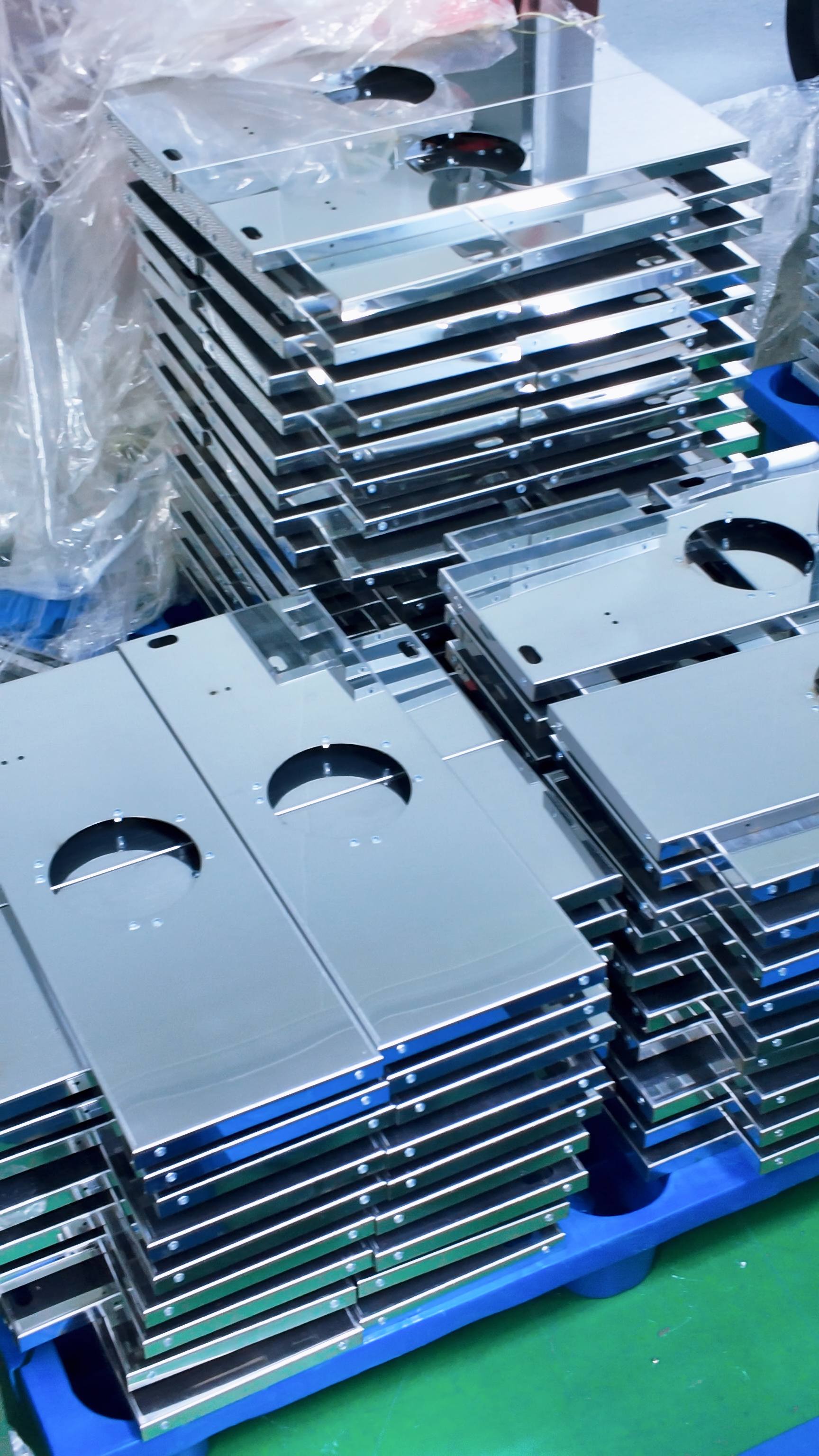
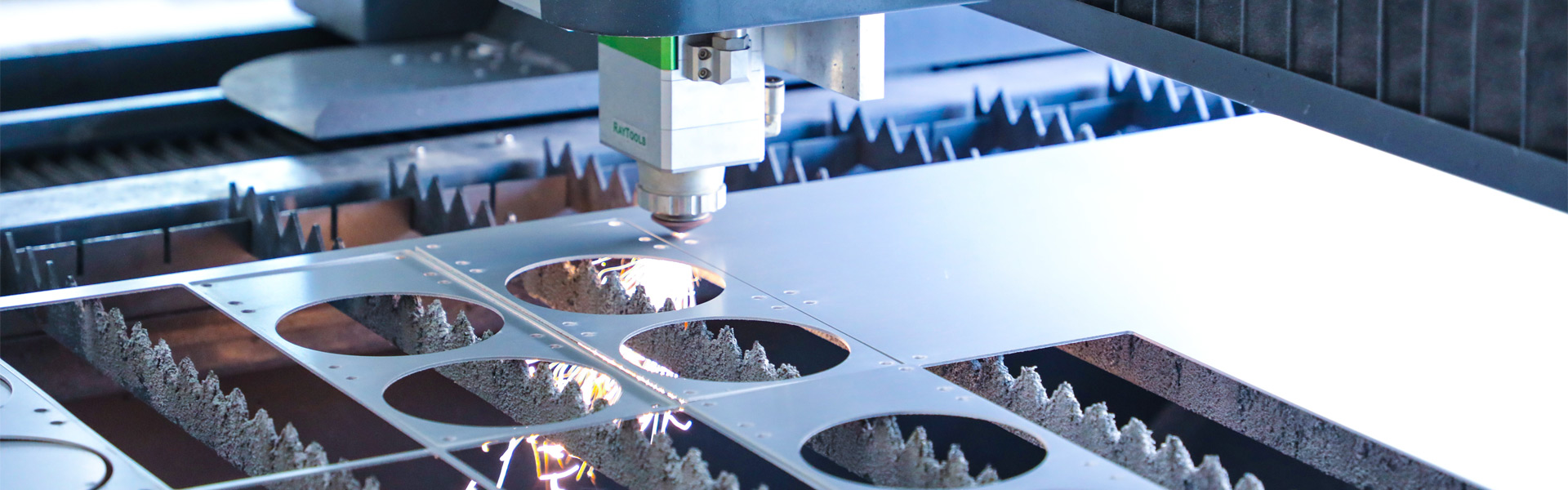
Walking into the cleanroom equipment facility, the first thing that hits you is the constant low hum of air handlers pushing filtered air through the ceiling grids. The production line starts with raw material inspection—stainless steel panels are checked for surface defects under angled lighting, and every roll of gasket material is logged with a lot number before it clears the airlock. Workers in bunny suits move deliberately, not rushing, because a single scratch on a workbench surface can mean a rejected batch later on.
Assembly happens in stages that feel more like watchmaking than heavy manufacturing. Frames are squared and bolted with torque wrenches calibrated each morning. Panels slide into place with a soft click, and the gaps are measured to within a fraction of a millimeter. The crew uses adhesive in small, controlled beads rather than sweeping strokes, wiping excess before it cures. Every joint is inspected under a bright task light, and any imperfection gets flagged with a red tag for rework before the unit moves down the line.
Testing is where the equipment earns its certification. Each finished unit is hooked up to a particle counter and run through a full cycle, with readings taken at multiple points across the work zone. Technicians watch the airflow patterns using a smoke wand, adjusting damper positions until the laminar flow stays smooth and unbroken. Finally, the equipment is wiped down with ultrapure isopropyl alcohol, wrapped in antistatic film, and wheeled into the shipping bay with a signed checklist taped to the side—no shortcuts, no exceptions.
Selecting Materials That Resist Contamination
In cleanroom environments, the smallest oversight in material choice can compromise an entire production batch. Silicone and PTFE, for instance, outperform standard plastics because they resist particle shedding and chemical breakdown under repeated sterilization. More importantly, their non-porous surfaces prevent microbial films from taking hold—a detail often overlooked until a contamination event forces a costly shutdown.
Field experience shows that textured finishes, while providing grip, create microscopic valleys where residues accumulate. Switching to electrophoretically polished stainless steel or low-surface-energy polymers eliminates these hidden traps. The key is matching the material's surface energy to the specific contaminant: hydrophobic surfaces reject water-based soils, but oily residues demand oleophobic treatments or coatings that alter the contact angle.
Maintenance teams frequently discover that contamination resistance depends not only on the base material but also on how it responds to wear. Abrasion from routine handling can generate micro-scratches that harbor bacteria even in materials marketed as antimicrobial. Selecting materials with comparable hardness to the cleaning implements—and specifying rounded edges to reduce impact points—extends the functional life of contamination-resistant surfaces far beyond initial lab test results.
Custom Cleanroom Fabrication for Specialized Demands
A standard cleanroom rarely fits the way a particular process actually runs. That’s why we build from the ground up, matching the enclosure to your space, your workflow, and the exact cleanliness class you need. The layout gets shaped around your equipment and people, not the other way around.
Some operations demand tighter humidity control than the cleanroom classification suggests. Others need laminar flow only over a single workstation, or materials that won’t shed particles when bumped. We’ve handled everything from small pass-through chambers to multi-room suites with cascading pressure zones, each one tailored during fabrication rather than adapted later.
What makes this work is constant back-and-forth during the build. You won’t get a prefab shell with a few tweaks. Instead, our fabrication team adjusts panel joints, filter placements, and utility cutouts as your requirements firm up. The result is a cleanroom that performs on day one and doesn’t fight you when you need to change something down the line.
Quality Checks That Guarantee Cleanroom Performance
Cleanroom performance doesn’t hinge on a single grand test—it’s the accumulation of small, methodical checks that keep contamination at bay. Particle counters positioned at workstations and return air paths offer far more than raw numbers; they reveal how personnel movement, equipment cycling, and even shift changes disturb the environment. When a spike appears, the root cause is rarely mysterious. More often it traces back to a torn glove seam, a poorly seated filter, or a hurried gowning sequence.
Airflow and pressure differentials are the quiet guardians of cleanroom integrity. A daily sweep of manometers and velocity sensors might feel repetitive, but that repetition is precisely what catches drift before it becomes a problem. If a pass-through door begins closing too softly or a fan speed drops by a few percent, the cascade effect on particle counts can be dramatic. Teams that log these values by hand, not just by automated alarm, tend to notice subtle patterns that software alone can miss.
Microbial monitoring adds another layer that particle counts cannot. Settle plates and contact plates in high-touch zones—such as telephones, pass-through handles, and cart wheels—often expose contamination sources that air sampling overlooks. Combined with routine filter integrity testing and surface disinfection audits, these checks create a feedback loop that keeps cleanroom performance stable without waiting for a failed certification.
Delivering Cleanroom Equipment to High-Stakes Industries
Moving precision cleanroom equipment into semiconductor fabs or biopharma suites isn't a job for standard freight carriers. Every step demands controlled conditions, specialized rigging, and a deep understanding of the client's contamination risks. A single particle shed in transit can compromise a multi-million-dollar production line before the equipment is even uncrated.
The real challenge lies in coordinating logistics that never break the clean chain. From double-wrapped crates and humidity-monitored trailers to cleanroom-compatible lifting gear, each decision is made with the final installation environment in mind. Experienced teams map out routes in advance, confirm dock-to-cleanroom airlocks, and stage equipment in ISO-rated buffer zones when necessary.
What sets top-tier providers apart is their ability to adapt on the fly without cutting corners. They know a pharmaceutical client's validation protocols differ from a data center's or an aerospace manufacturer's. By treating every delivery as a custom project rather than a routine shipment, they protect both the equipment and the reputation of the industries that rely on it.
FAQ
You'll typically see laminar flow hoods, pass-through chambers, air showers, fan filter units, and custom stainless steel furniture. Some facilities also build specialized enclosures for semiconductor or pharmaceutical processes. The common thread is that every item must shed virtually no particles and withstand harsh cleaning chemicals.
Most operate under strict internal protocols that mirror their customers' environments. Workers wear full bunny suits, tools are wiped down before entering assembly zones, and air is pushed through HEPA or ULPA filters. It sounds excessive, but even a fingerprint on a fan filter unit can cause a rejection downstream.
In a cleanroom, a gap of a millimeter can disrupt laminar airflow or create a niche where microbes hide. Equipment is often made to tolerances tighter than ±0.1 mm. For example, a pass-through door that doesn't seal perfectly lets unfiltered air rush in the moment pressure shifts. In semiconductor fabs, that can scrap entire wafer lots.
Stainless steel, especially 304 or 316L, dominates because it resists corrosion and releases almost no particles when electropolished. Powder-coated steel shows up in less critical zones, while clear polycarbonate or acrylic panels allow visibility without creating seams. Aluminum is used sparingly because its oxide layer can flake under repeated chemical washes.
Welds are often continuous and ground flush, then electropolished to create a smooth, non-porous surface. Bolted connections are minimized because threads collect debris. Where joints are unavoidable, gaskets made of silicone or EPDM are used, but only after passing outgassing and particle-shedding tests. The goal is to eliminate any crevice where bacteria or dust can lodge.
Each unit typically goes through particle counting, airflow velocity mapping, and leak testing of filters and seals. Some factories run a test where the equipment is operated and sampled under controlled conditions, essentially a cleanroom within a cleanroom. For pharma applications, documentation packages may include material certificates and surface roughness readings.
The design changes based on required air changes and particle limits. For an ISO 7 room, standard fan filter units and painted steel may suffice. For ISO 3 or better, you'll see stainless steel construction, high-efficiency ULPA filters, and welded seams throughout. The factory often keeps modular designs that can be upgraded with better gaskets, motors, or control systems.
It's not just welding and cutting—it's controlling the entire chain from raw material to final wipe-down. Standard fabrication shops rarely worry about outgassing from adhesives or particle release from packaging. Cleanroom equipment factories have to validate cleaning agents, use cleanroom-compatible lubricants, and often ship finished goods in sealed, particle-free wraps. Every step is documented because the end user's audit depends on it.
Conclusion
Step inside a cleanroom equipment factory and the first thing you notice is the absence of casual choices. Building for particle-free spaces starts with airflow mapping and pressure-cascade design, not with welding torches. Engineers treat every seam, corner, and surface finish as a potential contamination risk. Production unfolds in strict sequence—cutting, bending, grinding, and electropolishing stainless steel until it reflects without hiding defects—while material selection rejects anything porous, outgassing, or prone to static cling. Aluminum, 316L stainless, PTFE, and medical-grade polymers appear again and again because they resist chemical attack and clean without leaving residue. Even gaskets and fasteners are specified for low particulate release, so the assembly itself doesn't become the problem.
Custom fabrication is where the factory's real character shows. A semiconductor line might need a wafer-handling enclosure with glove ports cut at odd angles, or a hospital pharmacy might request a compounding isolator that fits a cramped cleanroom corner. Instead of pushing a standard catalog, the team reworks panel layouts, airflow paths, and access points to match the actual workflow. Before shipping, every unit passes through a gauntlet of tests—dynamic particle counts, HEPA filter leak scanning, pressure decay checks, and dimensional audits against CAD models. These quality gates aren't optional; they protect high-stakes customers in biopharma, aerospace, microelectronics, and cell therapy. When the crated equipment finally leaves the dock, it carries with it not just stainless steel and filters but a predictable cleanroom environment that someone, somewhere, will stake their product quality or patient safety on.
Contact Us
Contact Person: Amy Yang
Email: [email protected]
Tel/WhatsApp: 008619330882686
Website: https://www.genopharmatech.com/