

Commercial and Industrial Energy Storage System (C&I ESS) Factory Solutions for Reliable Power Infrastructure
2026-11-16
Ask any facility manager about power quality, and you'll hear stories: voltage sags stopping a line, demand charges spiking your OpEx, and backup generators that fail exactly when needed. The answer isn't more diesel—it's a commercial and industrial energy storage system designed from the factory floor up. UNC builds C&I ESS solutions that deliver on that promise, pairing grid-ready reliability with rapid deployment. Here's what separates a true factory solution from a collection of parts.
Keeping Production Lines Running When the Grid Stumbles
When voltage dips or frequency wobbles, sensitive equipment doesn't just slow down—it faults, jams, or resets. Keeping lines moving means treating power quality as a production variable, not an afterthought. Facilities that map which processes tolerate milliseconds of interruption and which don't can target protection where it matters instead of blanketing the plant with oversized backups.
A layered approach usually beats a single big fix. Fast-acting battery systems or flywheels bridge the gap until a generator spins up, while isolation transformers or dynamic voltage restorers handle the smaller sags that never trip a breaker but still confuse drives and PLCs. The trick is sequencing these layers so the transition feels seamless to the equipment that has no patience for flicker.
Testing under realistic conditions matters more than spec sheets. Simulate a brownout during a shift change, watch how conveyors and robots react, then adjust ride-through settings and restart logic. Plants that rehearse grid failures discover weak spots—a sensor that loses calibration, a robot arm that drifts—before they become a pile of scrap and a missed shipment.
Why Factory Storage Beats Diesel Generators for Demand Response
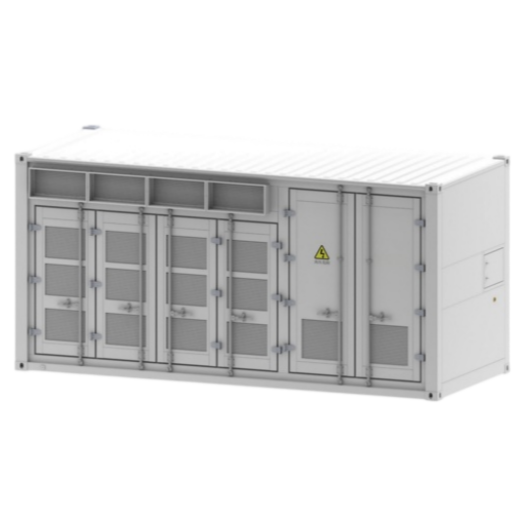
When grid operators signal a demand response event, factories have minutes—not hours—to shed load or inject power. Diesel generators have long been the default backup, but they come with a painful lag: startup sequences, synchronization checks, and the ever-present risk of a failed crank. Battery storage, by contrast, responds in milliseconds. That speed isn't just a technical nuance; it translates directly into capacity payments and avoided peak charges that diesel can never fully capture.
The real differentiator, though, is how factory storage flips a cost center into a revenue stream. A diesel generator burns fuel with every dispatch, wears down its engine block, and demands regular load-bank testing just to stay reliable. A battery system charges during off-peak hours, often from the factory's own solar, and then discharges during demand response events with zero marginal fuel cost. Over a five-year window, the maintenance logs tell the story: diesel requires oil changes, coolant flushes, and injector replacements, while storage mostly needs firmware updates and occasional contactor inspections.
Noise and emissions also weigh heavily in favor of storage. Running a diesel generator inside a factory complex triggers noise complaints, potential air quality permits, and even pushback from neighboring businesses. Battery containers hum quietly and emit nothing on-site. For manufacturers already facing sustainability pressures from customers and regulators, switching from diesel to storage for demand response isn't just an operational upgrade—it's a silent statement that the facility is ready for a cleaner, faster, and more profitable grid relationship.
Matching Battery Chemistry to Commercial Load Profiles
Most commercial facilities do not have one smooth, predictable load. A cold storage warehouse may draw heavily when compressors kick in, then settle into a steady baseline for hours. An office building with a small data center can create sharp, short-duration demand spikes that repeat on a schedule. Matching battery chemistry starts with reading the actual load profile from interval meter data, not from equipment nameplates. The shape of that curve, especially the ratio of peak power to total energy, tells you whether the battery will be asked to discharge hard for 15 minutes or gently for four hours.
Lithium iron phosphate (LFP) tends to work well for daily demand charge management because it tolerates frequent partial cycling and stays thermally stable in cramped electrical rooms. When space is tight and the profile calls for occasional backup rather than daily deep cycles, a nickel manganese cobalt (NMC) pack may offer better energy density. For long afternoon-to-evening shifts in a grocery store or warehouse with rooftop solar, flow batteries often match the longer, lower-power discharge better than lithium. Even lead-acid still earns a place in low-budget, low-cycle emergency lighting or gate opener applications where simplicity matters more than cycle life.
The real mistake is choosing chemistry by brand preference before looking at the depth and frequency of discharge. A battery that is oversized for a spiky profile may never reach the throughput needed to justify its cost, while one that is undersized for a long overnight load will degrade early. Working from 15-minute or 5-minute load data, you can separate which portions of the day belong to power batteries, which to energy batteries, and whether a hybrid system makes more sense than forcing one chemistry to handle everything. In the end, the load profile dictates the C-rate, cycle count, and temperature swings, and those three factors narrow the chemistry choices far better than any generic specification sheet.
Installing C&I Storage Without Halting Plant Operations
Most factory managers assume that adding battery storage means shutting down production lines for days, but that's rarely necessary when the system is designed around existing switchgear. The trick is to treat the storage unit as a parallel asset rather than a series component. By pre-assembling the entire battery cabinet, inverter stack, and protection panel on a single skid off-site, the on-site work shrinks to placing the unit, pulling heavy-gauge cable through existing conduits, and landing terminations during a brief planned maintenance window. In many cases, a single overnight shift is enough to make the final connections while the plant runs at reduced load.
Another underused approach is to stage the installation in phases that follow the plant's own production calendar. For facilities with seasonal peaks, the civil work, trenching, and rack placement can happen weeks ahead of the electrical tie-in. Temporary load banks or portable generators can cover any critical circuits during the brief switchover, but only if the storage vendor has done a proper arc-flash study and coordinated the new breaker settings with the existing protection relays. Skipping that step risks nuisance trips that halt operations far longer than the storage installation ever would.
The real differentiator, though, is choosing a storage system with built-in islanding and black-start capability. Instead of cutting power to the whole plant to test the new battery, commissioning engineers can isolate a single feeder, run that section on battery for a few hours, and then seamlessly return it to grid power. This lets the facility validate the system under real load conditions while every other line keeps running. When done right, the only sign of the installation is a new concrete pad and a quieter energy bill.
Using Real-Time Metering to Shape Energy Consumption
Real-time metering changes the way people see energy. Instead of waiting for a monthly bill that offers little context, households and businesses can watch consumption as it happens. A spike when the dryer kicks on, a steady draw from old refrigeration, the quiet baseline of a home at night—these patterns become visible. That visibility creates a feedback loop: the meter reports, the user reacts, and the next reading shows the result. It feels less like a utility service and more like a mirror held up to daily habits.
The real shift comes when this data is tied to price signals or comfort trade-offs. For example, a building manager might see that an entire floor's HVAC system draws heavy power at 3 p.m., even though most people have left. That single insight can trigger a schedule change that saves hundreds of dollars a month without anyone noticing a temperature difference. In homes, a smart meter paired with a simple display can nudge someone to run the dishwasher after 9 p.m. when rates drop. It is not about deprivation; it is about choosing when and how to use energy, not whether to use it at all.
Over time, these small adjustments accumulate into larger demand shifts. Utilities see fewer unexpected peaks, which means less need for expensive backup plants that run only a few hours a year. For consumers, the benefit is more direct: lower bills and a clearer sense of control. Some grids even offer rebates for letting the utility briefly adjust a thermostat or delay an electric vehicle charge. Real-time metering turns energy from a passive expense into an active, negotiable part of daily life—shaped by information rather than guesswork.
Planning Storage Capacity for Multi-Site Industrial Portfolios
Planning storage capacity across multiple industrial sites rarely works as a simple addition of square footage. Each location carries its own throughput rhythm, seasonal demand shifts, distance to suppliers, and reliability of local transport. A warehouse near a port may overflow before harvest season while an inland distribution center sits half-empty waiting for components. Useful planning starts with a dynamic baseline that reflects these site-specific patterns rather than a fixed annual figure.
Operational data streams can reveal hidden slack and pressure points across the portfolio. Tracking turnover rates, SKU velocity, and dock congestion often shows that one cold-storage unit runs at sixty percent occupancy while another site's general racks spill into aisles every quarter. These insights support rebalancing space through short-term subleases, shared shuttle routes, or relocating slow-moving inventory to lower-cost nodes instead of expanding every facility independently.
Capacity decisions also need to stay tied to the capital spending calendar. Prioritize investments in facilities that can flex without major retrofits, such as clear-height warehouses with adjustable racking or sites zoned for outdoor container storage. In some cases, it makes more sense to secure an option on adjacent land or sign a flexible third-party logistics agreement than to build new speculative space. Treat the plan as a rolling review—update it quarterly with actual throughput and order forecasts so that capacity shifts before bottlenecks appear, not after.
FAQ
Working directly with the factory removes several layers of markup and communication delays. You get engineering support from the people who designed the cabinets, faster customisation for voltage or enclosure requirements, and clearer accountability if something needs to be adjusted after installation. For larger rollouts across multiple commercial sites, that consistency becomes a real operational advantage.
The systems use fast-responding battery management and inverter controls that react to load changes in milliseconds. For a cold storage warehouse or a production line, this means the storage unit absorbs or supplies power before the site ever feels a dip or spike. We also stage the discharge curve based on your actual usage pattern rather than a generic profile.
Yes, that's actually one of the most common configurations. The ESS can be set to prioritise solar self-consumption, reduce generator starts, or provide seamless backup when the grid fails. We configure the control logic around your existing switchgear so the storage doesn't fight with other assets on the same bus.
For harsh environments we avoid relying on ambient air alone. Our outdoor-rated cabinets include liquid cooling or high-static-pressure HVAC options, along with filtered intake and positive pressure to keep dust out. Component temperature is monitored at the cell and power electronics level, and the system derates predictably rather than tripping unexpectedly.
The cabinets are built with cell-level fusing, insulated busbars, and robust thermal runaway containment. We include gas detection linked to the BMS, and the enclosure is designed to direct any venting away from occupied areas. For sites with restricted access, we can integrate with existing building alarm systems and provide clear emergency response documentation.
Every system ships with a cloud-based monitoring portal that tracks state of charge, cell balance, temperatures, and inverter status. Our factory team sets up automated alerts, and for critical sites we offer 24/7 remote diagnostics with a local service partner. Most issues are resolved through software adjustments or targeted part replacement rather than full unit swaps.
For standard 100kW to 1MW configurations, production typically takes 8 to 12 weeks after design approval. Site preparation and permitting often run in parallel. Installation and commissioning usually take two to four weeks depending on cable routing and utility coordination. We provide a milestone schedule at the quote stage so there are no surprises.
Factory-direct pricing is part of it, but the bigger savings come from system efficiency and serviceability. We use high-cycle LFP cells that maintain capacity over more cycles, and the modular design lets you replace a single battery tray instead of an entire rack. Lower auxiliary power consumption from the cooling system also adds up over a ten-year asset life.
Conclusion
For factories, grid instability is not an abstract concern—it interrupts assembly lines, spoils batches, and forces costly restarts. A commercial and industrial energy storage system (C&I ESS) changes that calculus. Instead of idling a diesel generator that may fail to start exactly when voltage sags, a well-sized battery bank picks up the load in milliseconds, keeping conveyors and CNC machines running without a blink. The real advantage over diesel goes beyond response time: storage can charge during low-price periods or from on-site solar, then discharge during demand spikes, turning energy from a fixed overhead into a controllable asset. Matching battery chemistry to the load profile matters here. High-throughput manufacturing with short, intense peaks often suits lithium iron phosphate for its thermal stability and cycle life, while facilities with long-duration shifts might mix in flow batteries or hybrid packs. The goal is not just backup power but shaping consumption to avoid peak demand charges.
Installation without halting plant operations is often the deciding factor for site managers. Modular C&I systems can be delivered as pre-wired containers, connected to the main switchgear during a scheduled maintenance window or even via a temporary bypass, so production never stops. Once live, real-time metering at the transformer and sub-panel level reveals exactly where energy is wasted—compressor banks, lighting, or idling motors—and the storage system can be programmed to offset those loads automatically. For enterprises with multiple industrial sites, planning storage capacity becomes a portfolio problem, not a single-building guess. One plant might need 500 kWh for demand response, another 2 MWh for overnight batch processes. By aggregating data across sites, operators can shift storage assets to the facilities where they deliver the highest return, negotiate better utility rates, and meet corporate resilience targets without overbuilding at any one location.
Contact Us
Contact Person: Manager Leng
Email: [email protected]
Tel/WhatsApp: 8613764878967
Website: https://www.unc-energy.com