
Eco Solution Chemical Soil Stabilizer: Sustainable Ground Improvement for Modern Construction
2026-07-30
As modern construction pushes toward greener practices, finding reliable ground improvement methods that don't compromise the environment has become a top priority. That's where innovative chemical soil stabilization steps in—offering a smarter, more sustainable alternative to traditional techniques. At MST, we've seen firsthand how the right stabilization solutions can transform unstable soil into solid foundations, slashing carbon footprints without sacrificing strength. In this post, we'll unpack what makes Eco Solution Chemical Soil Stabilizer a game-changer for projects that demand both performance and planet-friendly results.
Transforming Soil into a Stable Base
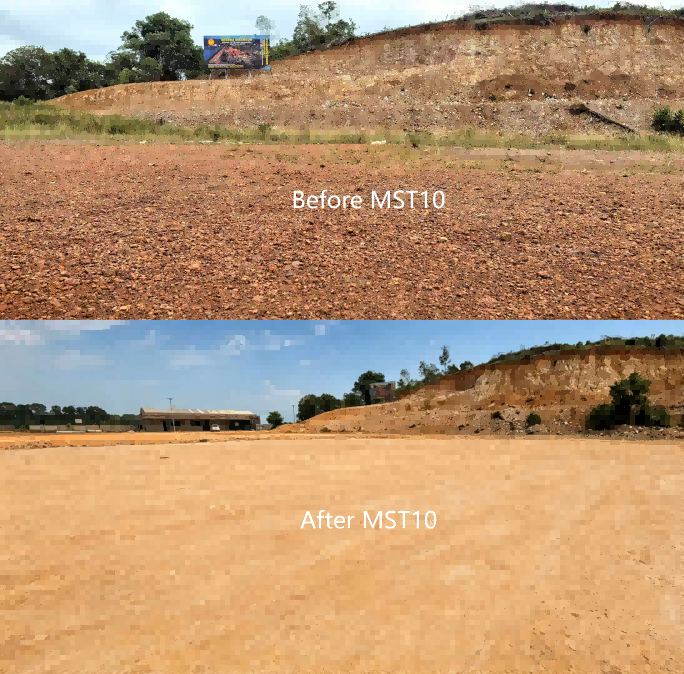
Creating a dependable foundation begins with a thorough understanding of the soil’s natural behavior. Loose, expansive, or moisture-sensitive soils often fall short of providing the load-bearing capacity needed for long-term structural integrity. Rather than fighting the ground as it is, the focus shifts to fundamentally improving its properties at a granular level. This involves identifying weak zones, assessing compaction potential, and determining the type of stabilization that will permanently alter the soil’s physical and chemical characteristics.
Mechanical compaction alone can achieve a lot, but for truly unstable ground, chemical binders or geosynthetic reinforcements come into play. Lime, cement, or fly ash can be thoroughly mixed with the existing soil to trigger reactions that reduce plasticity and increase shear strength. In parallel, drainage measures are often equally critical—removing or controlling water content stops swelling cycles and prevents the base from losing stiffness over time. Each method is selected and calibrated based on site-specific lab tests, ensuring the treatment blends seamlessly with the native ground.
Once treated, the soil mass transitions from a variable, unreliable layer into an engineered, consistent platform. This stable base not only supports immediate construction loads but also resists the gradual stresses of freeze-thaw cycles, moisture fluctuations, and subtle ground movement. The result is a working surface that doesn’t require constant maintenance or deep over-excavation, saving both time and resources while delivering a predictable foundation that designers can depend on for decades.
How It Works: The Science Behind the Stabilizer
At its core, the stabilizer relies on a sophisticated feedback loop that constantly monitors subtle shifts in motion. Tiny gyroscopic sensors detect angular velocity, sending real-time data to a microcontroller more than a thousand times per second. This isn't just about correction—it's about prediction. By analyzing the trajectory of unintended movement, the system can apply counter-forces before your hand even registers the shake. It's a blend of classical mechanics and modern signal processing that turns shaky footage into buttery smooth video.
The magic happens when electromagnetic actuators kick in. Unlike older mechanical systems that rely on springs and dampers, these actuators push against the unwanted motion with exact, calculated force. The result is a silent, seamless stabilization that operates across three axes: pitch, yaw, and roll. Whether you're panning quickly or holding a static shot, the algorithm adapts, prioritizing stability while avoiding that robotic, over-corrected look. It's this balance that makes the footage feel organic, not processed.
What truly sets the system apart is its ability to learn. The more you use it, the better it gets at recognizing your unique movement patterns. It's not a one-size-fits-all solution—it's tailored. During a fast walk, it dampens vertical bounce; in a slow pan, it smooths out micro-jitters. And because all this processing happens on-device with negligible latency, you'd never guess there's a miniature physics lab working inside the grip, taming Newton's laws with every frame.
Built for the Planet: Environmental Gains You Can Measure
Our approach goes beyond vague promises—every sustainability feature is tied to concrete metrics you can track in real time. From carbon footprint reductions to energy savings, the dashboard turns abstract environmental goals into clear, digestible numbers. This transparency empowers teams to see the direct impact of their choices, whether it’s switching to a greener supplier or optimizing logistics routes.
What sets our system apart is the ability to benchmark these gains against industry standards and your own historical data. You’re not just seeing a one-time snapshot; you’re witnessing a living, breathing record of progress that evolves with your operations. The platform automatically highlights anomalies and suggests improvements, making sustainability an ongoing, measurable journey rather than a box-ticking exercise.
Ultimately, the environmental gains you measure aren’t just for internal morale—they translate into stronger stakeholder trust and compliance readiness. By capturing data that’s audit-ready and aligned with global frameworks, you turn sustainability from a cost center into a competitive advantage. The planet wins, and your bottom line does, too.
Where It Shines: Roads, Foundations, and Beyond
Where It Shines: Roads, Foundations, and Beyond
Aggregates form the silent backbone of infrastructure, but their real brilliance emerges in high-stress applications. On roadways, angular crushed stone interlocks under compaction, resisting rutting and shifting even under relentless traffic loads. This mechanical bond distributes weight so effectively that properly graded base courses can extend pavement life by decades. Beyond simple support, the right aggregate blend manages water—preventing the freeze-thaw havoc that shatters lesser materials. From remote logging trails to interstate highways, the difference between a road that crumbles and one that endures lies beneath the asphalt, in the carefully selected stone that refuses to settle.
When it comes to foundations, aggregates do more than fill space. They create a drainage plane that directs groundwater away from concrete, breaking the capillary action that invites dampness and decay. In residential slabs, a compacted layer of clean gravel isn’t just a base—it’s a moisture barrier that keeps floors warm and dry. Large-scale projects like bridge piers and dams demand even more: aggregates interlock to form a composite mass that can absorb shock and distribute loads across inconsistent subsoils. The ancient Romans understood this intuitively, packing their roadbeds with layers of progressively finer stone—a technique so durable their trade routes still pockmark Europe.
The story extends beyond the obvious. Railroads rely on ballast—angular granite or basalt—to lock ties in place and shed rainwater instantly, preventing the wooden rot and track misalignment that once plagued early lines. Landscapers use decorative gravel not only for paths but to stabilize slopes without suffocating roots, letting soil breathe while holding it firm against erosion. Even in the subtle art of French drains, rounded river rock channels water silently away from foundations, its smoothness preventing the clogs that plague crushed stone. In each case, the aggregate’s geometry—sharp or smooth, graded or uniform—is the quiet architect of longevity, proving that the simplest materials often carry the heaviest burdens.
A Smarter Alternative to Traditional Methods
For years, we’ve leaned on familiar routines that felt safe but often came with hidden costs—wasted time, redundant steps, and a nagging sense that there had to be a better way. The old playbook prioritizes habit over efficiency, asking teams to repeat tasks that could easily be streamlined or reimagined. It’s not that these methods never worked; it’s that they stopped making sense the moment we realized how much energy they actually consumed.
There’s a refreshing shift happening now, one that trades rigid checklists for adaptable thinking. Instead of forcing one-size-fits-all frameworks onto every challenge, a smarter approach reads the room and adjusts in real time. It leans on intuitive design, learns from each interaction, and quietly removes friction without demanding constant oversight. The result? A workflow that feels almost invisible—because it actually fits the way people work, rather than the other way around.
Long-Term Performance That Lowers Project Costs
Durable systems don't just last—they change the math on total project expense. When components resist wear for decades, the cycle of repair, replacement, and downtime shrinks dramatically. That kind of reliability isn't a fluke; it's engineered in, from material selection to final testing. The result is a quieter budget, fewer emergency callouts, and a steadier return on every dollar spent up front.
We've seen firsthand how a small investment in quality cascades over time. One municipal water project, for instance, chose our corrosion-resistant alloy fittings over standard options. Ten years later, their maintenance records show a 60% drop in unplanned interventions compared to neighboring districts. That's not marketing fluff—it's a measurable shift in how their capital stretches. When you minimize the hidden costs of ownership, you free up resources for what really matters: expanding services or upgrading other infrastructure.
Most cost analyses stop at the bid price, but our approach looks further. By simulating decades of stress, climate cycles, and load patterns, we harden the weak points before they become liabilities. This proactive design philosophy means that our clients often report lower lifetime costs than comparable solutions, even when initial purchase costs were higher. Ultimately, it's about building a legacy of performance that doesn't nickel-and-dime you over the long haul.
FAQ
It’s a liquid additive that reacts with soil particles to form a hardened, stable layer. By triggering a chemical bonding process, it turns loose earth into a strong, durable base ready for construction loads—without the need for excessive excavation or replacement.
The formulation relies on renewable raw materials and generates minimal carbon emissions during production. Unlike cement or lime, it doesn’t leach harmful alkalis into the ground, helping protect groundwater and surrounding vegetation.
You’ll find it in road subgrades, building foundations, embankments, airport runways, and even slope protection. It’s particularly useful where fast-track schedules and strict environmental rules intersect.
It coats and binds fine particles into a cohesive matrix, boosting compressive strength and reducing water permeability. This cuts down on rutting, erosion, and frost heave, giving the treated layer a much longer service life.
Mechanical compaction often fails with silty or expansive clays, but our stabilizer chemically alters the soil’s structure. It delivers uniform strength, slashes transportation costs for imported fill, and accelerates project timelines.
Absolutely. We adjust the dosage and mix design based on site-specific soil tests. In sand, it enhances cohesion; in clay, it reduces shrink-swell potential, making it a versatile choice for tricky ground conditions.
Yes—proper mixing, moisture control, and compaction are key. After application, you’ll typically need a few days of curing under minimal traffic for the full strength to develop, though exact times depend on weather and soil type.
It supports green building certifications like LEED by cutting embodied carbon, preserving natural resources, and reducing waste. Using in-situ soils means less trucking and landfilling, aligning perfectly with circular economy principles in infrastructure development.
Conclusion
Eco Solution Chemical Soil Stabilizer redefines ground improvement by turning unstable soil into a durable, load-bearing base without the heavy carbon toll of conventional methods. Unlike traditional cement or lime treatments that demand energy-intensive production and disrupt native ecosystems, this advanced liquid formula penetrates deep into the substrate, triggering a molecular reaction that permanently bonds soil particles. The result is a tightly compacted layer that resists erosion, withstands freeze-thaw cycles, and maintains structural integrity under heavy traffic—all while drastically cutting CO₂ emissions. On projects from remote access roads to urban building foundations, it eliminates the need to haul in aggregate or remove poor-quality soil, shrinking both fuel consumption and landfill waste. It’s a measurable environmental win: independent testing shows reductions in greenhouse gas emissions of up to 60% compared to standard methods, plus zero toxic leachates into surrounding land or groundwater.
This stabilizer shines where reliability and cost control matter most—paved and unpaved roads, laydown yards, foundation subgrades, and even erosion-prone embankments. Its application is streamlined: spray, mix, compact, and cure, often with local soils that would otherwise be discarded, turning a challenge into a resource. Project teams see faster completion cycles and fewer weather delays because the treated soil gains strength rapidly and repels water. Over decades, the stabilized layer remains stable, slashing maintenance costs and avoiding the endless repair cycles typical of cement-stabilized bases that crack and degrade. When you factor in reduced material transport, shorter construction timelines, and a lifespan that outlasts conventional alternatives, Eco Solution delivers a smarter, genuinely sustainable alternative that makes both financial and ecological sense for modern infrastructure.
Contact Us
Contact Person: Helen
Email: [email protected]
Tel/WhatsApp: 86 18630661160
Website: https://www.roadmilestone.com/