
EV Charging Station Factory Tour: What Really Goes Into Every Unit
2026-11-22
A charging station looks simple until you see one opened mid-assembly. On the factory floor at BEILIN, that’s where the real story starts: soldered connections, board-level testing, thermal checks, and the small decisions that determine whether a unit lasts five years or fifteen. This tour breaks down what actually goes into every unit—and why the details matter more than the spec sheet.
Raw Aluminum, Laser Cutters, and the First Bend
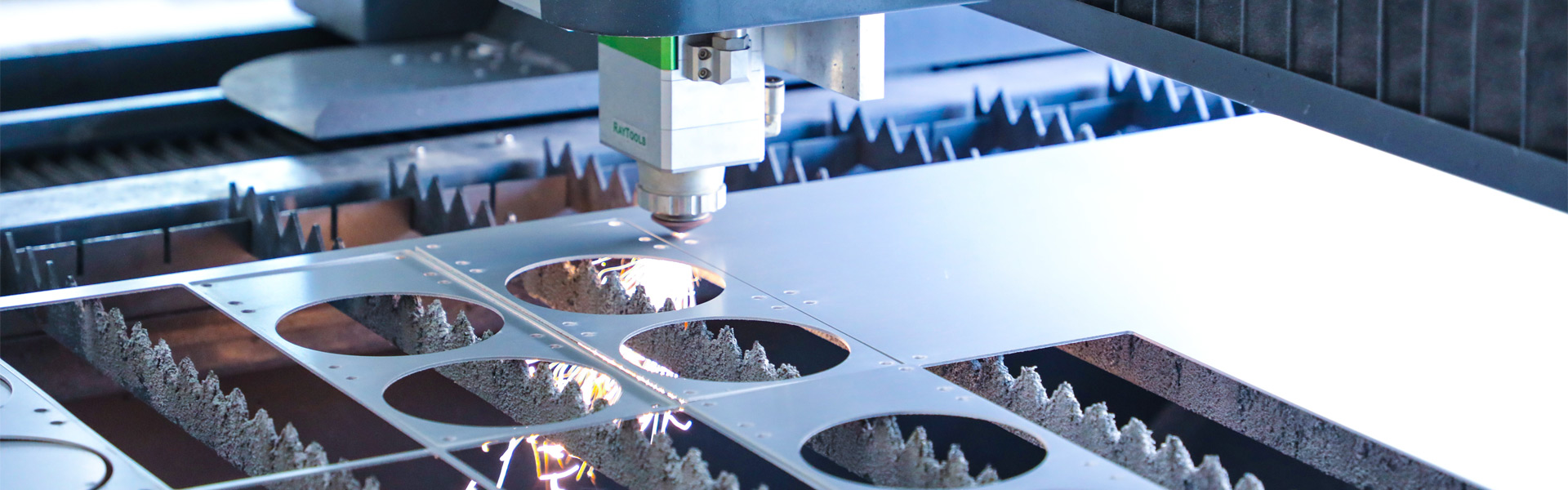
The aluminum lands on the shop table still wearing its plastic film, edges square but not precious. Laser cutting eats through the sheet before anyone reaches for a saw, leaving a narrow heat mark along the cut line that wipes off with a Scotch-Brite pad. Flat parts stack quickly, but they are still just outlines waiting for the press brake.
The first bend changes that. A blank goes against the back gauge, the ram comes down, and the metal resists for a fraction of a second before moving. Aluminum tends to spring back more than the print suggests, so the operator overshoots the angle slightly and lets the part relax into spec. That first crease gives the piece a top and a bottom, and every other bend starts making sense after it.
Once the initial fold is locked in, the remaining work is less guesswork. You can feel the grain of the aluminum under your fingers along the bend line, and the corners that were just sharp from the laser start to become the outline of an enclosure or a mount.
Crimping Copper Until the Connection Outlasts the Cable
A good copper crimp is not about squeezing the barrel until it looks tight. It is about applying enough controlled pressure to make the strands yield and flow together. When that happens, the oxide layers on the individual wires break apart, trapped air gets pushed out, and the conductor takes on a solid-like cross-section inside the terminal. The current path becomes a continuous metallic junction, closer to a cold weld than to a collection of pressed contact points.
Pull tests usually expose whether that has actually happened. If a terminal separates from the wire under load, the fault is often the wrong die, an incorrect crimp height, or a mismatch between the barrel and the copper size. A connection that is stronger than the cable shows a different signature: the strands break outside the crimp area, not inside it. Cut the joint open afterward and you will see the strands merged into one dense mass, the terminal wings closed without folding inward, and little to no void space along the barrel wall.
Thermal cycling and vibration reveal the same weakness later. A joint with internal voids may still pass a bench resistance check, but micro-movement and oxidation will push its resistance upward under service conditions. Fully compressed copper keeps oxygen away from the contact zones and does not give those failure mechanisms room to start. The crimp disappears electrically and mechanically, leaving the conductor as the first thing to fail.
The Water Jets and Dust Chambers Few Buyers Ever See
Pop the outer shell off most wet-dry machines and the tidy plastic exterior gives way to something far less polished. A narrow spray nozzle fires a thin, fast sheet of water into the incoming air stream, knocking fine dust out of suspension before it ever reaches the filter. The dust collects in a shallow chamber where it settles into a soft gray sludge. Buyers rarely see this part because it sits buried behind panels, clips, and branding, yet it does most of the actual air-cleaning work.
The water jet itself looks unremarkable, but its angle and flow rate decide whether dust gets trapped or blown straight back into the room. Behind it, the dust chamber is usually lined with a sloped baffle and a narrow drain channel. Run a finger along the bottom after a few weeks of use and you will find a dense layer of silt, proof that the water is catching what the dry filter would otherwise choke on.
Most buyers never ask to see these internals before handing over their money, which is a shame because the differences show up quickly. A slightly misaligned nozzle or a poorly sealed dust chamber can leave fine powder caked around the motor housing or dripping from the base. The models that feel effortless in daily use usually have careful welds, tight gaskets, and a jet aimed just right, none of which appears on a spec sheet.
Firmware Loaded Quietly While the LED Breathes
The update arrives without the usual fanfare. A slow, even pulse from the LED is the only visible clue that new firmware is being written beneath the surface. There is no abrupt power cycle, no blank screen, no forced wait. The device simply keeps doing its job while the light swells and fades in a steady rhythm.
That quiet breathing pattern becomes a kind of quiet assurance. Instead of watching a progress bar or wondering whether something has gone wrong, you can glance at the soft glow and go back to whatever you were doing. When the light finally settles, the hardware has already switched to the new firmware without interrupting the experience.
A Test Bay That Simulates the Worst Parking Lots on Earth
The test bay looks less like a laboratory and more like a concrete scar left behind by a demolished shopping mall. Cracked slabs jut upward at odd angles, faded arrows point toward spaces that no longer exist, and a rusted cart corral leans into the driving lane like a drunk party guest. Drainage grates have been deliberately clogged with rubber pellets and fake leaves, so every rain cycle leaves standing water deep enough to swallow a compact car's wheel. Even the painted lines are wrong on purpose — too narrow, too close, and sometimes interrupted by a chunk of asphalt the size of a carry-on suitcase.
Engineers don't just test for geometry here; they test for frustration. One section recreates the classic underground garage where concrete pillars sit exactly where a driver's shoulder check would be, forcing a three-point turn just to leave a spot. Another mimics a gravel overflow lot that has been chewed up by years of snowplows, with loose stones pinging off the underbody and a wobbling metal sign that promises “Customer Parking Only” in letters that have faded to a suggestive blur. Cameras record every scrape, every sudden brake, every instance of a test driver muttering something that gets bleeped later in the data review.
The real genius of the bay is that nothing stays the same for long. A crew comes in overnight and moves the pot holes, shifts the broken curb pieces, or erases half a lane marking with a grinder. Some mornings there's a metal plate covering a trench; other mornings the trench is just open, its edges hidden by a puddle of dirty water. The result is that a car's parking sensors and surround-view cameras never get comfortable. They're forced to interpret the world like a tired human driver: guessing where the space really ends, flinching at things that aren't there, and occasionally missing a low concrete block that has been painted the exact color of shadow.
How Each Serial Number Earns Its Place on a Pallet
A serial number on a carton is rarely just a tracking string. In a busy warehouse, it acts as a placement instruction. Once scanned, the number gets matched against the carton's dimensions, weight, stack tolerance, and final destination. That match decides whether the box sits on the bottom layer, rides near the edge, or gets held back because its pallet is still missing two cases from the same batch.
Workers on the floor don't have to guess where a case belongs. The scanner reads the serial number and the screen returns a simple location: row three, position seven, label facing the aisle. If a carton is heavier than the data suggests, the sequence gets flagged and the layout shifts before the wrap goes on. This is why two identical-looking boxes can end up in very different spots.
Over time, each pallet becomes a physical map of small decisions tied to those numbers. Returns, inspections, and reloads are faster because the serial number tells you not just what the item is, but exactly where it was placed and why. It earns its spot through the rules it carries, not by chance.
FAQ
It gets checked for flatness and weld gaps before any paint is stripped back for grounding studs. Then the subassembly teams mount the power modules, contactors, and the control board on a pre-built backplate. Torque guns are set to specific values for every lug, and each value is logged to the unit serial number. After that, the front display and cable management get fitted before the main harness is routed and tied down.
The enclosure is not fully sealed; it breathes through filtered vents. Heat from the power modules moves into a cast aluminum plate and then into the outside air, so the fans are not blowing directly on live components. We test thermal cutouts by running the unit inside a hot chamber at reduced airflow to simulate dust-clogged filters. If the internal temperature climbs too fast, the unit derates charging instead of shutting down suddenly.
The connector is mated and unmated by a fixture that twists it slightly, because people rarely pull straight out. They also drive over the cable with a steel wheel, drag it across concrete, and soak it in salt spray. After that, it still has to pass a hipot test and show no cracks under magnification at the strain relief. Anything that feels loose at the pin is rejected.
Yes, every unit is connected to a load bank and held at its rated output long enough to reach thermal steady state. That usually takes longer than the rest of assembly combined. We watch voltage sag, ground fault response, and the temperature rise on the main contactor. A unit only moves on if the logs show stable current delivery with no unexplained resets.
We keep a rack of older and newer test controllers that simulate vehicle handshakes, including some that intentionally send bad messages. The charge controller has to recover gracefully and log the fault instead of freezing. Firmware is flashed on the line, then verified by checksum. Updates are staged so a failed flash can be repeated without bricking the board.
Incoming parts are sampled by lot, and certain items like contactors and relays get traced by serial number to the station they are built into. If a supplier reports an issue later, we can pull the exact units affected. The line also has inline checks on torque and crimp height, so a loose connection gets caught before the covers go on.
We pull a vacuum on random enclosures and measure how fast pressure returns to find small leaks. There is also a rain test with nozzles aimed at every seam and cable entry. After that, the inside is wiped with a white cloth to look for water traces. It is uncomfortable to watch when the test fails, but better here than at a charging bay.
Most field issues trace back to installation torque or a damaged cable rather than internal failure. Each unit stores event logs locally, so support can read the last state before the fault. If a power module fails, it is built as a replaceable subassembly and can be swapped in a service visit without replacing the whole pedestal. We also track returns by serial number to see if a failure pattern appears.
Conclusion
Walking the floor, the first thing that strikes you is how unglamorous the beginning really is. Raw aluminum sheets hit a laser cutter, then a press brake forces the first bend; there is no mystery, just sparks, noise, and a fixture jig that decides whether the frame will sit true. From there, the copper work feels almost stubborn. Crimping stations apply enough pressure to fuse the strands, and a destructive pull test proves the joint will outlast the cable itself. Farther down the line, enclosures go through water jets and dust chambers that most buyers will never ask about, yet these are the tests that keep a charger alive in coastal salt air, desert grit, or a loading bay that never gets washed.
The quieter side of assembly is almost easy to miss. Firmware is loaded onto each board while a small LED pulses, and that blink is the only sign the unit is learning its own fault codes and power curves. Then comes the test bay, a deliberately hostile setup of sloped curbs, cracked concrete, and heat-soaked asphalt meant to imitate the worst parking lots drivers can find. A finished charger has to hold its own there before it earns its serial number. That number, scanned at the end, pulls up the torque records, firmware build, water-jet result, and the name of the shift. Only when every line closes does the unit get wrapped and sent to the pallet, not as a hopeful prototype, but as a machine with a paper trail.
Contact Us
Contact Person: Jason
Email: [email protected]
Tel/WhatsApp: 8615876017548
Website: https://www.bei-lin.com/