
High-Power Generator Set Manufacturer: Powerful Solutions for Critical Power Needs
2026-08-25
Power outages don't send a warning. For hospitals, data centers, and industrial plants, a few seconds of silence can spiral into costly downtime—or worse. That's where a high-power generator set from Hichai Power comes in. Built to shoulder the heaviest electrical loads without flinching, their systems turn critical power needs into a non-event. Here's a closer look at what makes them a manufacturer worth watching.
Keep Your Critical Loads Running Through Any Outage
When the grid goes down, your most important equipment shouldn't have to wait for a manual transfer switch or a generator that takes minutes to warm up. A properly sized uninterruptible power supply bridges that gap instantly, carrying critical loads through the first seconds and minutes of an outage until backup generation takes over. This matters most for anything that cannot tolerate even a brief interruption—think server rooms, medical devices, or security systems that need to stay online without a hiccup.
Battery runtime isn't just about capacity; it's about matching the right chemistry and discharge curve to the loads you actually need to protect. Sealed lead-acid remains a workhorse for shorter durations, while lithium iron phosphate handles deeper cycling and longer outages with less weight and longer service life. Pairing the battery bank with modular power modules lets you scale runtime in minutes instead of redesigning the whole system.
Beyond the hardware, proactive monitoring is what separates a solid backup plan from a false sense of security. Regular self-tests, remote status alerts, and scheduled load bank exercises catch weak cells and failing components before the next outage exposes them. That way, when the utility line drops, the transfer is seamless and your critical loads never notice the difference.
Generator Sets Engineered to Your Exact Power Signature
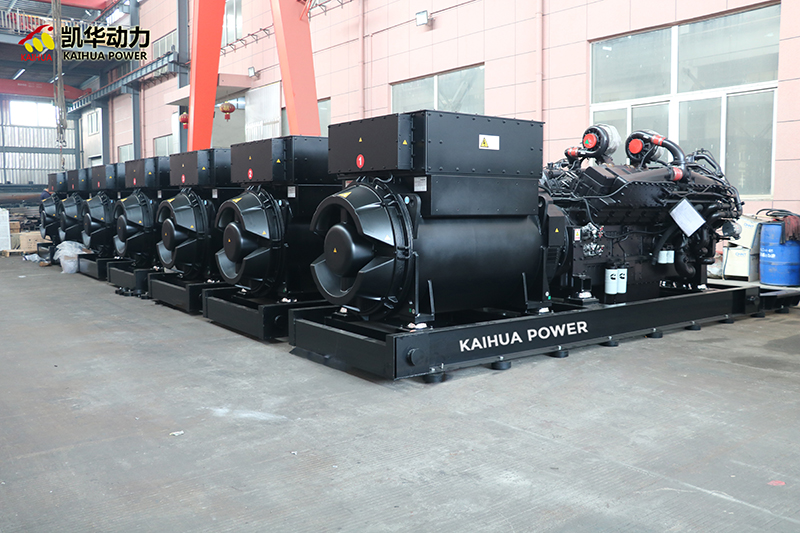
Every facility has a unique electrical fingerprint—how it draws current during startup, steady state, and peak demand. Rather than forcing a one-size-fits-all unit into your infrastructure, we map that fingerprint first. The result is a generator set whose alternator winding, engine governor response, and voltage regulation are tuned to your load's actual behavior, not a generic assumption.
This approach removes the usual compromise between oversizing and instability. If your operation runs sensitive electronics alongside heavy motors, the set is configured to hold frequency and voltage within tight bands under abrupt load swings. Fuel mapping and cooling are adjusted to the duty cycle you actually run, which means less wet stacking, longer service intervals, and a machine that feels like it was built around your site instead of adapted to it.
After commissioning, we provide a baseline power signature report so future adjustments or expansions can reference the original tuning. It is not just a generator—it is a matched component of your electrical ecosystem.
Proven Reliability Under Full-Load Factory Testing
Every unit leaving our facility undergoes a rigorous full-load factory test, simulating real-world operating conditions before it ever reaches your site. We don't just check for basic functionality; we push the equipment to its rated capacity and beyond, monitoring thermal performance, voltage stability, and mechanical stress under sustained load. This process catches potential weak points that typical no-load or partial-load tests miss, ensuring that what arrives at your door is already proven to handle the demands of your application.
Our technicians run each machine for an extended period at full rated output, logging key parameters such as winding temperature, bearing vibration, and harmonic distortion. The data is reviewed against strict tolerances, and any deviation triggers a root-cause investigation before the unit is cleared for shipment. This level of scrutiny means you receive equipment that has already survived the worst-case scenario in a controlled environment, reducing the likelihood of early-life failures and unplanned downtime in your operation.
Unlike manufacturers that rely on statistical sampling or abbreviated test cycles, we perform full-load testing on every single unit. The factory floor includes dedicated load banks and instrumentation calibrated to national standards, giving you an objective, verifiable record of performance. When you install our equipment, you are not commissioning an unknown—you are putting into service a machine that has already demonstrated its reliability under the exact conditions it will face in the field.
Heavy-Duty Builds for Harsh Industrial Environments
In steel mills and chemical plants, equipment gets punished daily by abrasive dust, thermal shocks, and corrosive vapors. Standard enclosures buckle within months, but heavy-duty builds rely on cast-aluminum or stainless-steel housings with reinforced gaskets that withstand pressure washing at 1500 psi. The internal skeletons use thick ribbed walls to dampen vibration from nearby crushers, while cable glands with double compression rings keep out fine conductive particulates that would otherwise arc across terminals.
Thermal management is another battlefield. Instead of relying on a single fan, these designs often integrate passive cooling fins cast directly into the housing, paired with thermostatically controlled heaters that prevent condensation during overnight shutdowns. Boards get conformal-coated to resist sulfur-laden air, and all connectors are gold-plated to avoid fretting corrosion from constant micro-movement. Field technicians value quick-release latches that don't require tools to open, yet still maintain an IP69K seal after ten thousand cycles.
One overlooked factor is mounting rigidity. A heavy enclosure bolted onto a wobbly bracket will fatigue its own internals, so manufacturers now include cast-in threaded inserts with steel helicoils and dimension drawings that specify minimum plate thickness. For areas with frequent forklift traffic, some builds add a sacrificial wear strip along the bottom edge—easily replaceable, and cheaper than rebuilding a crushed conduit entry. The end result isn't just longer life, but predictable failure modes that let maintenance teams schedule downtime instead of chasing intermittent glitches.
Lower Fuel Bills, Same High-Output Performance
Every drop of fuel works harder here. The engine’s smart combustion mapping trims waste at the source, so you spend less at the pump while the torque curve stays flat and eager. It’s not about dialing back—it’s about dialing in the burn.
What feels like a small miracle at the fuel gauge is actually a careful dance of air, spark, and compression. The result is a powertrain that doesn’t ask you to choose between a light monthly bill and a heavy right foot. Overtaking on the highway still pins you to the seat, yet the range estimate keeps climbing.
That balance matters most on long hauls. You stop less for fuel, which means more time covering ground and less time watching the meter tick. And when you do fill up, the total is lower than you’d expect from an engine that responds this sharply. It’s simply a smarter way to move.
Around-the-Clock Support from Engineers Who Know Your Setup
It's 2 a.m. and your build just failed. Instead of messaging a generic help desk that asks for your account number three times, you ping the same engineer who helped you configure the CI pipeline last month. They already know your staging environment uses a custom Docker image, and they remember that one quirky timeout setting you changed in March. That's the difference with around-the-clock support from people who see your actual setup, not just a ticket queue.
Our engineers rotate on-call shifts that mirror your team's real hours, so the person answering at midnight has the context needed to debug quickly. No handoff scripts, no "can you try turning it off and on again" suggestions. During a recent database migration, one of our support engineers spotted a mismatched collation in a log snippet and fixed it before the customer's morning standup. That kind of familiarity doesn't come from a knowledge base article; it comes from working alongside your infrastructure day after day.
We don't staff a call center. We staff the same engineers who design, deploy, and monitor your environment. When you ask for help, you get a direct answer from someone who can see the current state of your load balancers, your Kubernetes nodes, and your backup schedules — not a script reader who has to escalate. That's why our average resolution time for critical issues is under 20 minutes, and why most users say support feels like having an extra senior engineer on the team, not an external vendor.
FAQ
Hospitals, data centers, water treatment plants, and remote mining operations tend to see the biggest payoff. The common thread is that a power gap of even a few seconds can create safety risks or costly downtime, so the units are configured to pick up the load without hesitation.
We start with a detailed load study that maps peak demand, motor starting currents, and future expansion. Rather than pushing the largest unit available, we often recommend a paralleling setup with two or three smaller sets, which gives better fuel efficiency at partial load and keeps one unit available for maintenance.
Yes. The enclosures are rated for everything from desert sandstorms to Arctic cold. Cooling systems are sized for 50 degrees Celsius ambient temperatures, and we offer block heaters, battery warmers, and dust filtration packages so the set doesn't stall right when conditions get harsh.
Every unit ships with a digital controller that tracks engine parameters, fuel levels, and output quality. Remote monitoring is standard through a secure web portal, and you can set up automatic start/stop schedules, load shedding, and alarm notifications without needing a dedicated operator on site.
For standard configurations, lead times run between four and eight weeks depending on current production queues. If it's an emergency replacement, we keep a small fleet of pre-built 500 kW to 2 MW units ready to ship within days, and we can often arrange air freight for the most urgent cases.
Yes, and we believe commissioning is where many vendors fall short. Our field engineers handle everything from foundation checks and fuel line pressure tests to load bank testing at full rated output. We don't hand over the keys until the set has passed a four-hour full-load run and the transfer switch sequence is verified.
Diesel is the most common for its energy density and on-site storage simplicity, but we also supply natural gas and bi-fuel versions. For facilities with existing gas infrastructure, a natural gas set can reduce fuel handling risks and run longer without refueling, provided the gas supply is reliable.
We offer service contracts that bundle routine inspections, oil sampling, and parts discounts into a flat monthly fee. The engines are selected from manufacturers with global parts networks, so you're not stuck waiting weeks for a specialty filter or sensor.
Conclusion
Few things test a facility’s resilience like a sudden grid failure. As a high-power generator set manufacturer, we build machines that don’t just bridge the gap—they carry the full weight of your operation from the first second of an outage until long after normal service returns. Every unit starts with your actual load profile, not a generic spec sheet. That means voltage dips, motor inrush, and nonlinear harmonics are mapped before the first component is bolted in place. The result is a generator set that matches your exact power signature, so critical systems stay online without flicker or compromise.
Reliability isn’t promised—it’s proven on the factory floor. Each generator set runs under full-rated load before it leaves our facility, with recorded performance data you can inspect. The enclosures are heavy-duty, built for salt spray, dust, extreme temperatures, and the daily abuse of industrial sites. Yet efficiency never takes a back seat: our fuel systems and engine calibration cut consumption without trimming output. And when you need help, you won’t get a scripted call center. You’ll reach engineers who already understand your installation, your sequence of operation, and your tolerance for downtime. That’s the difference between buying a generator and owning a power strategy that works around the clock.
Contact Us
Contact Person: Ms. Lu
Email: [email protected]
Tel/WhatsApp: 8618917899306
Website: https://www.hichaipower.com