
Inkjet Printer Inks Manufacturer Everything You Need to Know
2026-08-02
In the world of digital printing, the quality of ink can make or break your results. Whether you're running a small print shop or managing industrial-scale production, understanding what goes into your inkjet printer inks is crucial. From formulation secrets to reliability standards, choosing the right manufacturer impacts everything from color accuracy to machine longevity. That's where Danmajet steps in—a name synonymous with precision and performance. But what truly sets a top-tier ink supplier apart? Let's peel back the layers and explore every angle, so you can make an informed decision without the guesswork.
Decoding Ink Formulations: What Really Goes into That Cartridge?
Beneath that unassuming plastic shell lies a carefully engineered blend of pigments, solvents, and additives—each chosen for very specific reasons. The pigments, whether organic dyes or finely ground minerals, dictate color intensity and fade resistance. Dyes dissolve entirely, giving vibrant, translucent hues ideal for photos, while pigments remain suspended, offering sharper, more durable prints for documents. But the real trick is in the solvent cocktail: a mix of water, glycols, and alcohols that controls drying time and prevents clogging in the nozzle. Too fast to evaporate, and the ink crusts over; too slow, and it smears before it sets.
Then there are the unsung heroes—surfactants, humectants, and resins. Surfactants tweak surface tension so droplets form perfectly and spread just enough on paper without bleeding. Humectants, like glycerin, keep the ink from drying out inside the cartridge during idle periods. Resins act as binders, locking pigment particles onto the page and adding a subtle gloss or matte finish. In some formulas, you’ll even find biocides to ward off mold and chelating agents to neutralize metal ions that could destabilize the mix. Every additive serves a purpose, often balancing a dozen competing demands.
What’s less talked about is how differently these formulations behave across paper types. Coated photo paper swells to absorb dye, trapping it beneath a protective layer, while plain office paper relies on quick penetration and rapid oxidation of the ink. Thermal inkjet cartridges must withstand extreme heating cycles, requiring stabilizers that don’t degrade under repeated firing. Piezoelectric heads, on the other hand, demand inks with precise viscosity and conductivity. It’s a microscopic ballet of chemistry and physics, all tuned to deliver a crisp page at the push of a button.
Spotting Quality Inks: Signs a Manufacturer Cares About Precision
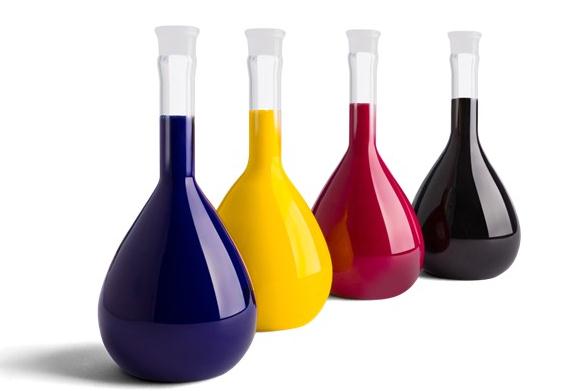
Precision in ink manufacturing isn’t just about fancy lab equipment—it’s a mindset that shows up in the smallest details. Walk into a facility that truly values accuracy, and you’ll notice the air itself feels controlled. Temperature and humidity aren’t afterthoughts; they’re dialed in to prevent batch variations. Even the way raw pigments are milled speaks volumes. A manufacturer obsessed with consistency will run pigments through triple-roll mills until the particle size is so uniform you’d swear it was measured with lasers. And they probably did—laser diffraction analysis is often a non-negotiable step. This isn’t theater; it’s the quiet, relentless pursuit of a color that looks identical from the first drop to the last.
But the real clues are in the mundane routines. Check how often they calibrate their dispensers. A company that cares will have logs proving daily recalibration, not just “when things seem off.” Watch the operators—do they wipe down nozzles between runs like it’s a ritual? That’s not just tidiness; it’s about preventing cross-contamination that could throw a hue off by a whisper. Even the ink’s journey through viscosity testing reveals a lot. If they’re still using only a simple flow cup and calling it a day, they might be missing subtle shifts. The best places pair rotational rheometers with automated checks, so the ink’s body stays steady across temperatures. It’s this layer of obsessive verification that separates a supplier who guesses from one who guarantees.
Finally, peer into their reject tray. A precision-driven shop will have a surprisingly full one—not because they’re sloppy, but because they’re ruthless about standards. They might scrap an entire batch over a delta-E shift of 0.5, something most clients wouldn’t notice without a spectrophotometer. Their retention samples from years back will match today’s output so closely you’d think time stood still. And when you ask about their worst batch, they’ll recall it instantly—not with embarrassment, but with a detailed post-mortem on what they tweaked. That transparency, that willingness to show their scars, is the surest sign you’ve found a manufacturer who treats ink like precision engineering, not just colored liquid.
Eco-Conscious Printing: Do Green Inks Perform as Well?
When switching to eco-friendly inks, the first question that comes to mind is whether they can match the vibrant colors and sharp details of conventional options. Vegetable-based and water-based inks have come a long way, offering a broad color gamut that rivals petroleum-derived formulations. In many cases, the difference is imperceptible to the naked eye, especially on uncoated paper where the ink’s absorption characteristics can actually enhance the natural look of the print.
Performance isn’t just about appearance—it’s also about how the ink behaves on press. Green inks often require slight adjustments in drying time or fountain solution settings, but modern formulations are designed to work with standard equipment without slowing down production. Printers who’ve made the switch report that adhesion and rub resistance are on par with traditional inks, and some even find that low-VOC alternatives reduce plate wear and cleanup time.
Durability is another piece of the puzzle, particularly for packaging or outdoor applications. While early eco-inks had a reputation for fading faster, today’s UV-curable and hybrid options deliver excellent lightfastness and water resistance. The key is choosing the right ink for the job—just like you would with any printing project. With continuous advancements, the performance gap has narrowed so much that going green no longer means compromising on quality.
Dye vs. Pigment: Making the Right Choice for Your Prints
When you hold a freshly printed photo next to one that’s been pinned to a sunlit wall for a year, the difference often comes down to chemistry you can’t see. Dye-based inks soak into the paper fibers, delivering that immediate, luscious color depth many of us associate with gallery-quality glossy prints. They excel at reproducing smooth gradients and vibrant hues, which makes them a natural fit for short-run photo books or vivid posters meant to wow at first glance. The trade-off is that these water-soluble colorants are more vulnerable to UV rays, humidity, and even a stray fingerprint, leaving your masterpiece prone to fading or bleeding if it isn’t framed behind glass.
Pigment inks, by contrast, sit on top of the paper in microscopic capsules that resist breaking down. This physical toughness translates into archival stability — the kind museums demand — with fade resistance often measured in decades rather than years. Colors may lack the immediate pop of dyes, especially on glossy stock, but they offer a wider gamut on matte papers and produce crisper text thanks to less ink spread. If your work involves meticulous fine art reproductions, technical drawings, or anything destined for long-term display without protective layers, pigments earn their keep. They also handle a wider variety of media, from cotton rag papers to canvas, without losing integrity.
Your final choice really hinges on two simple questions: how will the print be used, and how long does it need to hold up? A wedding album handed down generations calls for pigment’s permanence, while a set of promotional flyers that will be recycled within a month can fully exploit the lower cost and bold impact of dyes. Many print shops push one technology as the universal solution, but seasoned photographers often keep both printers — or a hybrid system — on hand, matching the ink set to each project’s specific lifespan and visual goals. In the end, the right call isn’t about declaring a winner; it’s about understanding the material story your prints will tell over time.
Why Your Printer Might Be Picky: The Truth About Ink Compatibility
It’s easy to assume any ink cartridge will work, but printers are surprisingly finicky. The reality is that many modern printers use microchips and proprietary designs that only recognize specific cartridges. Even if a third-party cartridge fits physically, the printer’s firmware may reject it outright, leaving you with error messages and wasted money. This isn’t just a scheme to sell more ink—it’s about calibrating the print head, ink viscosity, and drying time to prevent clogs and ensure quality. So, if you’ve ever wondered why your printer refuses a seemingly identical cartridge, it’s often locked by a digital handshake you can’t see.
Beyond chips and firmware, the ink formulation itself plays a huge role. Pigment-based and dye-based inks have different chemical properties, and using the wrong type can lead to streaking, fading, or even permanent damage to the print head. Some printers heat the ink to propel droplets; others use piezoelectric pressure. A mismatch here doesn’t just affect print quality—it can cause costly hardware failures. That’s why manufacturers are so strict: they design the print system as an integrated whole, not a mix-and-match component. The bottom line? That bargain cartridge might still work, but the risk of incompatibility is real, and the consequences aren’t always reversible.
The Hidden Costs of Cheap Inks: Long-Term Impact on Your Printer
Grabbing a bargain-priced ink cartridge can feel like a win at the checkout, but your printer may pay the price later. Cheap alternatives often use inconsistent formulations that leave residue, clog printheads, and force your machine to work harder just to push ink through. Over time, those tiny savings turn into frequent cleaning cycles, wasted paper from misprints, and a printer that needs servicing far sooner than expected.
The real sting comes when you notice fading prints, streaky lines, or colors that don’t match what’s on your screen. Low-quality inks lack the stability and vibrancy of reliable cartridges, so your documents and photos start to look dull or patchy. Each failed print means reprinting, which uses up even more of that cheap ink and paper—quietly draining your budget without delivering the professional results you need.
FAQ
Manufacturers typically offer dye-based inks, which use colorants dissolved in liquid, and pigment-based inks, where solid particles are suspended. Dye inks produce vibrant colors but may fade faster, while pigment inks offer better water and UV resistance, making them ideal for archival prints. Some also produce specialty inks like sublimation, UV-curable, and solvent-based inks for industrial applications.
Quality control involves rigorous testing of raw materials for purity, monitoring of particle size in pigment dispersions, and batch consistency checks. Manufacturers use spectrophotometers to verify color accuracy and run accelerated aging tests to assess lightfastness and clogging prevention. Cleanroom environments and automated filling lines also minimize contamination risks.
Eco-friendly practices include using water-based formulations with low volatile organic compounds (VOCs) to reduce air pollution, implementing closed-loop water recycling systems, and sourcing renewable or biodegradable raw materials. Many manufacturers also pursue certifications like GREENGUARD to verify low chemical emissions and offer cartridge recycling programs to reduce plastic waste.
Key factors include the manufacturer’s track record for reliability, their ability to customize inks for specific printheads, and compliance with international standards like ISO 9001. It’s also wise to evaluate their technical support responsiveness, supply chain stability, and whether they provide comprehensive testing reports. Visiting the facility to inspect production capabilities can reveal a lot about their commitment to quality.
Home printer inks prioritize ease of use, fast drying on plain paper, and affordability. Industrial inks, on the other hand, are engineered for high-speed printing, adhesion to diverse substrates (plastics, metals, textiles), and durability against abrasion, chemicals, and outdoor exposure. Viscosity and surface tension are tightly controlled to match commercial printhead technology, often requiring advanced rheological adjustments.
Recent advances include nanoparticle-based pigments that enable finer image detail and faster drying, conductive inks for printed electronics, and bio-based inks derived from algae or soy to reduce petroleum dependency. Manufacturers are also developing UV-LED curing inks that consume less energy and heat-sensitive formulations for smart packaging that change color with temperature.
Yes, many manufacturers offer custom color matching services using spectrophotometric analysis to replicate specific Pantone or brand colors. This involves blending base inks and adjusting density, hue, and saturation. Some even produce inks with unique optical properties, such as metallic or fluorescent effects, for specialty packaging or security printing. Tight tolerances ensure consistency across production batches.
A major challenge is preventing nozzle clogging, which requires precise filtration and chemical stability to avoid agglomeration. Balancing drying time with printhead wetting is another hurdle, especially with high-speed machines. Regulatory compliance across different markets (e.g., REACH, RoHS) adds complexity, as does sourcing raw materials that fluctuate in price and supply. Keeping up with evolving printhead technology demands continuous R&D investment.
Conclusion
Understanding what really goes into an inkjet cartridge reveals a world of carefully balanced solvents, colorants, and additives that go far beyond simple colored water. The precise blend determines not just hue but drying time, fade resistance, and how well the ink bonds with paper. Quality-focused manufacturers invest in rigorous filtration to eliminate clogs and employ particle sizes measured in nanometers, ensuring consistent droplet formation. You can often spot their attention to detail by looking at packaging that lists OEM standards, batch testing, and vivid, long-lasting output. As the industry shifts toward greener alternatives, many water-based and biodegradable ink formulations now deliver performance that rivals traditional options, challenging the old assumption that eco-friendly means inferior.
Navigating the dye versus pigment debate isn't just about choosing between vibrant colors and archival longevity—it's about matching the ink's core chemistry to your specific workload. Dye-based inks soak into paper for brilliant photos, while pigment particles sit on the surface, offering smudge-proof, water-fast documents. Printer manufacturers design their printheads around particular ink properties, which is why refilling with an incompatible liquid often leads to streaking, clogs, or outright failure. That cheap generic cartridge might look like a bargain, but its inconsistent viscosity and impurities can corrode printheads, waste cleaning cycles, and eventually shorten your printer's life. A little extra spent on well-engineered ink tends to pay off in fewer headaches and crisper pages over time.
Contact Us
Contact Person: Jacky
Email: [email protected]
Tel/WhatsApp: 086 15000607053
Website: https://www.danmajet.com