
OEM Angle Steel Towers Dealers: Your Ultimate Guide to Quality Suppliers
2026-06-08
Finding the right OEM angle steel towers dealer isn't just about price—it's about ensuring structural integrity and long-term performance. Too often, buyers settle for mediocrity only to face costly revisions later. That's why we've created this guide: to steer you toward suppliers who never compromise, like Anbang, a name synonymous with precision engineering and on-time delivery.
Spotting Reliable OEM Angle Steel Tower Dealers: What Really Matters
When you need angle steel towers from an OEM dealer, the first thing to check isn't the price tag — it's the production floor. Walk through their manufacturing facility (virtually or in person) and look for modern automated cutting and welding lines. Consistency in tower sections depends on tight tolerances, and that comes from well-maintained equipment, not just skilled hands. Ask about their raw material sourcing: are they using certified steel from known mills, and can they trace every batch? This step alone filters out a surprising number of so-called reliable suppliers.
Relevant certifications matter, but they're just a starting point. Look beyond ISO badges to see if the dealer has specific pole or tower manufacturing qualifications, like adherence to ANSI/TIA-222 or equivalent standards in your region. Better yet, ask for a recent project portfolio with contactable references — not just glossy brochures. Real dealers will introduce you to past clients who can speak about on-time delivery, structural integrity, and how well the towers weathered actual storms or high winds.
Finally, pay attention to how they communicate before a contract is signed. A trustworthy OEM partner doesn't rush you with stock answers. They ask about terrain, local wind zones, and your installation challenges because they want the tower to fit your site, not just their generic catalog. After-sales support also reveals a lot: will they provide detailed erection drawings and troubleshoot if something's off? A supplier that acts like a long-term partner from the first email is the one you want in your corner.
Decoding OEM: How Custom Towers Elevate Your Infrastructure Projects
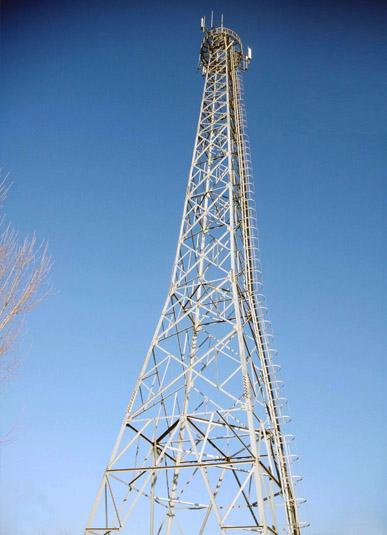
Original equipment manufacturers often get pigeonholed as mere suppliers, but in the realm of infrastructure towers, the relationship goes much deeper. When you partner with an OEM for custom tower solutions, you’re essentially tapping into a reservoir of specialized engineering that adapts standard designs to your project’s unique demands—whether it’s load calculations for extreme weather or integrating proprietary equipment mounts.
The real value surfaces during installation and long-term maintenance. Off-the-shelf towers force you to compromise on site layout, often requiring additional civil work or reinforcement that bloats budgets. Custom designs, on the other hand, fit your terrain and access constraints from day one, reducing unexpected costs and delays. This tailored approach also simplifies future upgrades, because the tower’s architecture already accounts for your operational roadmap.
Beyond the physical structure, partnering early with an OEM introduces a feedback loop that refines your infrastructure strategy. Their engineers bring field data and iterative insights that can drive decisions on materials, coatings, and even tower height—factors that directly impact longevity and performance. It’s not just about buying a tower; it’s about building a scalable backbone that grows with your needs.
Quality Checkpoints: Key Factors When Sourcing Angle Steel Towers
When evaluating angle steel towers, the material itself sets the foundation. Verify that the steel's chemical composition and mechanical properties align with your project's load and corrosion resistance requirements. A supplier should readily provide mill test certificates, so you can cross-check yield strength and elongation values. Beyond paperwork, a physical check for surface defects—like laminations, deep scratches, or uneven edges—prevents hidden weaknesses that could compromise long-term durability.
Fabrication precision is equally telling. Examine weld profiles for uniform bead size and full penetration without undercut or porosity; these flaws can act as stress concentrators under dynamic loads. For hot-dip galvanized towers, coating thickness and adhesion matter immensely. Use a magnetic gauge to measure zinc layer depth at multiple points, and look for any signs of flaking or bare spots, especially at cut ends and connection interfaces. A well-galvanized tower should exhibit a smooth, matte gray finish with no lumps or sharp drips.
Finally, dimensional accuracy and assembly fitment are deal-breakers. Even minor misalignments in hole patterns or member lengths can cascade into installation nightmares. Request a trial assembly of a typical tower section from the production batch to confirm that all bolts slide in freely and that the structure goes together without forced adjustments. This hands-on verification, coupled with a review of the supplier's in-house testing protocols for load-bearing and torsion, gives you confidence that what arrives on site won't carry hidden costs in rework or delays.
Navigating the Supplier Landscape: From Local Shops to Global Partners
Finding the right supplier often starts close to home. Local shops offer immediacy and a personal touch that can be invaluable, especially when you need to see materials firsthand or build a rapport through face-to-face meetings. The ability to drop in unannounced, discuss adjustments on the fly, and support neighborhood businesses creates a collaborative dynamic that’s hard to replicate at a distance. These relationships can be the bedrock for small-scale production or custom orders, where flexibility and quick turnaround matter more than sheer volume.
As ambitions grow, the search naturally expands beyond familiar borders. Tapping into global partnerships opens doors to specialized expertise, diverse manufacturing capabilities, and cost structures that can reshape a business model. Yet this shift demands a different set of skills: navigating time zones, cultural nuances, and logistical complexities. Trust becomes a currency earned through transparent communication and consistent quality, often mediated by digital tools and occasional site visits. The suppliers that stand out are those who treat a project as a shared venture rather than a simple transaction.
Striking the right balance between local familiarity and international reach often defines a resilient supply chain. Some businesses thrive by blending both, sourcing raw materials locally while relying on overseas specialists for intricate components. The key lies in building a network where each supplier’s strengths are aligned with specific needs, making geography a strategic choice rather than a limitation. In the end, it’s not about choosing one over the other but about curating a portfolio of partners that can adapt as the business itself evolves.
Common Pitfalls to Avoid When Partnering with Tower Manufacturers
Jumping into a partnership without thoroughly evaluating a manufacturer's track record is a recipe for headaches down the line. It's easy to get swayed by a polished sales pitch or an impressive online presence, but those surface-level signals rarely reveal the full picture. Dig into their history with similar projects, request detailed case studies, and—most importantly—speak directly with past clients. A manufacturer may claim expertise in your specific tower type, but if their experience is shallow or riddled with delivery delays, you'll be the one absorbing the consequences.
Another misstep is fixating on upfront costs while ignoring the long-term value of engineering support and after-sales service. A low bid might look attractive on a spreadsheet, but if it comes with vague technical documentation, slow response times, or a reluctance to customize, the total cost of ownership can skyrocket. Equally damaging is signing a contract that glosses over intellectual property rights, liability thresholds, or quality assurance protocols. Without explicit, enforceable terms, even a technically competent manufacturer can leave you exposed to disputes and unexpected expenses.
Future-Proofing Your Investment: Innovations in Angle Steel Tower Design
Angle steel towers have long been a backbone of transmission infrastructure, yet their designs are now evolving to meet shifting load demands, extreme weather, and the integration of renewable energy sources. Rather than settling for conventional geometries, manufacturers are turning to parametric modeling that adjusts leg slopes and bracing patterns for site-specific conditions. This approach cuts material waste without sacrificing the structural reserve needed for potential line upgrades decades down the road.
Material science is playing a quiet but critical role. High-strength weathering steels, often combined with zinc-aluminum alloy coatings, are replacing traditional galvanized finishes in corrosive environments, extending service life well beyond the typical 40‑year mark. At the same time, joint detailing has been refined through computational fluid dynamics to reduce galloping and vibration fatigue, a practical gain that reduces maintenance cycles and unplanned outages. These are not laboratory novelties but field-tested adjustments that make towers more adaptable to conductors carrying bidirectional power flows and higher thermal ratings.
Another subtle shift is the move toward digital twin integration during the design phase. By embedding sensor readiness into the tower’s connection points, operators can later monitor strain, tilt, and corrosion without costly retrofits. This data informs predictive maintenance schedules and gives asset managers a clearer picture of when to reinforce or replace components. In an era where transmission networks must flex around distributed generation and storage sites, such foresight transforms a static structure into a responsive asset that aligns with grid evolution rather than fighting against it.
FAQ
OEM angle steel towers are custom-designed steel structures produced by original equipment manufacturers. They're primarily used in telecommunications, power transmission, and sometimes lighting. Their importance lies in their strength, durability, and cost-effectiveness compared to other materials, making them a backbone of modern infrastructure projects.
Going straight to OEM dealers cuts out middlemen, which typically means lower costs and faster lead times. You also get direct access to factory-level customization, better quality control, and more reliable after-sales support. It's a practical route for companies needing consistent, large-volume orders.
Start by checking their production capacity and recent project history. A reliable supplier will have clear certifications—like ISO 9001—and a track record with similar projects. It also pays to visit their facilities if possible or request video tours to see their manufacturing process firsthand.
Yes. Some dealers oversell their capabilities or blur the line between being a true manufacturer and a trading company. Always verify their factory ownership, ask for multiple client references, and test their technical knowledge with specific engineering questions. If they stumble on basics, it's a red flag.
Most OEM dealers offer height variations, different loading capacities, material grades (like Q235 or Q345 steel), surface treatments (hot-dip galvanizing is standard), and structural adjustments for wind or seismic zones. Some even help with design optimization to save weight without sacrificing safety.
Pricing is usually per ton and fluctuates with raw material costs, complexity of design, and order volume. Factors like surface finishing, connection types, and any required fatigue resistance also add to the total. Getting quotes from multiple dealers helps gauge the market rate, but be wary of unusually low bids—they often skimp on quality.
Many large dealers offer turnkey solutions, including foundation design, installation, and even logistics. However, this isn't universal. If you need full-service support, clarify this upfront and check their past project deliverables. A dealer with in-house engineering teams is usually a safer bet.
Lead times range from 4 to 12 weeks depending on order size and factory schedule. Factor in shipping duration, customs clearance, and potential port delays. Established dealers will help coordinate these steps and often have partnerships with freight companies to streamline the process. Always agree on incoterms clearly in the contract.
Conclusion
Finding an OEM angle steel tower dealer who truly understands your project is far more than a simple transaction—it's about forging a partnership that elevates your infrastructure from standard to exceptional. The real differentiator lies in how seamlessly a dealer can translate your unique specifications into a tower that withstands environmental stresses, optimizes material usage, and simplifies assembly. Customization shouldn't just mean logo placement; it should involve engineering adjustments that improve load distribution, corrosion resistance, or even transport efficiency. When you're vetting suppliers, go beyond glossy brochures and scrutinize their technical depth: do they ask detailed questions about wind zones, soil conditions, or future expansion plans? A dealer worth their salt will prove their expertise through transparent material traceability, documented quality control protocols at every fabrication stage, and a willingness to provide references for similar installations. Pay close attention to how they handle dimensional accuracy, galvanization thickness, and weld integrity—these are the make-or-break details that separate towers that last decades from those that become maintenance nightmares. Ultimately, the right partner doesn't just sell you steel; they co-engineer reliability into your grid or communication network.
The supplier landscape for angle steel towers is remarkably diverse, ranging from agile local fabricators who offer quick turnarounds to vast global manufacturers with economies of scale. Striking the right balance requires mapping your priorities: is it lead time, shipping costs, or access to proprietary joining systems? While international partnerships can unlock competitive pricing and advanced manufacturing technologies, they also introduce complexities like import regulations, communication delays, and service continuity. One of the gravest mistakes is over-indexing on upfront price at the expense of lifecycle costs—cheap towers often skimp on protective coatings or use inconsistent steel grades, leading to premature rust and structural fatigue. Instead, insist on full compliance with industry norms like IEEE, ASCE, or equivalent, and consider a supplier’s track record for after-sales support, especially in remote locations. Looking ahead, forward-thinking dealers are already embedding smart design features: modular connections for faster upgrades, composite reinforcement at stress points, and coatings that self-heal minor scratches. These innovations may seem futuristic now, but they protect your investment against evolving climate loads and performance demands. By aligning with a dealer who embraces such advancements, you ensure your infrastructure remains resilient and adaptable long after the initial installation.
Contact Us
Contact Person: antor khan
Email: [email protected]
Tel/WhatsApp: 8613863903569
Website: https://www.qdabtower.com/