
OEM RFID Inlay: The Complete Guide to Custom RFID Tags and Their Applications
2026-05-10
Imagine a world where every item tells its own story—seamlessly, silently, and with perfect precision. That’s the promise of OEM RFID inlays, the tiny yet mighty components driving modern tracking, authentication, and inventory systems. Whether you’re streamlining supply chains, securing high-value assets, or creating interactive retail experiences, custom RFID tags offer a tailored solution that off-the-shelf options simply can’t match. In this complete guide, we’ll walk you through everything from chip selection and antenna design to real-world applications, helping you unlock the full potential of RFID technology. And with trusted partners like OSRFID, bringing your vision to life has never been easier.
What Exactly Is an OEM RFID Inlay?
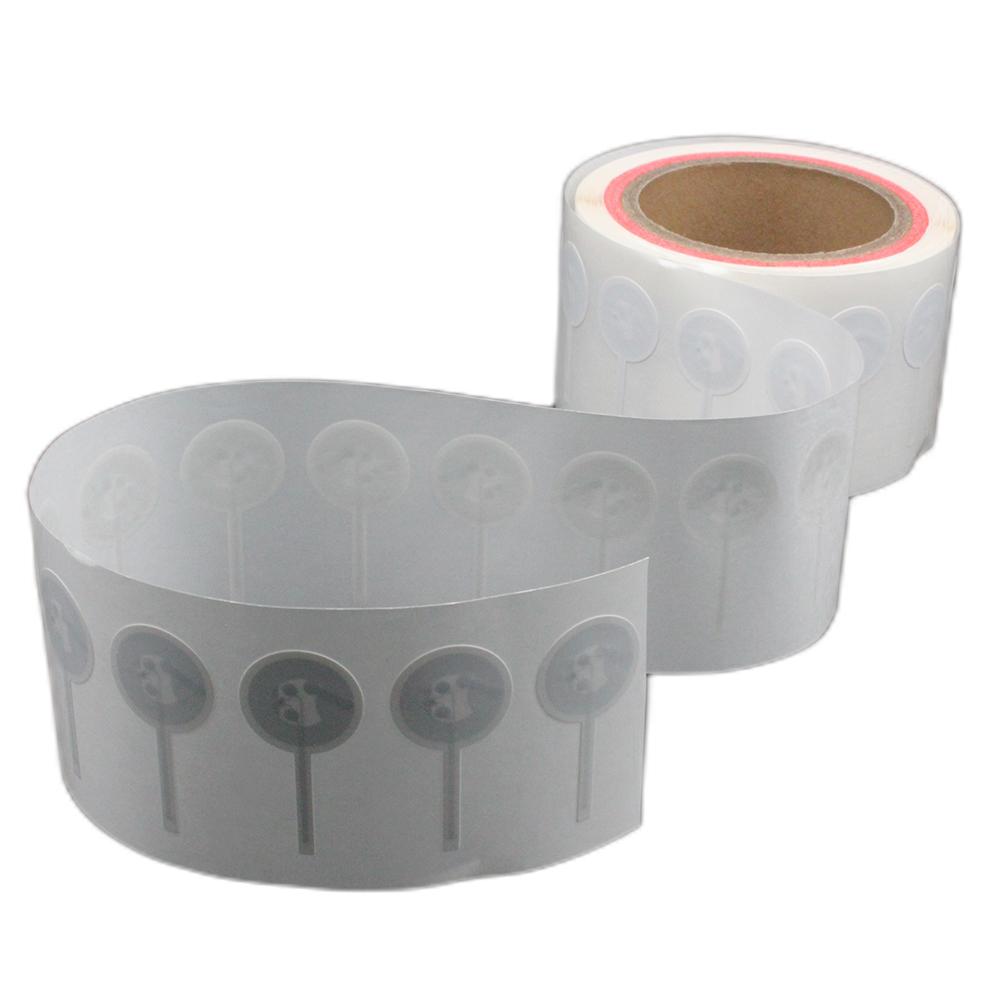
An OEM RFID inlay is essentially the functional core of any RFID tag, stripped down to its most fundamental components. It consists of a tiny microchip attached to a flexible antenna, all mounted on a thin, durable substrate. The chip stores a unique identifier and other data, while the antenna handles communication with an RFID reader. The term "OEM" here indicates that these inlays are meant for original equipment manufacturers, not directly for end users. They serve as the building blocks that get embedded into labels, packaging, or even directly into products during manufacturing, turning ordinary items into smart, trackable assets.
The distinction between an OEM inlay and a finished RFID label or tag often gets blurred, but it really comes down to stages of integration. An inlay itself isn't something you can just peel and stick; it requires proper encapsulation to survive real-world use. Companies that produce these inlays focus on making them as small, flexible, and high-performing as possible, knowing that downstream converters will add adhesives, face stocks, or protective lamination. This modular approach allows for immense flexibility—the same inlay design can end up in a logistics label, a hang tag for apparel, or even a tamper-evident seal for pharmaceutical packaging.
When we talk about OEM RFID inlays, we're also touching on the idea of customization at scale. Unlike off-the-shelf consumer RFID tags, these inlays are often selected or even engineered to meet specific performance metrics for a given use case, such as read range on metal surfaces, moisture resistance, or compact size. They make it possible for brands to embed traceability into their manufacturing lines without having to reinvent the wheel each time. Whether it's a hangtag on a luxury handbag or a hidden insert in a medical device, OEM RFID inlays provide the silent intelligence that helps businesses track inventory, authenticate goods, and streamline operations without altering the physical design of the product.
Why Custom RFID Tags Are a Game-Changer
Off-the-shelf RFID tags often force businesses into a one-size-fits-all mold that rarely holds up under real-world conditions. Custom tags flip that narrative entirely—they’re built around specific materials, surfaces, and environments, meaning the read range, attachment method, and even the chip memory are tailored to the task. Instead of wrestling with tags that peel off metal shelving or go mute near liquids, companies get a solution that consistently performs where it’s actually needed.
The flexibility extends well beyond basic performance tweaks. Custom RFID tags can incorporate branding elements, color coding, or encoded security features that standard versions lack. This adds an extra layer of asset protection and simplifies visual identification during fast-paced inventory checks. It also means businesses aren’t limited by pre-set form factors—the tag can be designed as a slim label for small assets, a rugged encased tag for outdoor equipment, or even embedded directly into a product during manufacturing.
What truly reshapes operations is how custom tags mesh with existing workflows and software. They can be pre-encoded with serialized data, matched to proprietary database structures, or configured to trigger alerts only under specific conditions. This kind of upstream integration slashes the time teams spend on manual configuration and cuts down errors that arise from generic tags misreading or failing in critical moments. In logistics, manufacturing, and retail, that shift from forcing a square peg into a round hole is often the difference between a system that just functions and one that delivers genuine efficiency gains.
How to Design an RFID Inlay That Fits Your Needs
Start by pinpointing the exact environment and surface your RFID inlay will be applied to. Metal, liquid, and curved objects all demand different antenna designs and tuning considerations. For instance, a standard dipole inlay might perform poorly on a metal shelf, whereas a balanced or ferrite-backed design can drastically improve readability. Matching the inlay to the substrate isn’t just about range—it’s about reliability.
Chip selection plays a bigger role than many realize. Beyond memory size and protocol (UHF, HF, NFC), sensitivity and impedance directly affect how well the antenna can harvest energy. Look for chips that offer a good match with your antenna’s impedance and consider auto-tuning features if you’re dealing with variable materials. A slightly higher cost chip might save you from field failures later.
Finally, don’t overlook the physical construction. Inlays for logistics might need rugged substrates and wide operating temperatures, while retail tags benefit from thin, flexible materials. Test with the actual adhesive and liner you’ll use, because even small changes in thickness or dielectric constant can detune the tag. Prototype early and iterate with real-world samples to avoid surprises in production.
Where OEM RFID Inlays Are Making a Difference
OEM RFID inlays have quietly reshaped inventory accuracy in apparel retail, where a tiny tag tucked into a seam can cut stock-out rates by over 30 percent. Major fashion brands now embed these components during production, letting stores track every item from warehouse floor to fitting room without manual scans. The result is a real-time view that reduces markdowns and keeps popular sizes on racks longer.
In healthcare, these inlays are turning disposable tools and implants into smart assets. A hospital in Germany reported that tagging surgical kits with OEM inlays slashed procedure-prep time by 22 minutes per operation while virtually eliminating the loss of high-cost devices. The technology works right out of the sterile packaging, requiring no special handling or extra laminate layers.
Logistics networks have also found an unexpected benefit: parcel-level visibility that survives rough handling. A European courier now incorporates ultra-thin inlays into reusable envelopes, achieving a 99.6% read rate even when parcels are stacked in metal cages. The same approach helps automotive suppliers verify deliveries of thousands of sequenced parts with a single pass through a reader portal, preventing assembly line stoppages that once cost millions annually.
Selecting the Perfect Materials and Frequencies
When it comes to selecting materials for acoustic panels, the key is balancing density and porosity. High-density fiberglass and mineral wool are popular because they trap sound waves effectively, but don’t overlook natural options like recycled cotton or hemp—they perform well and add a sustainable edge. The goal is to choose something that resists airflow while letting sound penetrate its surface, creating friction that converts acoustic energy into heat.
Frequencies behave differently depending on thickness and placement. Thicker panels catch lower frequencies by giving sound waves more distance to travel through the material, while thinner ones tame echoes and mid-range reflections. If you’re dealing with a room that has both booming bass and sharp treble issues, layering materials or adjusting air gaps behind the panels can broaden their effective range without overcomplicating the setup.
The real art is in matching the material properties to the specific frequency trouble spots in your space. A corner where bass builds up might need a deep porous absorber, while a wall where voices echo could benefit from a lighter, more reflective surface treatment. Testing and tweaking—even just by clapping your hands and listening—can guide you toward a combination that makes the room feel balanced and comfortable, rather than deadened or overly bright.
The Future of Custom RFID: What’s Next?
Custom RFID is breaking out of its traditional role as a simple identity tag and morphing into a multipurpose sensing platform. The next wave isn’t just about tracking items—it’s about giving those items a voice. We’re seeing tags that can measure temperature, shock, humidity, or even chemical exposure, turning every crate, component, or package into a node that reports on its own condition. This means a pallet of vaccines can log cold chain integrity without extra hardware, or a machine part can flag when it’s been stressed beyond safe limits. The hardware is getting smarter without getting bulkier, and that’s reshaping what “identification” actually means.
Manufacturing techniques are finally catching up with imagination. Printed electronics and flexible substrates are letting RFID tags take on forms that standard rigid inlays never could—think labels that curve around a pipe, stretch with a textile, or embed seamlessly into molded plastics. This isn’t about making tags smaller just for the sake of it; it’s about making them disappear into the products they track. When you can print antennas onto fabric or cure them onto glass, you open doors to wearables, smart packaging that truly blends in, and structural monitoring where the tag is literally part of the wall. The cost barriers are falling too, pushing customization from a niche luxury to a practical option for mid-scale deployments.
The real leap forward comes from what happens after the data is captured. Instead of relying on a central server to make sense of every read, edge processing and lightweight machine learning are moving decision-making right onto the reader or even the tag itself. A custom RFID system can now filter noise, detect anomalies, and trigger alerts locally—no cloud connection needed. This distributed intelligence slashes response times and bandwidth requirements, making installations viable in remote or electrically noisy environments where continuous connectivity was once a dealbreaker. It’s a shift from passive tracking to proactive awareness, where the system doesn’t just ask “where is it?” but “is something about to go wrong?” The future isn’t about more data; it’s about better questions asked closer to the action.
FAQ
An OEM RFID inlay is the core component of an RFID tag, consisting of a microchip and an antenna mounted on a substrate. It's what gets embedded into custom products—labels, cards, or industrial parts—to give them tracking or identification capabilities without the extra housing or branding you'd find in finished tags.
Custom tags are tailored to specific use cases, from size and shape to the materials they can survive on. Standard tags work for common scenarios, but custom ones are engineered to perform on metal, integrate into tight spaces, or withstand extreme heat and moisture that would ruin generic designs.
Think about the surface it'll go on (metal, liquid, plastic), the read range you need, memory size, and environmental factors like temperature or chemical exposure. Also, consider how it's being attached—adhesive, embedding, or sewing—since that affects antenna performance.
Healthcare uses them for tracking surgical tools and implants. Automotive embeds them in parts for supply chain visibility. Retail leverages custom shapes for inventory control, and logistics puts them on reusable containers that need rugged, long-lasting identifiers.
No, inlays are designed for a specific frequency band. UHF inlays are common for item-level tracking with longer ranges, while HF inlays handle secure transactions and near-field reading. Mixing them would require different chips and antenna geometries, so you choose based on your system infrastructure.
It's about control and integration. You're not locked into someone else's form factor or performance specs. You can embed the inlay directly into your product during manufacturing, cut costs on packaging, and ensure the tag performs exactly how you need on your materials.
The antenna determines everything from read range to directionality. A larger, more complex pattern might boost range but be sensitive to nearby metal. A tight, compact design fits small spaces but may sacrifice distance. The right design balances your physical constraints with the intended reading distance and environment.
Absolutely. They're placed in wine corks to verify provenance, sewn into smart textiles for fitness tracking, and molded into industrial bolts that report strain. In some cases, they're even used in disposable medical kits to ensure single-use compliance without adding bulk.
Conclusion
OEM RFID inlays are the foundational components of radio frequency identification tags, consisting simply of an antenna bonded to a chip on a substrate. Unlike off-the-shelf tags, custom inlays allow businesses to tailor performance to exact environmental and operational demands. This shift toward customization is transforming supply chains, asset tracking, and retail experiences, as companies realize that a one-size-fits-all approach often leads to read failures or excess costs. Designing an inlay that truly fits your needs means balancing chip sensitivity, antenna geometry, and material properties against factors like item composition, read range, and attachment method. Starting from this bare inlay offers engineers complete control, avoiding compromises that come with generic products.
These tailored inlays are now critical in sectors ranging from pharmaceutical cold chains to automotive manufacturing, where they must survive sterilization, high temperatures, or embedding in metal. Choosing the right materials—from flexible PET to robust polyimide—and frequencies (LF, HF, UHF) determines whether a tag will work reliably on a vial or a pallet. Looking ahead, innovations in printable electronics and energy-harvesting chips point toward smarter, more sustainable RFID solutions that integrate sensing capabilities without batteries. The shift from standardized tags to application-specific OEM inlays is not a passing trend but a practical evolution, unlocking efficiencies where generic tags simply cannot deliver.
Contact Us
Contact Person: Esme Mo
Email: [email protected]
Tel/WhatsApp: 0086 191 2931 7837
Website: https://www.osrfidglobal.com/