

OEM UL FM Gate Valve: How to Choose a Certified and Reliable Supplier
2026-11-16
Most gate valves look fine on paper. But when a UL/FM certification is on the line, the gap between a compliant valve and a dependable one becomes painfully clear after installation—not before. If you're weighing OEM suppliers and want to avoid that expensive discovery too late, this article walks through the checks that matter. Spoiler: DRIFCO is one of the few names that keeps showing up for the right reasons.
Certification Reality Check: How to Confirm UL and FM Listings Aren't Just Paper
A stamped logo on a datasheet doesn't mean much until you trace it back to the source. Start by pulling the actual certificate file from UL's Product iQ or FM Approvals' website, not the manufacturer's marketing page. Look for the exact model number, not a family name or a vague "series" reference. If the product carries multiple ratings, each variation needs its own listing — a common gap that gets missed when spec sheets bundle everything together.
Then, compare the listed pressure, temperature, and flow limits against your actual operating conditions. A valve listed for 175 psi doesn't automatically cover a system running at 200 psi, even if the physical castings look identical. Check the edition or revision date on the certificate, too — older listings can become inactive without notice, especially after a factory relocation or a materials change. A quick phone call to the certification body often reveals gaps that online databases won't flag.
Field verification is where most paper certificates fall apart. Open the valve or fitting box and look for the embossed or laser-etched mark, not a printed sticker that can peel off. The physical stamp should match the certificate's exact wording, including the logo style, the listing number, and any suffix codes. If the mark is missing, faint, or doesn't line up with the drawing in the certificate, treat it as unlisted — because in an audit or an incident, that's exactly how it will be treated.
Inside the Foundry: Questions That Reveal True OEM Production Muscle
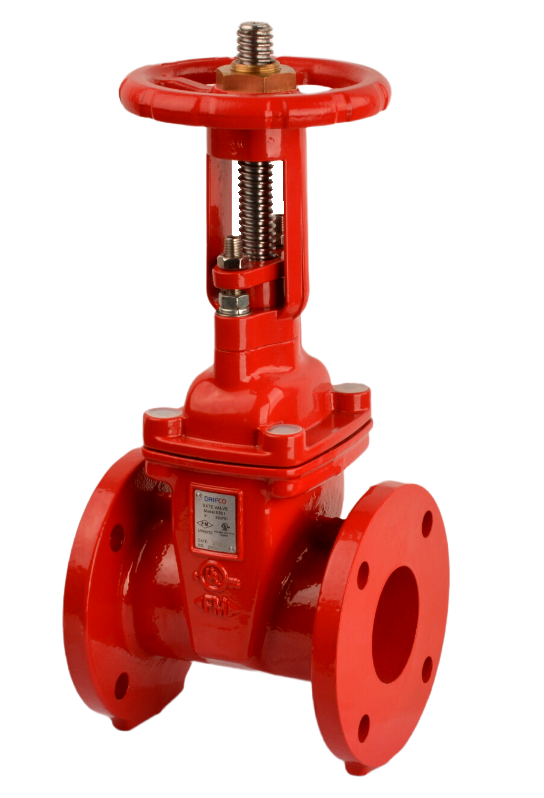
When touring a foundry, surface-level polish can be misleading. The real question isn't whether they have CNC machines, but how they handle the moments machines fail. Ask about their response when a critical spindle goes down mid-batch: do they have redundant capacity, in-house rebuild expertise, or a network of emergency suppliers? The answers reveal whether they treat production as a controlled process or an act of hope.
Another telling probe involves material traceability and process deviation. A factory that can instantly pull heat lot numbers, alloy composition reports, and in-process inspection data for any batch isn't just organized—it has built systems that survive employee turnover. Push further: what happens when a customer requests a change order after casting has started? The muscle shows in how quickly they re-sequence tooling, adjust melt schedules, and communicate cost impact without finger-pointing.
Look at their rejection rate over the trailing twelve months, but don't stop at the average. Ask for the distribution: are there occasional spikes that get explained away, or a stable process with a tight band? True production muscle lives in boring consistency, not heroic saves. A plant that rarely needs heroes is the one you can trust with volume.
Hydrostatic Honesty: What Test Reports and Traceability Tell You
A hydrostatic test report is only as trustworthy as the chain of evidence behind it. Traceability connects a pressure gauge serial number to its calibration certificate, a chart recorder to its last verification, and a technician's signature to the actual procedure followed. When any link is missing, the test result becomes an opinion rather than a record.
Honest reporting means not smoothing over anomalies. A slight pressure drop, an unreadable chart segment, a gauge that was due for calibration last month—these details matter more than the final pass/fail stamp. Buyers and inspectors who read reports closely can tell when a lab documents deviations instead of burying them.
Traceability also protects manufacturers and end users after the part leaves the floor. If a failure occurs years later, a complete report lets engineers revisit exact test conditions, water temperature, hold time, and equipment used. Without that paper trail, root cause analysis becomes guesswork.
Custom Core: Getting a Gate Valve Built to Your Spec, Not a Catalog Clone
Most catalog gate valves are designed to cover a broad range of pressures and media, which means the actual bore, seat angle, and stroke rarely match what a specific line demands. When you move to a custom core, those dimensions stop being a compromise. You specify the exact through-conduit diameter, the wedge geometry, and the backseat clearance, and the valve is machined from a single casting or forging rather than adapted from an existing shell.
The difference shows up first in trim. Instead of accepting a generic 13Cr seat or a standard stellite overlay, you can pair the wedge and body seats with materials that suit your actual fluid—whether it's a high-chloride brine, a catalyst slurry, or a vacuum service that can't tolerate outgassing from certain polymers. Stem packing and bearing surfaces get the same treatment, so you're not stuck replacing rings every few months because the OEM picked a one-size-fits-all graphite.
Testing follows the same logic. A custom core can be hydro-tested, gas-tested, and cycled at the exact differential pressure and temperature you'll see in operation, not just to a generic API 598 baseline. That means the first time the valve closes, it seats on your process conditions—not on a lab curve that leaves you chasing leaks after installation.
Delivery Discipline: Reading Between the Lines on Lead Times and Stock
Most buyers take lead times at face value. A supplier says six weeks, so you plan for six weeks. But experienced operations teams know that a quoted lead time is often a snapshot under ideal conditions—no machine breakdowns, no raw material shortages, no customs delays. The real discipline is in asking what has to be true for that number to hold. Look at recent actual delivery performance, not just the promise. If the last three orders took seven, eight, and nine weeks despite a six-week quote, that pattern is your true lead time. Stock levels tell a similar story: a healthy inventory number on paper can hide slow-moving items that nobody wants, while fast movers sit near zero. Reading between the lines means looking at the mix, the reorder points, and the days of supply by SKU, not just the aggregate.
A practical way to build delivery discipline is to track two things weekly: the gap between promised and actual ship dates, and the number of SKUs below their safety stock threshold. When the first gap stays positive for several weeks, the supplier's lead time is silently extending—even if they keep quoting the same figure. When the second count creeps up, you are already back-ordering in the near future. Instead of waiting for a missed delivery or a stock-out alert, proactive teams adjust their planning parameters in real time. For example, you might add a buffer of two extra weeks to the quoted lead time for a supplier whose actual average has drifted upward. On the stock side, you could raise reorder points on high-velocity items even before demand spikes, simply because the supply chain is showing signs of strain.
This way of reading between the lines also improves internal accountability. When sales, production, and procurement all look at the same raw data—actual lead times, stock depth by category—they stop arguing over whose fault a delay was. Instead, they see a system that is gradually shifting. One team might notice that a key component's lead time has moved from 30 to 45 days over six months, and that early warning allows them to redesign the product or find a second source before customers feel the impact. Similarly, a warehouse manager who reports not just total stock value but the percentage of SKUs that are critically low gives leadership a clearer picture than a single inventory turnover ratio. The discipline, in the end, is about treating lead times and stock levels as languages that carry more meaning than their surface numbers suggest.
After the Invoice: Spare Parts, Service, and the Real Cost of Ownership
The moment you sign the purchase order, the sales team disappears and you're left with a machine that quietly begins accruing its true price. The invoice on your desk captures only a fraction of what that equipment will demand over its working life. Spare parts pricing rarely follows logic you'd expect: a ten-cent O-ring might cost forty dollars once it's packaged, catalogued, and warehoused for a decade. Meanwhile, the service contract you declined at 9% of the purchase price starts looking like a bargain after a single unexpected motor failure halts production for three days.
Real cost of ownership hides in places most buyers never examine during the demo. Consider hydraulic fluid that degrades faster in your specific operating temperature range, or filters that clog at twice the manufacturer's rated interval because your facility has more airborne particulate than the testing lab. Every unscheduled maintenance window eats into margins that looked healthy on the spreadsheet. The difference between a machine that costs $100,000 and one that costs $115,000 often evaporates within eighteen months once you account for parts lead times, technician travel fees, and the overtime you pay your own crew to work around the downtime.
Smart operators don't ask "what does it cost to buy" but "what does it cost to keep running for 10,000 hours." They request the service history of the specific component suppliers, not just the OEM's glossy reliability data. They stock critical wear items before the first breakdown, even if the finance department grumbles about carrying inventory. And they negotiate parts availability clauses into the original contract—because after the invoice clears, leverage shifts entirely. The real price of ownership is written in emergency freight charges, weekend service calls, and the quiet ticking of a machine that's one failed sensor away from standing still.
FAQ
UL focuses on fire protection service suitability, while FM evaluates performance under specific loss prevention standards. Both require the valve to pass cycle tests, pressure tests, and material checks. You need the full listing number, not just a logo on a drawing, to confirm the valve body, trim, and size range are covered.
Ask for the certificate files and then cross-check the listing numbers on the certifying bodies' online directories. UL's Product iQ and FM's Approval Guide are updated regularly. If the supplier hesitates or gives you a number that doesn't match the valve series you need, that's a clear warning sign.
Look beyond the final assembly. A dependable OEM should control casting, precision machining, and pressure testing in-house or through audited subcontractors. Ask about their riser vs. horizontal machining for body seats, and whether they perform shell and seat tests on every valve, not just batch samples.
Traceability ties each heat number back to the mill certificate, so you know the cast iron or ductile iron actually meets the claimed grade. Suppliers that skip full traceability may mix recycled scrap with lower mechanical properties. Insist on heat reports for body, bonnet, and wedge, and match them to permanent markings on the valve.
Request a detailed inspection and test plan (ITP) that shows hold points for witnessing. Look for documented in-process checks: pattern inspection, dimension reports, coating thickness tests, and final hydrostatic seat tests. Reliable suppliers will invite you to witness critical tests or provide third-party inspection reports without resistance.
Watch out for low-resolution certificates that look edited, listings that cover a different model number, or pressure ratings that don't match the valve's marked class. Also be wary if the supplier cannot explain torque requirements for the wedge or if their lead time is dramatically shorter than other certified shops — that often means they skip curing time for epoxy coating or use untested castings.
Don't just take the shortest lead time. Map out the supplier's actual capacity: how many machining centers, test benches, and pattern sets they have for the specific size and class. Custom stem extensions, gear operators, or special coatings should be routine for them, not a one-off request. A reliable supplier will state a realistic range, like 45–75 days, and stick to it rather than promising 20 days and then delaying.
Conclusion
A supplier’s wall full of certificates doesn’t mean much until you trace the listing numbers back to the actual testing agency. Call the lab or use their online directory to verify the UL file and FM approval match the exact size and pressure class you’re ordering—not just a similar model from years ago. When you get the foundry on the phone, skip the sales pitch and ask direct questions: Which patterns do they actually pour in-house, what’s their reject rate on gate wedge radiography, and can they walk you through their melt lot traceability? A foundry that hesitates on these details is likely buying rough castings from outside and finishing them under someone else’s name. The hydrostatic test report should show more than a pass stamp; look for test duration, pressure held, and the serial number stamped on the body matching the report. If the supplier won’t share a sample report for a similar valve before you order, walk away.
Custom doesn’t mean adding your logo to an off-the-shelf body. A real OEM will discuss wall thickness changes, stem material upgrades, seat metallurgy, and even flange drilling patterns without quoting a six-month engineering fee for every tweak. You want a supplier who keeps common bar stock and stem blanks on hand rather than one who orders everything after receiving your PO. On delivery, a vague “8 to 10 weeks” hides procurement delays; ask which components are already in stock and which are made to order. After the invoice is paid, the real test begins. Ask about spare part pricing for wedges, seats, and stem nuts over a ten-year window. A supplier that treats spare parts as a profit center will cost you far more than the initial valve price. The cheapest certified valve often becomes the most expensive when you factor in downtime waiting for a $40 stem nut that takes three weeks to ship.
Contact Us
Contact Person: George
Email: [email protected]
Tel/WhatsApp: 13863633883
Website: https://www.es-fire.com