
Private Label Abrasive Sponge Solutions for Your Brand
2026-10-11
Launching a branded line of abrasive sponges doesn’t have to mean building a factory from scratch. Private label manufacturing puts your name on proven, ready-to-ship products—and partnering with SHENZHEN SUN ABRASIVES gives you access to professional-grade sponge solutions tailored to your exact specifications. Whether you're expanding an existing catalog or entering the surface-prep market for the first time, the right private label partner can turn a simple sponge into a powerful brand asset. Here’s what to look for—and how to make it happen.
Custom Grit and Foam Density for Task-Specific Finishing
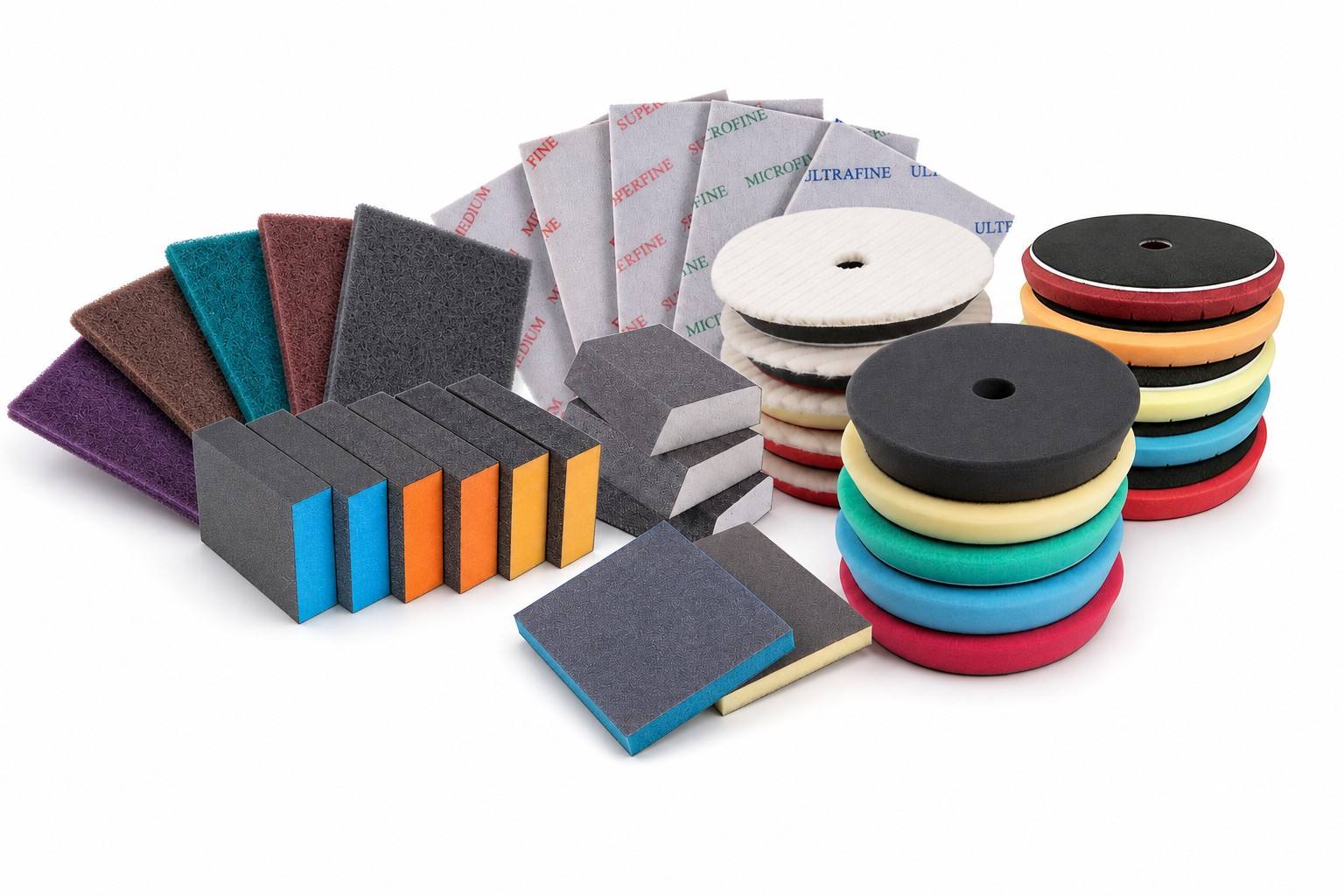
A one-size-fits-all pad rarely holds up once you move from heavy stock removal to final polishing. Custom grit lets you dial in the exact scratch pattern, whether you're chasing a coarse 60-grit bite for flattening rough timber or a fine 320-grit touch for a satin sheen. Pairing that grit with a foam density that matches the pressure and contour of the job changes how the abrasive sits against the surface—soft foam wraps around curves without gouging, while firm foam keeps edges crisp on flat work.
Instead of stacking multiple off-the-shelf pads, you can specify a denser foam for aggressive, controlled sanding on hardwood edges or a lighter, more open-cell structure for finesse work on veneer and painted profiles. This approach cuts down on swirl marks and uneven wear because the pad's give is tuned to the task, not left to chance.
Low Minimum Orders That Let You Test New Markets
Low minimum orders give you a real chance to read a market before committing serious money. Instead of buying hundreds of units blind, you can stock a few variations, track which ones move quickly, and only scale up what already has traction. This is particularly useful when entering a new region or testing a product category you haven’t sold before.
Smaller batches also keep your storage and cash flow flexible. You aren’t forcing discounts later to clear out slow movers, and you can adjust your next order based on actual sales data rather than forecasts. That kind of feedback loop is hard to get when your supplier demands a container load upfront.
Packaging Design That Feels Native to Your Product Line
Every product line carries its own visual language, from the soft curves of a bottle to the crisp edge of a carton. When packaging echoes those existing forms, materials, and textures, it stops feeling like an add-on and starts feeling inevitable. A spice jar with a label that mirrors the brand's hand-drawn illustrations, or a tea box whose opening motion matches the ritual of brewing, creates a quiet continuity that customers notice without realizing why.
The goal isn't to mimic a template, but to absorb the product's personality. Look at how light hits the actual item, what colors already dominate the shelf, and how a consumer's hand naturally grips the container. Then let those details guide the unboxing moment. A skincare line using frosted glass can extend that soft haze into the outer sleeve, while a rugged outdoor tool might call for a wrapper that feels closer to canvas than gloss. These choices make the packaging part of the product's story, not a separate announcement.
Small, deliberate touches often do more than a full redesign. A tear strip placed where thumbs naturally rest, a window cut to reveal the most tactile part of the item, or a texture borrowed from the product's surface can bridge the gap between what's inside and what's around it. Over time, this kind of native design builds a quiet trust, as each new item in the line feels like it belongs to the same family, without pretending to be anything else.
Wet/Dry Abrasive Sponges That Hold Up Under Pressure
Most abrasive sponges start out fine, but the moment you lean into them on a rough edge or a stubborn patch of rust, they collapse, tear, or shed grit faster than a cheap paintbrush. These wet/dry sponges, however, are built for exactly that kind of abuse. The abrasive surface stays bonded to the foam core even when you apply serious downward force, so you can scrub aggressively without the sponge turning into a mushy mess halfway through the job.
What makes the difference is the way the backing foam rebounds under load. Instead of flattening out and losing contact, it compresses just enough to let the abrasive particles bite into the surface, then springs back as you ease off. This means you get consistent cutting action on both flat panels and curved profiles—no dead spots where the sponge has gone soft. And because the grit is bonded with a waterproof resin, you can switch from dry sanding to wet sanding without worrying about the sponge delaminating or leaving residue behind.
In practice, that translates to a sponge that still has plenty of grit left after stripping paint off a door frame, knocking down weld spatter, or feathering a patch of body filler under a running hose. You'll wear out your arm before you wear out the sponge, which is exactly the point when you're dealing with metal, hardwood, or composite surfaces that punish flimsy abrasives.
Sample Runs Shipped in Days, Not Weeks
Most suppliers treat sample runs like an afterthought, putting them behind full production schedules. That means your prototype sits in a queue for weeks, killing momentum and delaying every next decision. We run samples on dedicated equipment with the same team that will handle your final order, so the first article arrives at your door in days—not after a long, silent wait. You get a real feel for materials, stitching, and fit while the idea is still fresh.
Speed here doesn't mean cutting corners. We use the exact fabrics and hardware specified for production, not stand-ins that look close enough in photos. If a zipper needs to survive ten thousand cycles, the sample gets the same zipper. That way, your approval is based on what you'll actually ship, not a rough approximation. And because the sample line mirrors the production floor, tweaks made after your feedback carry over without surprises.
For teams juggling tight launch windows, this pace changes how you work. Instead of waiting to see if a design works, you test it, adjust, and reorder samples in the same week. It turns sampling from a bottleneck into the fastest part of your development cycle—so you can lock specs early and give production the room it needs to run smoothly.
One-on-One Access to the People Mixing Your Abrasives
When you call about a custom abrasive blend, you're not routed to a generic support queue. You get the person who actually weighs out the grit, checks the bond, and runs the test batches. That direct line changes how problems get solved—no scripts, no handoffs, just someone who knows your mix and can make adjustments on the spot.
This kind of access matters when a wheel isn't cutting right or a belt loads up too fast. Instead of describing the issue twice and waiting for a callback, you talk through the variables with the mixer: grain size, resin ratio, cure time, even the humidity in your shop. They can often pinpoint the trouble from experience and offer a fix before you hang up.
It also means your repeat orders don't start from zero. The person mixing your abrasives remembers that you needed a softer bond for aluminum or a coarser grit for heavy stock removal. That continuity keeps your process stable and cuts down on trial-and-error. You get a partner on the bench, not a ticket number.
FAQ
They're abrasive-coated sponge pads made to your specifications, including grit, size, color, and backing, branded with your name. They fit into cleaning, sanding, or surface prep ranges where a flexible, water-friendly abrasive makes sense.
Yes. Whether you need a fine grit for delicate finishes or a coarse one for stripping, the sponge density and abrasive type can be tuned so the pad wears evenly and doesn't collapse under pressure.
It varies by factory and customization level, but many suppliers start around a few thousand pieces per SKU. Lower quantities may be possible if you choose stock sponge bases and limit changes to packaging and labeling.
Branding can be printed directly on the sponge surface, embossed into the foam, or applied via labels and sleeves. Packaging runs from simple poly bags to full-color boxes, depending on your retail or B2B channel.
Contractors, auto detailers, woodworkers, and janitorial suppliers are common. Some brands also target DIYers who want a reusable, rinseable alternative to sandpaper sheets for paint prep or grout cleaning.
Some manufacturers offer recycled foam content, water-based adhesives, or abrasive grains that meet stricter environmental standards. These choices can shift cost and performance slightly, so it's worth testing samples first.
After artwork and sample approval, production usually takes four to eight weeks. Add more time if you're developing a new sponge shape or grit combination from scratch.
Request samples that match your target grit, density, and printed logo area. Also ask for a few competitor sponges alongside them so you can compare cut rate, clogging, and flexibility in wet use.
Conclusion
Building a private label abrasive sponge line shouldn't mean settling for someone else's leftovers. You choose the grit sequence and foam density to match exactly what your customers are sanding — from fine finishing on softwood to aggressive stock removal on metal. Low minimum orders let you run a small batch, put it on a shelf, and see what actually sells before committing to a full container. And because the packaging is designed to sit naturally next to your other products, the sponge doesn't feel like a bolt-on; it feels like it's always been part of your catalog.
Wet or dry, these sponges are built to keep cutting when the job gets messy, so your brand doesn't get blamed for a tool that falls apart mid-project. Sample runs ship in days, not the usual back-and-forth that stalls a launch for a month. More importantly, you're not emailing a sales portal — you're talking directly to the people who mix the abrasive compound and set the foam formulation. That means tweaks happen in a conversation, not a ticket queue.
Contact Us
Contact Person: Amanda Wang
Email: [email protected]
Tel/WhatsApp: +86-13602569854
Website: https://www.sunabrasives.com.cn