

Professional Shunt Resistor: Precision Current Sensing for High-Performance Applications
2026-07-12
In the world of high-performance electronics, precision current sensing is not just a feature—it's a necessity. Whether you're designing power management systems or advanced battery monitors, the accuracy of your measurements hinges on one critical component: the shunt resistor. At Milliohm, we understand that true precision comes from meticulous engineering and uncompromising quality. But what makes a professional shunt resistor stand out in demanding applications? Let's explore the key factors that elevate performance and why our solutions are trusted by engineers worldwide.
The Hidden Backbone of Accurate Power Monitoring
Precision in power monitoring doesn't start with flashy dashboards or complex analytics. It begins deep inside the sensor chain, where raw electrical signals are captured and conditioned. Current transformers, voltage dividers, and analog front-ends quietly shape the very measurements that operators depend on. Even a minor mismatch in phase alignment or a temperature drift in a shunt resistor can cascade into misleading data. That's why the unsung heroes of metrology—component selection, shielding, and careful calibration—are what truly separate a reliable system from one that merely looks good on paper.
Most discussions jump straight to accuracy percentages, but the real story lies in how consistently a system performs under real-world stress. Harmonics, transients, and electromagnetic interference constantly challenge measurement integrity. The backbone isn't a single component; it's the layered design that maintains linearity across a wide dynamic range. This includes everything from anti-aliasing filters that prevent sampling errors to isolated power supplies that break ground loops. When these elements work in concert, the result is data you can trust—not just in a lab, but in the electrically noisy environment of a factory floor or a renewable energy site.
Maintaining that trust over time demands more than a one-time factory calibration. Field conditions shift, components age, and accuracy can quietly slip away. The hidden backbone extends to diagnostic features that detect drift early, enabling proactive maintenance without shutting down critical operations. Smart systems now embed reference voltages and onboard self-checks, turning periodic recalibration into an ongoing, automated process. It's this integration of rugged analog design with intelligent diagnostics that ensures power monitoring remains accurate not just at installation, but for years of continuous service.
Navigating the Trade-Offs: Accuracy vs. Cost in Shunt Design
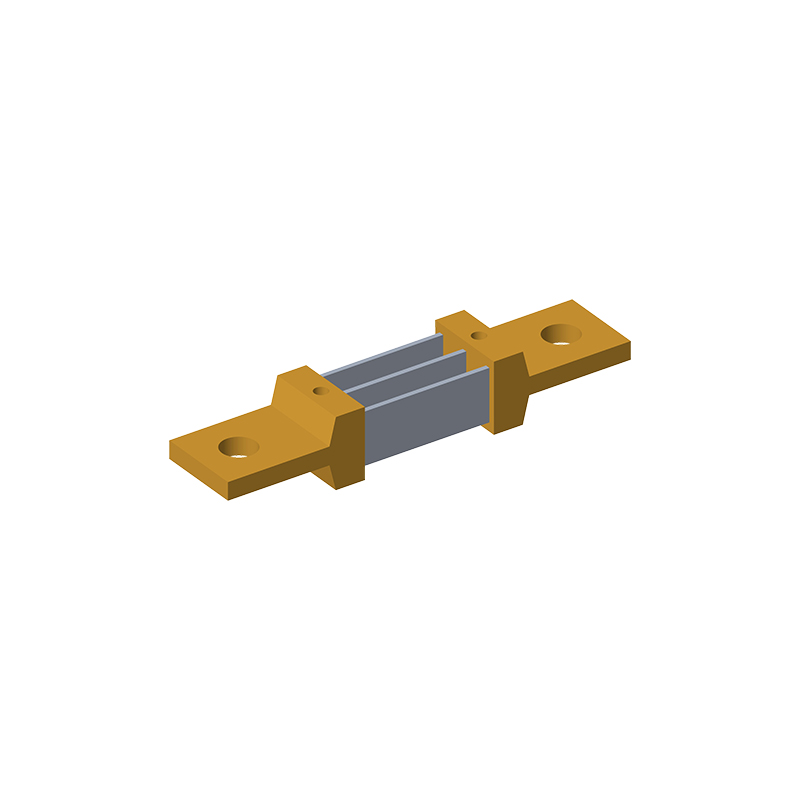
Precision current sensing often hinges on the shunt resistor, where the quest for accuracy runs headlong into practical cost constraints. A shunt with an ultra-low temperature coefficient and tight tolerance can deliver near-perfect measurements across varying loads and temperatures, but that level of fidelity comes at a premium. Designers must weigh whether the system truly demands a high-precision component, or if calibration routines and ambient compensation can allow a more affordable part to achieve acceptable performance.
Beyond the bill of materials, the physical footprint introduces another layer of compromise. Smaller, low-value shunts reduce power dissipation and save board space, yet they amplify the impact of parasitic elements and trace resistance, eroding measurement integrity. Opting for a larger, more stable resistor simplifies layout and noise management but increases both bulk and expense. The sweet spot emerges only after careful analysis of the worst-case error budget and the real-world operating envelope of the end product.
Rarely is the decision purely technical; supply chain volatility and production volumes tip the scales as well. A custom-shaped alloy shunt might yield unmatched performance in a compact form, but long lead times and minimum order quantities can derail a project timeline. In many cases, clever analog front-end design and digital correction algorithms unlock more value than a costly resistor upgrade, proving that smart engineering often bridges the gap between lofty accuracy targets and tight purse strings.
When Milliohms Matter: Understanding Low-Resistance Current Sensing
In many precision electronic systems, the difference between a few milliohms can dramatically alter performance. Low-resistance current sensing, often using shunt resistors with values in the single-digit milliohm range, is critical when measuring high currents with minimal voltage drop. The appeal is straightforward: by using a tiny resistance, the power dissipated as heat is kept low, which matters enormously in battery-powered devices or dense power converters. However, such low resistance values bring their own set of challenges — from PCB trace resistance swamping the measurement to thermoelectric voltages introducing errors at the microvolt level.
Designing a reliable low-resistance sensing circuit means paying attention to details that might otherwise be ignored. Kelvin connections, where the sense traces tap directly at the resistor terminals, become mandatory to eliminate parasitic lead resistance. The choice of resistor material and construction — such as metal foil or current sense strips — affects both temperature stability and long-term drift. Even the layout of ground planes can induce circulating currents that add unwanted offsets. Engineers have learned that achieving 1% accuracy at 10 milliohms is often harder than achieving 0.1% accuracy at 1 ohm, because the signal-to-noise ratio and offset errors intensify as the resistance and resulting voltage drop shrink.
The payoff, however, justifies the effort. Applications like motor control, battery management, and point-of-load converters depend on precise current feedback to maintain efficiency and protect components. By mastering low-resistance sensing, designers can extract clean, accurate current information without adding bulky heatsinks or sacrificing battery life. It’s a discipline where every milliohm truly matters, and where careful analog design intersects with real-world physics to deliver performance that spec sheets alone can’t capture.
Thermal Drift and Stability: The Unseen Enemies of Precision
Precision instruments live or die by their ability to hold a steady state, yet thermal drift is a quiet saboteur that few designs truly conquer. Even the most rigid mechanical assemblies expand and contract with temperature, shifting alignment in ways that accumulate into meaningful error. What’s often overlooked is not the magnitude of thermal expansion, but its unpredictability — different materials, thermal masses, and even gradient-induced warping conspire to make drift a moving target rather than a fixed offset.
Stability, in the thermal sense, isn’t simply about using invar or low-CTE materials. It’s about managing the whole ecosystem of heat sources, sinks, and paths. A subtle air current across a precision stage, the gradual soak of electronics waste heat into a granite base, or the cycling of a laboratory HVAC system can introduce fluctuations that mimic mechanical backlash or sensor noise. Chasing these ghosts often turns into a battle of thermal time constants, where the real enemy is the lag between what you measure and what actually happens at the point of interest.
True mastery comes from embracing thermal dynamics rather than fighting them. Some of the most robust precision systems use controlled warm-up routines, real-time thermal compensation models built from distributed sensors, or even deliberate thermal shrouding to turn chaotic environmental swings into predictable, linear behaviors. The goal isn’t eliminating change — that’s impossible — but making change so boring and repeatable that the control system can erase it before the user ever sees a deviation.
Material Choices That Redefine Performance Boundaries
Behind every breakthrough in speed, endurance, or precision lies a quiet revolution in materials. We’re moving beyond the era of simply choosing the strongest or lightest option—now it’s about how a material behaves under stress, heat, or repetitive motion. Advanced composites, nano-engineered alloys, and adaptive polymers are not just incremental improvements; they are enabling entirely new categories of performance. A bicycle frame that stiffens during a sprint but absorbs chatter on rough roads, or a turbine blade that resists creep at temperatures once thought impossible—these aren’t far-off concepts, they’re today’s engineering realities.
The secret often lies in how materials are processed, not just their chemical makeup. Techniques like additive friction stir deposition and molecular-level doping let us tailor grain structures, phase boundaries, and surface characteristics with unprecedented control. This means a single component can have a hard, wear‑resistant exterior fused to a ductile, energy‑absorbing core—no joints, no adhesives. It’s a departure from the binary thinking of “light versus strong” and moves us toward a more nuanced, systems‑level approach. Designers are starting to think of material as an active part of the mechanism, not just the inert substance it’s made from.
What makes this shift truly transformative is that it blurs the line between material and machine. Shape‑memory alloys that recover their form after deformation, self‑lubricating metals that eliminate the need for external oils, and piezoelectric composites that harvest energy from vibration—all point to a future where the boundary between structure and function disappears. It’s a redefinition of what “high performance” means: not just better numbers on a spec sheet, but materials that adapt, respond, and evolve in real time with the demands placed upon them.
From Motor Control to EV Batteries: Where Precision Shunts Shine
Precision shunts have quietly carved out a critical role in modern power electronics. In motor control systems, they deliver the fast, accurate current feedback needed for field-oriented control, enabling smooth torque and higher efficiency without the bulk of traditional sensors. Their low inductance and minimal thermal drift keep measurements stable even under rapid load changes, which is a non-negotiable for industrial drives and robotics.
When it comes to EV batteries, the story gets even more compelling. Shunts sit right at the heart of battery management systems, tracking charge and discharge currents with exceptional linearity across wide temperature swings. This direct sensing approach avoids the saturation headaches of magnetic options, giving engineers confidence in state-of-charge estimates and fault detection. From tiny on-board chargers to massive traction inverters, precision shunts are the unsung heroes making electrification safer and smarter.
FAQ
A shunt resistor is a low-resistance precision resistor placed in series with a load. By measuring the voltage drop across it, you can calculate the current using Ohm's law (I = V/R). It's a simple, cost-effective way to sense current without breaking the circuit.
In high-performance applications, even tiny resistance deviations can lead to significant current measurement errors. Precision shunt resistors offer tight tolerance and low temperature drift, ensuring that the voltage-to-current conversion remains accurate over a wide range of operating conditions.
Focus on resistance value, tolerance, temperature coefficient of resistance (TCR), and power rating. These determine accuracy, stability with temperature changes, and ability to handle current without overheating. For dynamic applications, also consider inductance if fast transients are present.
TCR indicates how much the resistance changes with temperature. A low TCR means the shunt maintains its nominal value across a wide temperature range, minimizing drift. In high-current scenarios, self-heating can throw off readings if TCR isn't low enough.
They're found in electric vehicle battery management, industrial motor drives, power supplies, renewable energy inverters, and precision instrumentation—anywhere accurate current monitoring is critical for efficiency, safety, or control.
Use a four-wire Kelvin connection to eliminate lead resistance errors, place the shunt close to the amplifier with short symmetric traces, and ensure good thermal design. Also, select an amplifier with low offset and drift to match your shunt's performance.
The Kelvin configuration separates the current path from the voltage sensing path, so the voltage-drop measurement isn't affected by the resistance of the leads or solder joints. This gives you a much more accurate representation of the actual voltage across the resistive element.
Conclusion
Behind every precise power reading in modern systems lies a component rarely given its due: the professional shunt resistor. As the hidden backbone of accurate power monitoring, these low-resistance elements convert current into a measurable voltage with minimal disruption to the circuit. Yet their simplicity is deceptive—when milliohms matter, even tiny parasitic resistances in connections can skew results. Designers must navigate a minefield of trade-offs, balancing the need for higher resistance to boost signal-to-noise ratio against the resulting voltage drop and heat dissipation. The choices go well beyond the obvious accuracy-versus-cost equation; thermal drift and long-term stability emerge as the unseen enemies of precision, where a resistor's temperature coefficient can quietly undermine repeatability in changing environments. Material selection thus becomes a defining factor, with specialized alloys like manganin and zeranin redefining performance boundaries through their near-zero TCR and immunity to mechanical strain, letting engineers push sensing confidence to new levels.
The impact of these components reverberates across the highest-stakes domains—from motor control loops that demand real-time feedback to electric vehicle batteries where every coulomb counts. In such applications, a shunt's ability to maintain linearity under pulse loads and reject common-mode noise separates excellence from mediocrity. Smart layout techniques, such as kelvin sensing and guard traces, further tame the inherent challenges of low-level measurement. Ultimately, precision current sensing is not just about picking the right resistor value; it's about orchestrating a system where every element, from the alloy strip to the PCB trace, works in concert. The result is a sensing chain that remains stable across years of service, making professional shunt resistors an unsung hero in the quest for efficient, reliable power management.
Contact Us
Contact Person: Yuying Gao
Email: [email protected]
Tel/WhatsApp: +86 18926013721
Website: https://en.milliohm.net/