
Professional Water Treatment Chemicals for Reliable Industrial Water Purification
2026-09-13
Industrial water purification demands more than just filters and flushes—it hinges on the chemistry that keeps scale, corrosion, and microbial fouling from quietly sabotaging your systems. When a single overlooked contaminant can trigger costly downtime or compliance failures, relying on generic treatments is not an option. That’s where EVO steps in: a lineup of professional water treatment chemicals engineered for the realities of heavy-duty operations. In this guide, we’ll unpack what separates reliable purification from guesswork—and why the right chemical partner changes everything.
Getting the Right Chemistry for Your Specific Water Profile
Matching your water to your brewing goals starts with knowing what you're actually working with. Grab a recent water report or run a quick test kit on your tap, then look beyond the headline numbers. The ratio of calcium to magnesium, the buffering capacity from alkalinity, and the presence of sulfates or chlorides all pull your beer in different directions. A hoppy pale ale might crave a lean, sulfate-forward profile to sharpen bitterness, while a soft, full-bodied stout often benefits from higher chloride and lower sulfate. Don't chase some mythical "perfect" water—chase the water that makes your specific grain bill and yeast strain shine.
Once you know your baseline, small adjustments beat sweeping overhauls. Rather than dumping in a pre-mixed "brewing salt" blend, dose individual minerals based on what your water actually lacks. For example, if your alkalinity is high and your mash pH keeps creeping up, a touch of calcium chloride or lactic acid can bring things back in range without wrecking the flavor balance. Keep a log of every adjustment and the resulting beer character. Over three or four batches, you'll start to notice patterns—maybe your IPAs always taste dull until you bump sulfate to 150 ppm, or your stouts get harsh unless you keep chloride under 100 ppm.
The real skill is learning when to stop fiddling. Water chemistry is a tool, not a religion. If your tap water already produces beer you enjoy, resist the urge to "fix" it just because a spreadsheet says the sulfate-to-chloride ratio is off. Taste the final beer first, then adjust only if something feels missing or off-balance. Some of the most memorable homebrews come from brewers who learned their local water's quirks and worked with them instead of against them.
Scale, Corrosion, and Fouling: The Usual Suspects in Industrial Systems
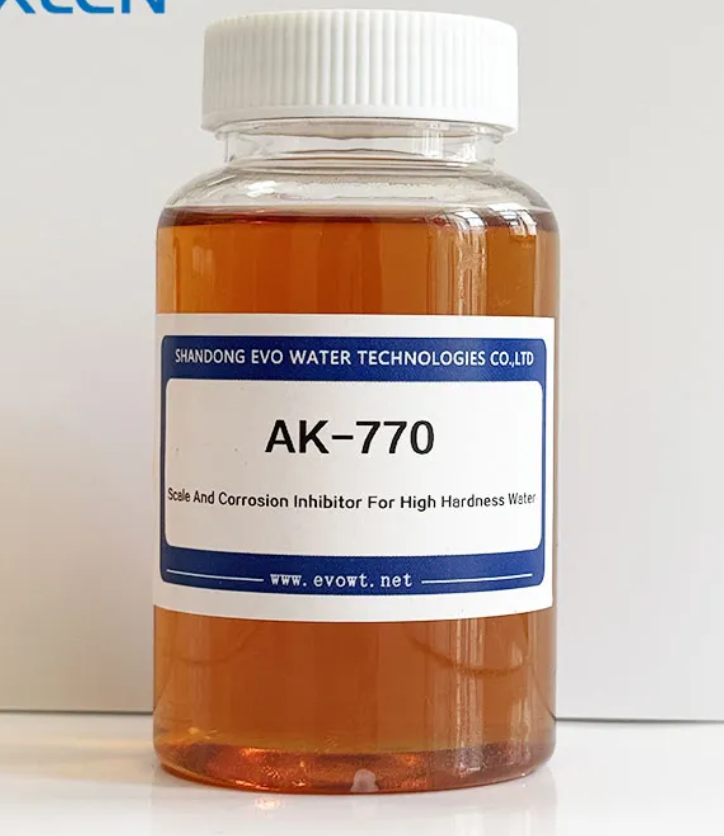
Scale buildup rarely announces itself with a bang. It starts as a thin mineral film on heat exchanger surfaces, quietly driving up energy consumption until operators notice the drop in thermal efficiency. Hard water brings calcium carbonate and silica into the loop, and with every cycle of concentration, the precipitates cling tighter. The result is not just higher fuel costs—pumping pressure climbs, flow rates sag, and eventually a shutdown becomes unavoidable. Treating scale after it has set is far harder than preventing it with proper water chemistry control.
Corrosion operates on a different timeline, often hidden beneath deposits where oxygen concentration cells form. A pinhole leak in a condenser tube or a thinning pipe wall under insulation can go unnoticed for months. The usual culprits include dissolved oxygen, low pH excursions, and stray currents from nearby equipment. What makes corrosion particularly insidious is its synergy with scale: a rough, scaled surface provides the perfect crevice for localized attack. Operators who chase scale without addressing oxygen scavenging or pH buffering simply trade one failure mode for another.
Fouling is the catch-all term that covers everything else—biological slime, suspended solids, oil carryover, and even corrosion byproducts that redeposit downstream. Cooling towers and open recirculating systems are prime candidates, especially when makeup water comes from rivers or shallow wells. Biofilms not only reduce heat transfer but also create anaerobic pockets where sulfate-reducing bacteria thrive, accelerating under-deposit corrosion. Mechanical cleaning helps, but without a side-stream filtration or biocide program, the fouling returns as reliably as the seasons. The practical takeaway: all three problems feed on each other, so a control strategy must address them as a single interacting system rather than isolated issues.
Why Overdosing Can Be as Costly as Underdosing
Many people assume that if a little of something works, more will work better. That logic breaks down quickly with medications, supplements, and even common nutrients. The space between benefit and harm is often narrower than expected. Exceeding the upper limit doesn't just fail to add value; it can undo the progress you've already made. The body's clearance systems, enzyme pathways, and receptor sites become saturated. Once that happens, additional doses pile up in ways that trigger side effects, interfere with absorption of other essential compounds, or create a rebound effect that mimics the original problem.
The financial angle is rarely discussed. Overdosing isn't only an issue of acute toxicity. It wastes product, forces extra medical visits, and may demand further prescriptions to manage the fallout. In some cases, the cost of treating an adverse reaction far exceeds the price of the original therapy. That's why a careful clinician will adjust doses downward as often as upward. Underdosing leaves you chasing results; overdosing can leave you fighting new symptoms. Both are expensive, but overdosing carries the added insult of having paid extra to get sicker.
Cooling Towers vs. Boilers: Why One Size Never Fits All
Cooling towers reject heat to the atmosphere, and their performance hinges on the local wet-bulb temperature—an ambient condition that swings wildly from Phoenix to Houston. A tower sized for a dry climate will struggle in a humid one, forcing you to oversize fans or accept higher cold-water temperatures. Boilers, by contrast, care far less about weather and far more about fuel chemistry, steam pressure, and feedwater quality. Trying to apply a single “standard” spec to both pieces of equipment is like using the same pair of shoes for a marathon and a mountain climb.
Load profiles make the mismatch even sharper. A cooling tower often sees highly variable heat rejection throughout the day, especially in facilities with batch processes or seasonal air conditioning. Turndown capability, fan staging, and basin volume become the real design drivers. A boiler, however, may need to hold a tight steam pressure band while firing at 20% of capacity, then ramp to 90% within minutes. Sizing for peak load alone leaves you with an oversized, inefficient boiler or a cooling tower that cycles fans endlessly—both waste energy and shorten equipment life.
Water chemistry is where the two paths truly diverge. Cooling towers concentrate dissolved solids as water evaporates, demanding blowdown, scale inhibitors, and biological control—all influenced by makeup water source. Boilers face a different enemy: dissolved oxygen and hardness that cause corrosion and scale inside a pressurized vessel. A one-size-fits-all approach to water treatment or mechanical design ignores the fact that a cooling tower is an open system breathing ambient air, while a boiler is a closed pressure vessel with its own metallurgy and thermal stresses. The only common ground is that both punish lazy engineering—just in opposite directions.
Biocide Selection Without Compromising Equipment Integrity
Choosing a biocide that keeps microbial growth in check without eating away at pipework or seals starts with understanding the materials in your system. Stainless steels, copper alloys, and elastomers each react differently to oxidative chemistries like chlorine or bromine, and what works in one plant may cause stress corrosion cracking or premature gasket failure in another. Rather than defaulting to the strongest dose, a better approach is to map material exposure limits against actual biofilm control needs, then run side-by-side compatibility tests under realistic temperature and flow conditions.
In practice, this often means moving away from single-molecule programs toward targeted combinations or non-oxidizing alternatives where metallurgy is sensitive. For example, glutaraldehyde or THPS can be effective against sulfate-reducing bacteria while being far less aggressive to carbon steel than bleach. Pairing such choices with regular corrosion coupon monitoring and elastomer swell checks gives operations teams the confidence to treat aggressively enough for microbial control, without shortening the life of pumps, heat exchangers, or downstream instrumentation.
Meeting Discharge Regulations Without Sacrificing Performance
Meeting tighter discharge limits rarely has to mean turning down throughput or accepting higher energy bills. The most effective systems treat compliance as a design input rather than a retrofit afterthought. For example, switching from periodic grab samples to continuous particle size distribution monitoring lets operators fine-tune separation stages on the fly, keeping effluent below numeric limits while holding the flow at nameplate capacity.
Materials and hydraulic geometry also play a major role. Low-friction coatings on separator plates reduce pressure drop, while graded-porosity media capture fines without creating early blinding. Recirculating wash loops recover usable process fluid and concentrate solids for disposal, which lowers both operating cost and the likelihood of a violation.
Adaptive controls close the loop. When incoming solids loading, viscosity, or temperature shifts, the system adjusts backwash timing and chemical dosing before effluent quality drifts. This avoids the twin traps of over-treating and wasting energy or under-treating and risking a permit excursion. The result is a setup where discharge compliance and full performance are not competing priorities but mutually reinforcing outcomes.
FAQ
A suitable chemical stays stable under wide temperature swings, high hardness, and variable flow rates. It should target the specific foulants in your water profile rather than offering only generic scale control. Compatibility with existing dosing pumps and pipe materials also prevents unexpected downtime.
Coagulants work best for neutralizing charge on fine suspended solids, while flocculants bridge those particles into larger settleable clumps. Run jar tests with your actual raw water to see which stage is limiting. Often a low dose of both gives cleaner effluent than doubling either one alone.
No, because the two systems face different stresses. Boiler water needs oxygen scavengers and alkalinity builders to handle high heat and pressure, while cooling water requires scale inhibitors and biocides for open recirculation. Using one program for both usually leads to rapid corrosion or fouling in one of them.
Watch for rising pressure drops across heat exchangers, visible scale on pump internals, or sudden increases in makeup water demand. Microbiological slime on cooling tower fill and a gradual drop in cycles of concentration are also red flags. These symptoms usually appear before a full system failure.
pH shifts the solubility of minerals and the effectiveness of disinfectants like chlorine. Too low a pH accelerates metal corrosion, while too high a pH can cause scale to form even with antiscalants present. Keeping pH in a narrow range ensures that other chemicals in your program actually do their jobs.
Yes, several modern polymers and biodegradable chelants can handle high silica, iron, and hardness without the environmental burden of older phosphates or heavy metal inhibitors. Performance depends on precise dosage and water matrix, so pilot testing on a side stream is wise before a full switch.
Review rates at least every quarter, but more often if your raw water source changes seasonally or your plant runs at variable loads. Online monitors for conductivity, pH, and corrosion can trigger adjustments in real time. A quick review after any mechanical modification or cleaning procedure also helps avoid overdosing.
Antiscalants keep sparingly soluble salts like calcium carbonate and barium sulfate from crystallizing on membrane surfaces. They extend the time between cleanings and protect the membrane from irreversible fouling. The right antiscalant also allows a higher recovery rate without risking scale formation in the concentrate stream.
Conclusion
Industrial water systems rarely fail because of a single bad chemical—they degrade slowly when the treatment program ignores the actual water profile. A proper chemistry match starts with a full analysis of dissolved solids, alkalinity, and seasonal shifts in makeup water. Many plants still dose on autopilot, assuming one inhibitor works for every heat exchanger, but that thinking leaves scale and corrosion to flourish in the margins. The most reliable purification programs treat chemistry as a moving target: recalibrating phosphate or polymer blends when silica creeps up, choosing a blended corrosion inhibitor for mixed metallurgy, and never letting a generic product mask a specific fouling risk. The right chemistry is less about adding more and more about knowing which species are already in the water.
Cooling towers and boilers punish overdosing differently. In a tower, excess polymer can accelerate deposition, while in a boiler, overfeeding oxygen scavenger creates sludge that insulates heat transfer surfaces. Biocide selection adds another layer—oxidizing chemistries may control bacteria but chew through soft metals or elastomers if not matched to system materials and retention time. And discharge regulations are the final constraint: a high-performance scale inhibitor that pushes zinc or molybdenum above permit limits is a compliance failure, not a success. Reliable purification means balancing efficacy, equipment integrity, and effluent limits with a tailored program—not a one-size-fits-all drum off the shelf.
Contact Us
Contact Person: Fiona Su
Email: [email protected]
Tel/WhatsApp: 8619963724144
Website: https://www.evo-chemical.com/