
Professional Wheat Grain Mill Equipment That Delivers Superior Flour Every Time
2026-10-22
Flour that falls short can ruin an entire bake before the oven even warms. For millers who refuse to compromise, professional wheat grain mill equipment isn't just a purchase—it's the backbone of consistent, superior flour every single run. PINGLE builds milling solutions around that exact demand, pairing robust engineering with precision output. In this post, we break down what actually separates premium equipment from the rest, and why your next upgrade might be simpler than you think.
Why Flour Consistency Starts with the Right Grinding Pressure
Most milling operations chase consistency by adjusting moisture or sifting screens, but the real anchor point is grinding pressure. Too little force leaves coarse, uneven particles that bake unpredictably; too much crushes the starch granules and overheats the flour, stripping it of natural elasticity. The sweet spot varies with wheat variety and roll condition, yet few operators measure it directly, relying instead on machine settings that drift over time.
One practical approach is to map pressure against particle size distribution every shift, using a simple sieve stack rather than waiting for lab results. When the tail-end fractions start climbing, pressure has likely dropped below the effective range—worn corrugations mask the change. Conversely, a sudden spike in fine dust often signals over-compression from uneven roll alignment. Small adjustments of 0.2–0.5 bar can shift the entire curve back into spec without touching the feed rate.
Consistency also depends on how pressure is transmitted through the roll gap. Pneumatic systems with leaking seals or inconsistent air supply create micro-fluctuations that no amount of blending can fix. Operators who log pressure alongside ambient temperature and wheat hardness start to see patterns: a cold morning changes oil viscosity, which changes effective nip force. Tuning for that—rather than chasing a fixed bar number—keeps flour behavior steady from first run to last.
Handling High-Volume Wheat Without Compromising Quality
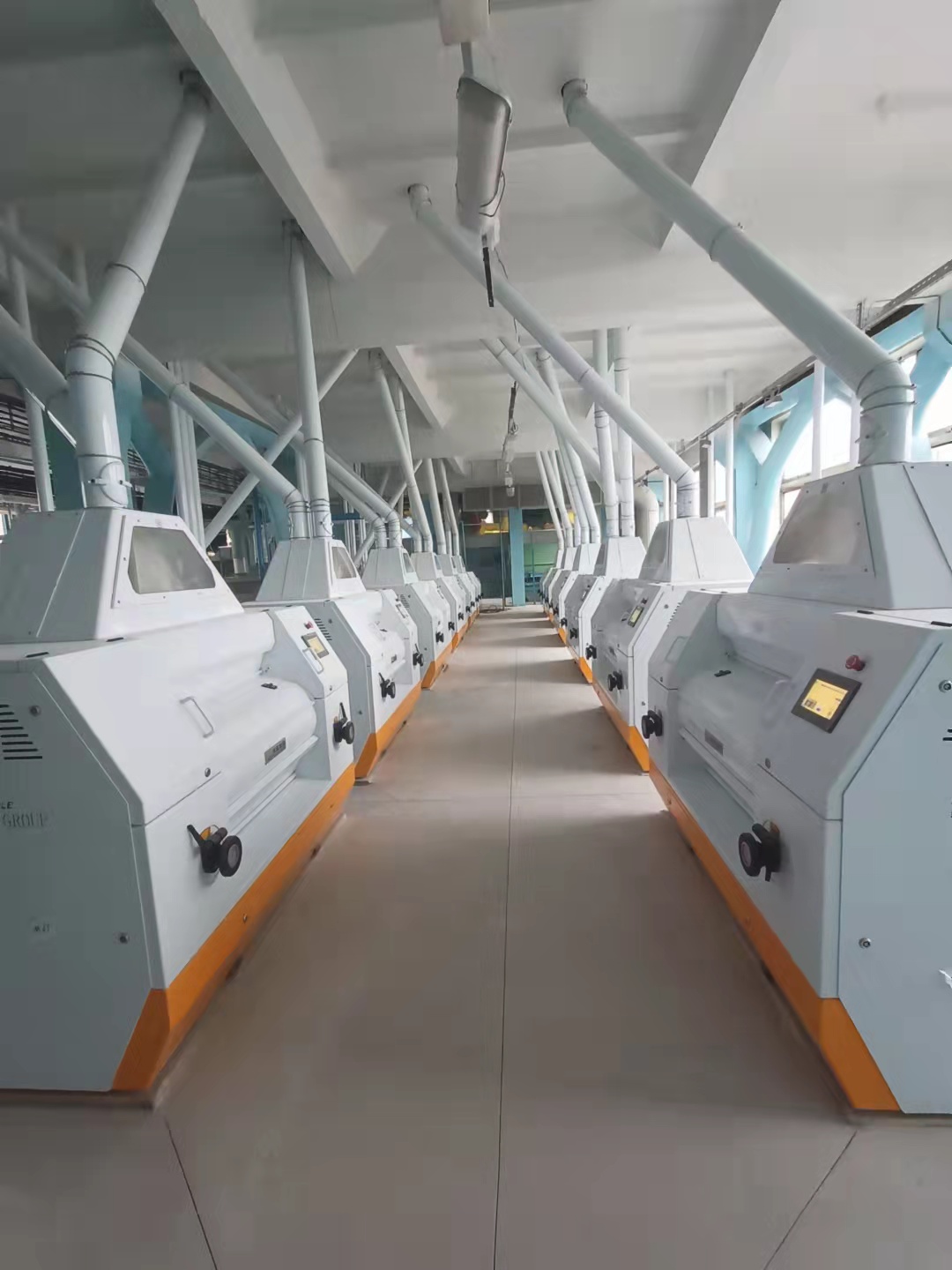
Managing large quantities of wheat demands a careful balance between speed and preservation. The moment grain arrives at the facility, moisture levels, temperature, and foreign material content must be assessed swiftly to prevent spoilage before it takes hold. Automated sampling and rapid testing equipment allow operators to make real-time decisions, routing wheat to the appropriate storage bin or drying system without bottlenecks. By prioritizing early detection of variances, even a surge in deliveries won't force a trade-off between throughput and the integrity of the grain.
Storage is where high volume often collides with quality risks. Instead of relying solely on aeration fans running on fixed schedules, modern systems use sensors placed throughout the silo to track temperature differentials and moisture migration. This targeted approach means air is moved only when and where it's needed, reducing energy waste while keeping the entire mass of wheat within safe parameters. For facilities handling thousands of bushels per hour, such precision prevents hot spots from developing in the center of a pile—a common failure point when volume is treated as the only metric that matters.
Blending strategies also play a critical role when incoming wheat varies in protein content or falling number. Instead of dumping everything into one grade, operators can segregate lots based on quality data collected at intake. This allows for intentional mixing later, creating a final product that meets mill specifications without downgrading the entire batch. The goal isn't to slow down the process, but to build enough flexibility into the system so that high-volume handling never becomes an excuse for accepting lower standards.
A Maintenance Schedule That Actually Fits Real Production
Standard maintenance calendars assume a clean line, predictable shifts, and equipment that pauses on cue. Real production doesn't work that way. Orders spike, raw material arrives late, and machines stay hot through lunch breaks. A schedule that actually fits starts with the rhythm of the floor, not the convenience of the office. Instead of fixed dates, anchor tasks to actual run hours, cycle counts, or output thresholds. When PMs trigger off usage rather than the calendar, lubrication and inspections land right when wear becomes measurable, not before or after.
Build the schedule around natural downtime pockets: changeovers, waiting on material, or the few minutes between shift handoffs. That turns small gaps into productive maintenance windows without stealing from production time. Assign owners by station, not by department, so the person closest to the machine handles the first-line checks and flags early symptoms. Keep the checklist short enough to finish in those pockets. If the list runs longer than the available window, people rush, skip steps, or pencil-whip it. A realistic schedule is one the crew can actually execute without pushing the line behind.
Roller Technology That Doesn't Overheat the Grain
Overheating during milling is a common headache — it can degrade proteins, destroy vitamins, and leave a slightly cooked taste in the flour. This roller system tackles that by keeping the crushing zone cool through a combination of low-friction materials and internal coolant channels. The grain stays within a few degrees of ambient temperature, even during long runs.
Rather than relying on external cooling after the fact, the design pulls heat away right where it's generated. The rollers are machined from a thermally conductive alloy and feature a spiral groove pattern that directs air across the surface. Every pass through the mill adds only a fraction of a degree, so enzymes and volatile flavor compounds survive intact.
The result is flour that behaves more like it was stone-ground — with better gluten development and a fuller, nuttier aroma — but without the inconsistency or slow throughput of traditional methods. Bakers notice the difference immediately: doughs rise higher, and whole-grain loaves taste less bitter because the bran hasn't been scorched.
Keeping Noise and Dust Down in Busy Mills
Inside a busy mill, the constant rumble of rollers and the fine dust drifting through the air aren't just annoyances—they wear down equipment and make the workday harder than it needs to be. One simple move that often gets overlooked is checking the seals and flexible connections around transfer points. A small gap that lets a puff of dust escape also lets sound travel much farther than you would expect, so tightening those spots can quiet things down surprisingly fast.
Another approach that pays off is scheduling regular cleanups around the noisiest machinery instead of waiting for a full shift change. Built-up grain dust on floors and ledges absorbs vibration poorly and can actually amplify certain frequencies. Vacuuming those areas with a unit rated for fine particulate, rather than blowing them down with compressed air, keeps the dust from simply relocating into the air intake of a nearby motor or into the crew's breathing zone.
For mills running multiple lines at once, placing acoustic panels behind the most punishing equipment—like hammer mills or roller stands—can cut reflected sound without blocking access for maintenance. Pair that with a simple log of which doors or inspection hatches tend to get left open during peak hours, and you will often find the biggest gains come from closing up paths that let both noise and dust spread to the rest of the floor.
Switching Between Wheat Varieties Without Reconfiguring Everything
Traditionally, moving from one wheat variety to another meant a half-hour of manual adjustments: concave clearance, fan speed, sieve openings, and sometimes rotor speed all had to be dialed in again. A small miss on any one of them could push grain loss up or leave too much chaff in the tank. Modern setups take a different route by storing variety-specific settings as named profiles. When the operator switches from hard red spring wheat to soft white wheat, the controller automatically resets the threshing and cleaning parameters to the saved values—no crawling around the machine with a wrench, no guesswork based on last season’s notes.
What makes this work smoothly is the blend of sensor feedback and historical data. The system doesn’t just apply a static preset; it logs actual rotor torque, shoe load, and return volume while the combine runs, then refines each profile over time. If a seed lot comes in slightly drier or with more straw, the controller makes small corrections around the stored baseline instead of demanding a full reset. That means switching varieties mid-harvest feels less like starting over and more like changing a radio station.
The practical payoff shows up quickly on farms that grow several wheat classes or handle custom cutting jobs. Crews can move between fields with different varieties in the same afternoon without sacrificing grain quality or throughput. It also encourages growers to plant varieties better matched to specific soil types or end markets, since the cost of switching during harvest drops to nearly zero. The end result is less downtime, steadier performance, and fewer headaches for the person in the cab.
FAQ
It's not a stone mill, but you can get a similar texture by using the coarse plates and opening the gap slightly. The result is a rustic flour with visible bran flakes, and you won't have the stone grit that sometimes ends up in traditional mills.
It's quieter than you'd expect for the throughput. Most of the noise comes from the grain feeding, not the motor. If you mount it on rubber feet, you can hold a normal conversation a few feet away.
The inlet has a magnetic trap and a debris screen. They catch most foreign objects before they reach the grinding chamber. If something does get through, the rollers are designed to slip rather than shatter, which saves the internal gears.
It ships mostly assembled, so you just need to bolt it to a level surface and connect the power. The manual walks you through aligning the rollers, but many users skip that step because the factory setting is already spot-on.
You can, as long as you clean the chamber thoroughly between batches. The grind plates handle softer grains well, though you may want to run a small amount of rice through first to season the surfaces.
Yes, the main body and motor are covered for three years, and wear parts like grinding plates have a one-year warranty. The company also keeps replacement parts in stock, which is reassuring if you rely on the mill daily.
The even particle distribution means flour absorbs water more predictably. Bakers often notice they can reduce mixing time by a minute or two because there are fewer dry clumps to work out.
Conclusion
Getting truly superior flour from professional wheat grain mill equipment isn't about a single clever feature—it's how the whole system handles pressure, heat, and change. Flour consistency starts with the right grinding pressure, and that means rollers are tuned to crush rather than smash, preserving starch and protein structure in every pass. When you're running high-volume wheat through the line, the temptation is to speed things up, but that's exactly when quality slips. The best setups maintain steady feed rates and let the mill's design absorb the load, so a busy week doesn't turn into a batch of uneven flour. A maintenance schedule that actually fits real production makes a bigger difference than any spec sheet. Instead of shutting down for days, smart mills let you swap wear parts, check belt tension, and recalibrate gaps during normal shift changes. And roller technology that doesn't overheat the grain keeps temperatures low enough that enzymes and flavor stay intact—because hot rollers quietly ruin what looks like fine flour.
The second half of the story is how the equipment handles variety and environment. Switching between wheat varieties without reconfiguring everything sounds like a dream, but modern mills use preset profiles and quick-release chutes so a hard red winter run can shift to soft white in minutes, not hours. That flexibility keeps a mill profitable when orders change fast. Keeping noise and dust down in busy mills isn't just about comfort; lower dust means less waste and fewer contamination risks, while quieter operation makes the floor safer and more pleasant for the crew. Together, these details add up to flour that bakers notice—consistent absorption, predictable rise, and clean flavor. Professional wheat grain mill equipment that delivers superior flour every time isn't magic. It's the result of thoughtful pressure control, heat management, realistic maintenance, and fast changeovers working side by side. That's what turns a good mill into the one customers trust.
Contact Us
Contact Person: Jiakuo Wu
Email: [email protected]
Tel/WhatsApp: +86-13011566087
Website: https://www.pinglemachine.com