
Solventless Laminating Machine Factory: Key Insights for Modern Packaging Professionals
2026-11-19
Walk into any modern flexible packaging plant and you will quickly see that the laminating room sets the pace for the entire operation. A solventless laminating machine is no longer just an alternative to solvent-based lines; it has become the quiet engine behind faster turnaround, lower emissions, and safer food-contact structures. Yet with so many equipment builders claiming similar specs, packaging professionals are asking a sharper question: where does real long-term value come from? That is where XIAOPAI enters the conversation. This article looks beyond the glossy brochures and examines what actually matters when evaluating a solventless laminating machine factory today, from build quality and coating accuracy to the support network that keeps production running after installation.
How Solventless Lamination Reshapes Daily Production Priorities
Switching to solventless lamination doesn't just change the chemistry on the line; it forces a rethink of what gets attention first each morning. Without solvent recovery systems to monitor or VOC limits to worry about, the daily checklist loses a few familiar headaches. The freed-up time tends to drift toward things that used to be secondary—adhesive metering accuracy, roll tension consistency, and how quickly a job can be changed over. Operators who once spent half a shift logging emissions data now walk the line with a different eye, looking for subtle coat weight drift instead of waiting for a lab report.
One unexpected shift is the urgency around prepress and material handling. Because solventless adhesives often have shorter pot life and faster cure profiles, the old habit of pre-coating a full shift's worth of film ahead of time stops working. The priority moves from “keep the coater running at all costs” to “mix only what the next two hours actually need.” That sounds like a small thing until a rush order lands at 10 a.m. and the crew realizes the real bottleneck is no longer the laminator but how fast raw rolls can be staged and splice-ready at the unwind.
Maintenance routines also get reordered. Without the constant solvent residue and heat-related wear on exhaust ducts, the weekly cleaning schedule can ease up somewhat. But that breathing room gets replaced by a sharper focus on roll condition, doctor blade wear, and static control. A single nick in a metering roll now shows up as a visible streak within minutes, not after a full roll is cured. So the daily priority becomes early detection on the line rather than end-of-shift inspection. That subtle reframing—from managing emissions to managing precision—is where the real reshaping of production culture happens.
Reading Factory Engineering Signals Before Committing to a Machine
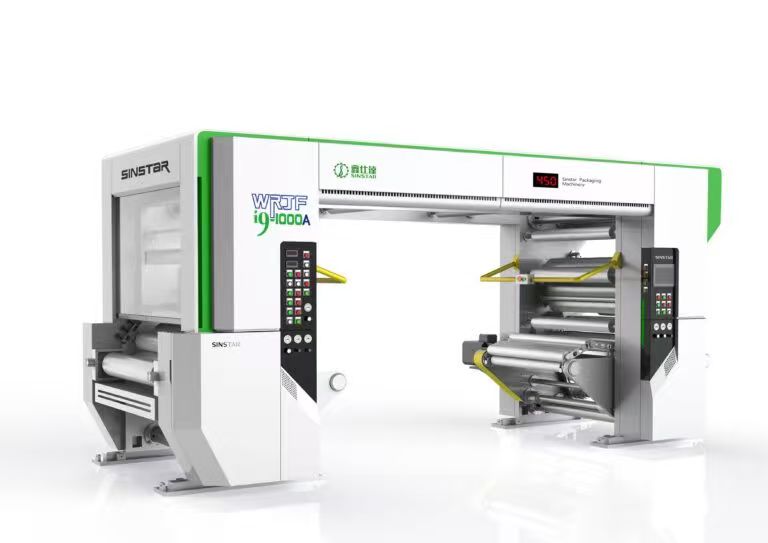
Most machines do not advertise their weaknesses on a datasheet. Spend time next to an identical unit that has been running for at least a full shift. Listen after the frame reaches operating temperature, not during a cold start. A faint knock that appears only under load, a thin film of oil mist near a bearing housing, or a worn spot on guarding where operators repeatedly climb or lean can tell you more about daily reliability than any cycle-time chart.
The control cabinet offers another set of clues. Ask to see historical fault codes and the timestamps between resets. A drive that trips three times a week on overcurrent may have been sized too tightly for the actual load, even if the nameplate suggests otherwise. Also watch how the machine behaves during a tool change or a batch switchover—those transition moments reveal whether the control system was tuned for one idealized product or for the messy reality of mixed production.
Check air supply quality, voltage stability, and how nearby equipment affects the machine. If the factory runs a shared compressor with pressure dips during break times, or if a nearby press sends a voltage sag every stroke, the machine will inherit those conditions. Engineers on the floor usually know which corners were cut during the last installation. Their casual comments about 'we had to add a filter' or 'that sensor never lasted' are engineering signals in plain language. Buying without reading them often means inheriting someone else's unresolved compromise.
Substrate and Adhesive Pairings That Determine Finished Quality
The bond between a substrate and adhesive rarely gets attention until something lifts, bubbles, or turns cloudy. The real decision is not just adhesive strength but how surface energy, porosity, and flexibility on the substrate side line up with the adhesive's open time, cure mechanism, and film thickness. A rigid, non-porous surface like powder-coated metal calls for a different chemistry than raw MDF or expanded PVC, even if the same decorative laminate is going over both.
Pairing a pressure-sensitive adhesive with a low-surface-energy plastic often leads to edge lift within weeks, while a two-part acrylic or a properly primed polyurethane holds for years. Porous substrates can wick solvent out of a contact adhesive before it tacks, leaving dry spots that telegraph through thin face films. Even small mismatches in thermal expansion between the adhesive layer and the substrate will show up as ripples or gloss variation once the piece sits in direct sunlight or moves into a conditioned room.
Finished quality is decided before the topcoat or face material is introduced. If the substrate moves, off-gases, or retains moisture, the adhesive has to absorb that movement without losing bond strength or telegraphing through the surface. Selecting the combination around real working conditions rather than datasheet values alone is what separates a clean, stable result from a callback.
Cost Drivers You Only Notice After Installation
The first real surprise often comes with routing and access. Once equipment is bolted down, you discover that cable trays, extra conduit, or a dedicated circuit were never part of the initial quote. The materials are not the main expense; it is the labor to open walls, run lines around existing ductwork, and patch everything afterward that inflates the bill.
Ventilation and noise are another delayed line item. A unit that looked compact in the showroom may need a louvered door, an exhaust fan, or additional cooling to stop the room from overheating. In quieter spaces, the hum or vibration becomes a complaint that only emerges after the first week, forcing you to add isolation pads, acoustic panels, or relocate the unit.
Then there are the recurring costs tied to maintenance access. Filters that seemed easy to reach may sit behind a fixed panel or above a ceiling grid, so every replacement takes twice as long. If the installation blocks a valve, drain, or electrical panel, routine servicing turns into a custom job. These are not upfront line items; they are the small invoices that keep arriving month after month.
Inspection Habits That Catch Lamination Issues Early
Most lamination faults start small enough to feel before they are obvious. At the delivery stack or rewind, run a dry fingertip along the trimmed edge every 20 to 30 minutes and look across the surface with a low-angle light. Silvering, faint tunnels, or a wavy edge that feels warmer than the surrounding sheet usually shows up in that pass long before it becomes a customer complaint.
A quick habit that saves hours is writing down three numbers at every splice or roll change: unwind tension, nip pressure, and the room’s moisture reading. Bubbling and curl rarely come from a single bad batch of film; more often the tension has drifted a few points or the humidity spiked near a dock door. Keeping the log boring is the goal, because an uneventful sheet usually means the process is under control.
It also helps to keep a physical “not sure” stack instead of tossing borderline sheets. Once a week, lay those samples next to the job ticket and look for repeat locations: clouding near the gripper edge, starved adhesive along one side, or fine creases at the tail. Ten minutes of pattern-spotting catches repeat issues that random end-of-run inspection misses.
Designing Capacity for Brand Changes Without Overengineering
Most brand systems get overbuilt because someone tries to plan for every possible rename before the first one happens. A more practical approach is to separate the parts of a brand that actually move—color, typography, tone, logo assets, product naming—from the parts that rarely change. Keep those movable pieces in simple, versioned files and let templates read from them. That way a packaging refresh or a new sub-brand becomes an update to content and tokens, not a rewrite of the underlying components.
The discipline is in waiting for a second real example before adding complexity. One rebrand is a data point, not a pattern. When the same type of change shows up again, that is the moment to extract a shared rule or a reusable component. Building it earlier usually means maintaining an abstraction that matches an imaginary future, and the team pays for that guess every time they make an unrelated update.
A steady rhythm of small brand updates also lowers the risk of a large change. If tokens and copy ship regularly, the path from decision to production stays familiar. By the time a major identity shift arrives, the system has already absorbed dozens of smaller changes. That repeated practice, not elaborate architecture, is what creates real capacity.
FAQ
Look beyond the catalogue and ask how the factory controls adhesive temperature, mixing ratios and roller pressure during continuous runs. A trial using your own films will reveal more than a polished demo.
Solventless lines remove drying tunnels and solvent recovery systems, which lowers energy use and frees up floor space. They also eliminate residual solvent risk, although cure times need to be planned more carefully.
It often determines whether the line runs well after the first month. Factories that send engineers to adjust web tension, gap settings and roller pressure during commissioning can prevent most early wrinkling and delamination problems.
Metering roller surfaces and doctor blade edges deserve routine checks because small wear changes adhesive coat weight. Operators also tend to forget to verify roller temperature calibration every quarter.
Yes, but it requires careful matching of the film structure and adhesive system. For demanding barrier jobs, test bond strength, curing development and coefficient of friction at 24 and 48 hours before committing to full production.
Ask for case studies with similar substrates, lead times on spare rollers, training options, and whether local service engineers are available. If the factory only offers remote support, clarify response times and escalation paths in writing.
In adapting existing unwind and rewind sections and in underestimating climate control needs around the adhesive station. A factory that audits the complete line layout before quoting can help avoid expensive mid-project changes.
Conclusion
When a packaging line switches to solventless lamination, the first real change appears in daily workflow rather than chemistry. Operators stop managing solvent ratios, drying ducts, and recovery units, and instead pay closer attention to roll pressure, adhesive temperature, and metering consistency. But before committing to a machine, experienced buyers read the factory itself: floor flatness near the unwind, vibration sources from nearby slitters, and whether the maintenance team already tracks roller parallelism. These signals often predict uptime more accurately than a brochure. On the material side, finished quality rarely comes from a universal setting. A fast-running BOPP film with a low-viscosity adhesive behaves very differently from metalized PET or thin aluminum foil. The pairing, not the machine alone, determines bond clarity, cure time, and final feel. Shops that document substrate-adhesive combinations early reduce trial runs and customer complaints later.
After installation, the cost drivers people overlook tend to matter most. Roller wear accelerates when tension profiles are copied from solvent-based lines, and adhesive waste climbs if temperature control drifts during shift changes. Energy use also shifts: without ovens, the load moves to hydraulics, compressed air, and climate control around the coating station. That quietly reshapes maintenance budgets in ways many teams only notice after three or four months. Inspection habits need to match this reality. Checking the first fifty meters of a new roll, watching for faint adhesive lines under bright side lighting, and logging nip impressions take only minutes but catch problems before lamination reaches slitting or the customer. Finally, capacity planning for brand changes works best when the line allows quick width adjustments and modular unwind additions rather than oversized rollers purchased for hypothetical volume. A slightly flexible, well-instrumented line often outperforms a heavily overengineered one.
Contact Us
Contact Person: Kellen Chen
Email: [email protected]
Tel/WhatsApp: 8613806536768
Website: https://www.cnxiaopai.com