

Stand-Up Pouch Filling Machine Company: What to Look for Before You Invest
2026-11-16
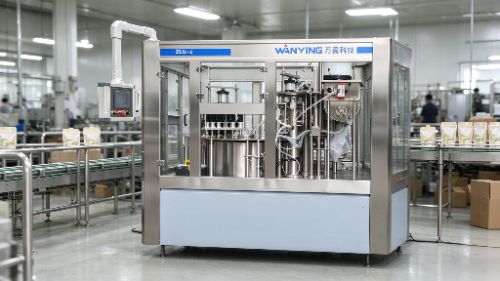
Most buyers focus on filling speed and pouch size, but the real risks hide in sealing consistency, film waste, and maintenance access. If you're evaluating a stand-up pouch filling machine company, asking the right questions upfront can save you from downtime and costly retrofits. Wanying Machinery engineers its equipment with these overlooked details in mind. Here's what to look for before you sign the contract.
Can the Machine Handle Your Exact Pouch Size Without Retrofit Fees?
Most packaging equipment on the market forces you into a narrow range of pouch dimensions, and when your product doesn't fit, the conversation quickly turns to custom retrofits and surprise invoices. That's the wrong starting point. Ask instead whether the machine was designed from the ground up to adjust across a wide range of lengths, widths, and gussets without replacing core components. If the answer involves disclaimers about "standard sizes" or "typical configurations," you're already looking at hidden costs.
A better approach is to look for a system with quick-change forming sets and servo-driven adjustments that can move from a small stand-up pouch to a large side-gusset bag in under fifteen minutes. No new sealing jaws, no re-timing cams, no technician on site. That kind of flexibility isn't just a convenience—it's what keeps your line profitable when you switch from a single-serve snack to a family-size portion on the same shift.
Before you sign anything, run a test with your actual film and your actual product at the machine's upper and lower limits. Watch how the machine handles edge wrinkling, zipper alignment, and seal pressure at those extremes. If the vendor hesitates to run that test on their floor, you can be sure the retrofit fee is already waiting in the quote.
What Support Do You Actually Get After the Warranty Ends?
Once the standard warranty lapses, most people assume they're completely on their own, but that's not always the case. Many electronics brands continue to push out software updates and security patches for several years after the hardware warranty has expired. If you own a smartphone or a laptop, you might still receive operating system fixes or even feature enhancements well beyond the original coverage window. Customer support lines also stay open in most regions, so you can call to troubleshoot issues, ask about compatibility, or get guidance on replacing a part—though the repair itself will usually be at your expense.
Beyond the basics, some manufacturers offer paid service plans or extended warranties that you can purchase before or shortly after the original coverage ends. These aren't always advertised loudly, but they can be worth checking if you rely on the device for work or travel. In certain cases, a known defect that affects a specific batch of products may be covered under a "goodwill repair" program, even if your warranty has technically run out. The key is to document the problem clearly and contact the company directly—being polite and persistent often makes a difference in whether they'll cover the labor or parts.
If you choose not to pay for extra coverage, the real support usually comes from community resources and official knowledge bases. Forums, user groups, and manufacturer-hosted troubleshooting guides can walk you through common failures step by step. Some brands also offer trade-in discounts or recycling credits that lower the cost of a replacement when a repair no longer makes financial sense. In short, the warranty ending doesn't mean support vanishes; it simply shifts from free, automatic fixes to a mix of self-service tools, paid repair options, and occasional goodwill exceptions.
Who Builds the Machine—Them or a Subcontractor?
It is easy to assume that the name on the machine's badge tells you who built it, but that assumption often falls apart on the factory floor. Plenty of equipment makers quietly hand off large chunks of fabrication, assembly, or even testing to outside shops. The question is not just about where the metal was welded, but who takes responsibility when a critical component fails six months later.
A good starting point is to ask for a breakdown of what is made on their own floor versus what arrives from a subcontractor. Some companies are upfront about using specialized partners for castings, electronics, or control systems, while others keep that information tightly guarded. What matters most is whether the final integration, quality checks, and performance validation are still done by the brand you are paying. If a subcontractor builds the entire machine and the nameplate company only adds a logo and a manual, you may be paying a premium for marketing rather than engineering.
There is also a middle ground that often gets overlooked. A machine can be designed in-house, with critical components made by subcontractors, and then assembled and tuned by the original company's own technicians. That can work perfectly well if the subcontractors are vetted and the supply chain is transparent. The real red flag is vagueness. If you cannot get a straight answer about who actually builds the machine, it is worth walking the line yourself or asking for references from other buyers who have seen the production process firsthand.
How Many of Their Machines Are Running Today, and Can You Visit One?
Counting how many of their machines are actually running on any given day is less straightforward than it looks. A small core of restored examples gets fired up on a rotating schedule, mostly for live demonstrations or special open days. The rest are either static displays or projects waiting on parts, so the number can shift from week to week. On a typical visit you might catch two or three in motion, though a busy event weekend could push that closer to half a dozen.
Visiting one is usually possible, but it pays to check ahead. Some of the machines are housed in working workshops where public access depends on staffing and maintenance downtime. A number of sites let you stand close enough to feel the vibration, while others keep you behind safety lines for obvious reasons. Calling or checking the online calendar before you go is the only way to avoid arriving on a day when everything is cold and silent.
If you want the full effect—heat, noise, the smell of warm oil—aim for a scheduled live demonstration rather than a quiet weekday. That’s when multiple machines are most likely to be running and the people who maintain them are around to answer questions you won’t find on any placard.
Are Spare Parts a Two-Day Delivery or a Two-Month Wait?
The answer often depends on where you look first. A common replacement filter or brake pad set might ship overnight from a regional warehouse, while a less common engine mount or a specific electronic control unit sits on backorder for weeks. The difference rarely lies in the part's complexity alone—it comes down to whether your supplier stocks it locally, how far the nearest distribution center is, and whether the manufacturer treats that item as fast-moving or slow-moving inventory.
Original equipment manufacturers typically keep deep stock for popular models, but niche components or older vehicle parts often get pushed to a secondary network with longer lead times. Aftermarket suppliers can sometimes beat OEM timelines by sourcing from multiple warehouses or remanufacturing cores, yet their coverage is uneven. Another frequent culprit is demand forecasting: when a part fails in clusters—say, a batch of faulty alternators—the system may not react fast enough, turning a routine repair into a waiting game.
To avoid the two-month scenario, it helps to ask suppliers for real-time stock visibility before ordering, not just a generic availability estimate. Building a relationship with a local independent distributor can cut days off delivery, and for critical downtime, paying a premium for expedited freight or a dealer-to-dealer transfer often beats waiting. Some fleets now keep their own small inventory of known failure items, or partner with 3D printing services for low-stress brackets and covers—a practical hedge against the unpredictability of global parts logistics.
Does the Control Panel Make Sense to Your Line Workers, Not Just Engineers?
Walk onto most factory floors and you'll find control panels that were clearly laid out by someone who has never run the line at 3 a.m. Engineers tend to group functions by system architecture or electrical schematics, which makes perfect sense on paper. But for an operator trying to clear a jam or adjust a feed rate under pressure, that logic falls apart. If a worker has to pause and decode abbreviations or hunt through nested menus, the panel is already failing them.
The real test is whether someone with dirty gloves and five other things on their mind can glance at the panel and know exactly what to do. That doesn't happen by accident. You need to watch line workers during normal shifts and during breakdowns, ask them which readings they actually use, and find out which alarms they ignore because they don't trust them. A panel that makes sense to workers usually has big, obvious status lights, buttons labeled with plain verbs, and warnings that show what action to take rather than just a fault code.
Making panels usable for line workers isn't about dumbing things down. It's about respecting the mental load of a fast-moving job. When operators can read the panel at a glance, they respond faster, make fewer errors, and stop relying on workarounds. In the end, a control panel should be judged by how quickly a new worker can learn it and how confidently a veteran can run the line without thinking about the interface itself.
FAQ
Look at the frame material, weld consistency, and how easily components can be accessed for cleaning. A machine that feels sturdy with minimal plastic parts in high-wear areas will hold up better over time.
It matters more than many buyers expect. A clear, responsive interface reduces operator mistakes and training time. Ask if the software supports recipe saving, user permissions, and remote diagnostics.
You want a model that handles your current pouch range plus some margin. Check the minimum and maximum width, height, gusset depth, and whether changeover is tool-free or requires extra parts.
Yes, but go beyond the standard list. Request contacts for customers running similar products and production volumes. Ask those references about downtime frequency, spare parts delivery, and how the company responded to problems.
Find out which parts are considered wear items, their typical lifespan, and whether they are off-the-shelf or proprietary. A good supplier will provide a clear maintenance schedule and keep critical spares in stock locally.
Not by itself. Rated speed means little if changeovers take hours or the machine jams on your film structure. Pay more attention to overall equipment effectiveness and how the machine runs with your actual pouches and products.
Ask about average response time, whether technicians are in-house or third-party, and if remote support is available. A written service level agreement with penalties for missed response windows is a good sign.
Include installation, training, spare parts kit, air compressor upgrades, and potential film waste during commissioning. Also check electrical requirements and whether your facility needs any modifications.
Conclusion
Before investing in a stand-up pouch filling machine, the most expensive surprises usually come from sizing mismatches and hidden retrofit fees. Ask whether the machine handles your exact pouch dimensions, seal types, and film materials without extra charges for "custom" adjustments—vague answers like "it's adjustable" are a red flag. Equally important is knowing who actually builds the equipment. If a subcontractor is involved, you lose direct accountability for quality control, lead times, and design changes. Request the number of machines currently running in the field and, if possible, visit one in operation. A real production line reveals far more than a polished demo video.
Post-warranty support and spare parts logistics often decide whether your line stays up or stalls. Get specific commitments on response times, remote diagnostics, and on-site service costs after the warranty ends. For spare parts, ask pointedly: is it a two-day delivery or a two-month wait? A machine that runs well but leaves you waiting on a critical seal bar is not a good investment. Finally, watch how the control panel performs in the hands of your line workers, not just engineers. If operators need constant help to change recipes or clear alarms, the machine's sophistication becomes a daily bottleneck. Simple, intuitive controls and clear training materials are signs the manufacturer understands real production floors.
Contact Us
Contact Person: Tyson
Email: [email protected]
Tel/WhatsApp: +8613396971296
Website: https://www.wanyingmachinery.com