
Top 10 Walking Aids Series You Need for Safer Mobility
2026-11-27
Not all walking aids earn their place in daily life—some look helpful in theory but fail on uneven sidewalks or tight hallways. That is exactly why we put together this list of ten mobility supports worth a closer look, with several standout picks from Suncare leading the way. If you want safer steps without sacrificing comfort or independence, the options ahead might change how you think about walking aids.
How to Tell When a Cane Is No Longer Enough for Your Daily Routes
A cane often stops being enough long before you admit it. The clearest signal is not a single fall, but a pattern: your hand reaches for walls, parked cars, or a companion’s arm on streets you once walked without thought. You start leaning heavily into the cane on one side, which throws your hips and shoulders out of alignment and leaves your lower back tight by evening. That uneven effort is a quiet red flag.
Another shift happens before you step outside. You begin editing your day around terrain—avoiding the curb cut that slopes a little too steeply, taking the long way to skip a cracked patch, or waiting for someone to walk with you to the mailbox. When the route shrinks to protect you, the cane has stopped extending your mobility and started marking its limit.
Rollator Features Worth Paying For Before You Look at Wheel Count
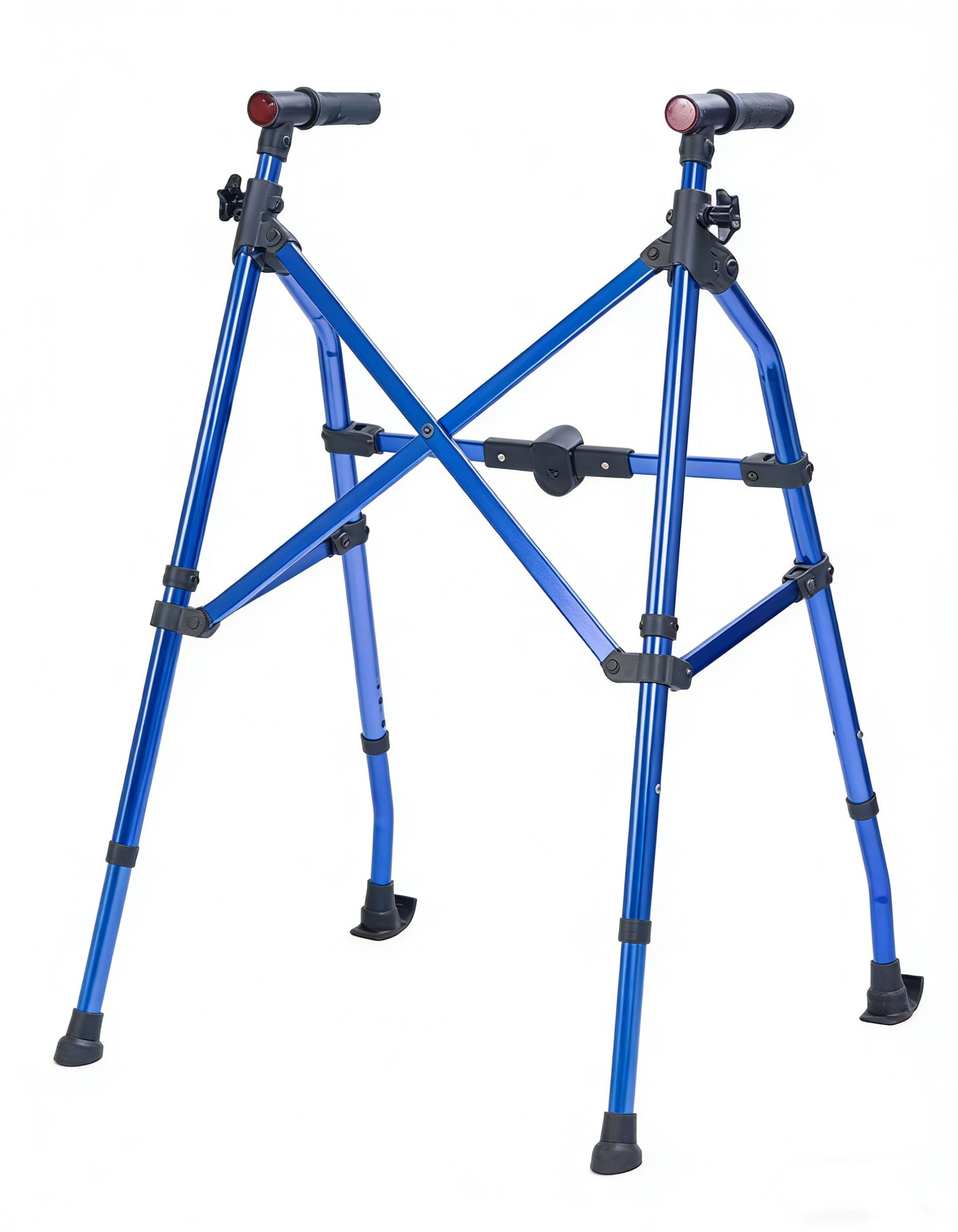
Before counting wheels, pay attention to how the rollator fits your posture and grip. Handles that adjust high enough to keep your shoulders relaxed and brakes that engage without squeezing hard matter more in daily use than wheel size or number. A padded seat with enough width and a curved backrest also turns short rests into genuine recovery stops instead of awkward balancing acts.
Folding and lifting are where cheaper designs show their limits. A rollator that collapses with one hand and locks closed saves energy at every car trunk, stairwell, or narrow hallway. Check the folded size, the weight you can actually lift, and whether the frame stays put once folded. Those details affect how often you will take it out, not just how it rolls on flat ground.
Storage and clearance deserve equal weight. A basket that sits too low or too far back becomes useless, and rear wheel spacing that makes you clip doorframes gets old fast. Think about what you carry, how you move through tight rooms, and whether the seat height lets you stand up without pushing hard against the armrests. Sort those features first, then look at wheel count with clearer eyes.
The Handle Height and Grip Check That Prevents Most Wrist Fatigue
Most wrist fatigue doesn't start in the wrist. It starts when the handle height forces your hand into a bent or cocked position as soon as you take hold. A simple way to check is to stand relaxed, close your eyes, and reach out as if you were going to grab the handle without looking. If your wrist has to hinge upward, downward, or sideways to meet it, that angle turns into steady low-grade strain. Adjust the bar, stem, or grip height so your wrist stays in line with your forearm while your elbow keeps a soft bend, and the pressure usually drops off before it builds.
Grip diameter matters just as much as height. Too narrow, and your fingers over-wrap while the forearm flexors stay tight. Too wide, and the hand never fully closes, leaving the palm and thumb side to carry the load. To test it, wrap your hand around the grip and look at where the tip of your middle finger lands. It should rest near the base of your thumb or just short of it, not pressed into the palm and not leaving a large gap. If the grip itself can't be swapped, a thin layer of tape or a slip-on sleeve can fine-tune the diameter enough to keep the hand relaxed over longer sessions.
Brakes That Hold on Slopes Instead of Letting You Creep Forward
Many drivers know that brief moment of uncertainty when lifting off the brake on a hill and feeling the car start to drift before the gas pedal is pressed. This system keeps the brakes applied for a few extra moments after you release the pedal, giving you time to move your foot without the car rolling backward or creeping forward on its own.
Instead of relying on a quick shuffle between pedals or grabbing the parking brake, the feature holds hydraulic pressure in the brake lines automatically. The release is tied to throttle input or sometimes clutch engagement, so the car stays planted until there is enough power to pull away smoothly.
What makes it feel different is the absence of that slow forward crawl many automatic transmissions produce at idle. On a steep driveway or at a light near the top of a rise, the car stays exactly where you leave it, then moves only when you ask it to.
Light Frames That Stay Steady on Cracked Pavement and Uneven Curbs
Riding over cracked pavement usually means bracing for the rattling handlebars and a front wheel that jerks sideways, but these frames handle it differently. The geometry keeps the front end a touch longer and slightly slacker, so when a wheel drops into a fissure or catches an uneven curb lip, the motion translates more into forward roll than sideways deflection. You feel the surface without the bike trying to steer itself.
The real difference comes from how the frame tubes are shaped and joined. The down tube and chainstays have a mild oval profile that lets them flex vertically just enough to absorb chatter, while the head tube area stays laterally stiff. That combination means you can roll off a curb at an angle, land with one wheel on a raised slab, and still keep a relaxed grip on the bars. There’s no harsh jarring through the saddle, just a muted thump that lets you hold your line.
What you get in practice is a frame that feels calm on neglected city streets and lumpy sidewalks. Instead of constantly picking the smoothest path, you can take the direct route across cracked blacktop and misaligned curb joints without losing pedaling rhythm. That steadiness shows up most when you’re carrying speed into a rough patch and realize you didn’t have to slow down or stand up to unweight the saddle.
Doorways, Tight Hallways, and the Indoor Aids That Handle Them Quietly
Most homes were not built with a walker or chair in mind, and that fact becomes obvious the first time a rubber handgrip scrapes along a doorframe at two in the morning. Standard interior doors leave roughly thirty-two inches of clear space, but the swing of the door itself, the position of a hinge, or a slight angle in a hallway can shrink that clearance fast. What helps is not always bigger equipment; sometimes it is a slimmer frame, a shorter wheelbase, or a set of offset hinges that opens up two extra inches without any major construction.
Indoor aids designed for these spaces tend to keep things narrow and quiet. A lightweight aluminum rollator with a folding backrest and low-profile casters can slip through a tight bedroom door without leaving a trail of dents, while a transfer pole placed just beside the bed takes up barely more floor space than a floor lamp. The casters make a real difference too: softer polyurethane wheels roll over hardwood and tile without the low rattle that cheaper plastic wheels produce, which matters when the rest of the house is asleep.
Hallways present their own set of problems because they leave very little room to turn or correct a line of travel. In those areas, the goal is usually to reduce pivoting rather than force a full turn. Half-steps, grab rails mounted at shoulder height, and small slide discs for seated transfers can handle a narrow corridor without turning it into an obstacle course. Paired with a quiet indoor chair or walker, the movement becomes less of a negotiation and more of a steady path from one room to the next.
FAQ
The compact rollator in the lineup folds flat with one hand and stays locked when lifted, so it slips into a trunk without wrestling with loose parts.
Yes, several rollators in the series include a padded seat and a small storage pouch underneath, which helps when you need a quick rest on a long outing.
A cane suits people who mainly need light balance support and have decent arm strength, while a walker or rollator gives a wider base and more weight-bearing help for unsteady days.
Many models in this series use contoured, soft-touch grips that reduce pressure on the palm, and some can be swapped for thicker or ergonomic handle styles if needed.
The larger-wheeled rollators and all-terrain walker attachments in the series are designed for bumps and cracks, with swivel wheels that do not catch easily on rough pavement.
Stand with your arms relaxed at your sides, set the grip at wrist level, then lock each side at the same number so the frame stays even and your elbows bend slightly when holding it.
Wipe the wheels clean after outdoor use, check for cracks or flat spots weekly, and replace rubber tips or brake pads as soon as they look worn or feel slippery.
Only when the brakes are locked and the rollator is on flat ground. Facing forward with both feet on the ground keeps the seat stable, but it is not meant for being pushed while seated.
Conclusion
A cane often hides its limits until you notice how much attention your wrists and shoulders demand after a familiar route. When curbs, sloped driveways, or uneven pavement start pulling your balance forward, that single point of contact is doing less than you think. The switch to a rollator is not about giving up independence; it is about keeping the support matched to the ground underfoot. Before counting wheels, check the handle height and grip shape. A handle set too high or low forces the wrist into an awkward angle, and that is where fatigue creeps in long before the legs feel tired. The right grip lets the arm rest near its natural line while the frame carries more of the load.
Outdoors, a light frame can still hold steady on cracked sidewalks if the weight is balanced low and the wheels absorb small jolts instead of bouncing sideways. On slopes, brakes matter more than most people expect. A rollator that creeps forward while locked turns a rest break into a slow slide. Look for brakes that bite and stay set without constant squeezing. Indoors, that same support needs to move quietly through doorways and tight halls. Narrow frames, soft wheel treads, and controlled turning make a real difference when you are navigating a bedroom, bathroom, or crowded kitchen. The best aid is the one that adapts to the route, not the one that makes you adapt to it.
Contact Us
Contact Person: Frank Chan
Email: [email protected]
Tel/WhatsApp: 0086-13924529088
Website: https://www.suncare-medical.com