
Top Knife Gate Valve Choices for Abrasive Slurry Applications
2026-11-24
Slurry doesn't care about your maintenance schedule. The moment a knife gate valve seals poorly or erodes early, abrasive particles force a decision: rebuild, replace, or rethink the specification. This guide covers the top knife gate valve choices for abrasive slurry applications—and why THT has become a go-to for teams that are done with repeated failures.
Reading Abrasive Slurry Wear Patterns Before Selecting a Knife Gate Valve
Abrasive slurry doesn't wear a valve uniformly. Lines, grooves, and localized thinning near the seat or along the bottom of the bore tell you much more than a generic “high wear” label. Spiral scoring often points to particles trapped during closure, while a smooth, polished channel in the lower half suggests the valve spends most of its life partially open. Matching the wear pattern to the actual operating cycle matters more than chasing a harder material blindly.
Look at where the gate disappears into the packing area. If the slurry has carved fine channels there, the issue may not be the gate material at all, but the velocity profile and how solids are being driven against the moving parts. A knife gate valve that survives in one slurry line can fail quickly in another simply because the flow is more turbulent or the solids have sharper fracture edges. Before locking in a specification, map the exact wear locations from the old valve onto the new design.
Sometimes the pattern reveals that the valve is being used as a throttling device when it should be either fully open or fully closed. Erosion concentrated just downstream of a partially lifted gate is a classic sign. In that case, changing the valve style or adding a choke point elsewhere can extend service life far more than upgrading to a thicker blade or a fancier coating. Reading the wear story first keeps you from paying for the wrong kind of toughness.
Materials and Coatings That Keep Slurry Valves in Service Longer
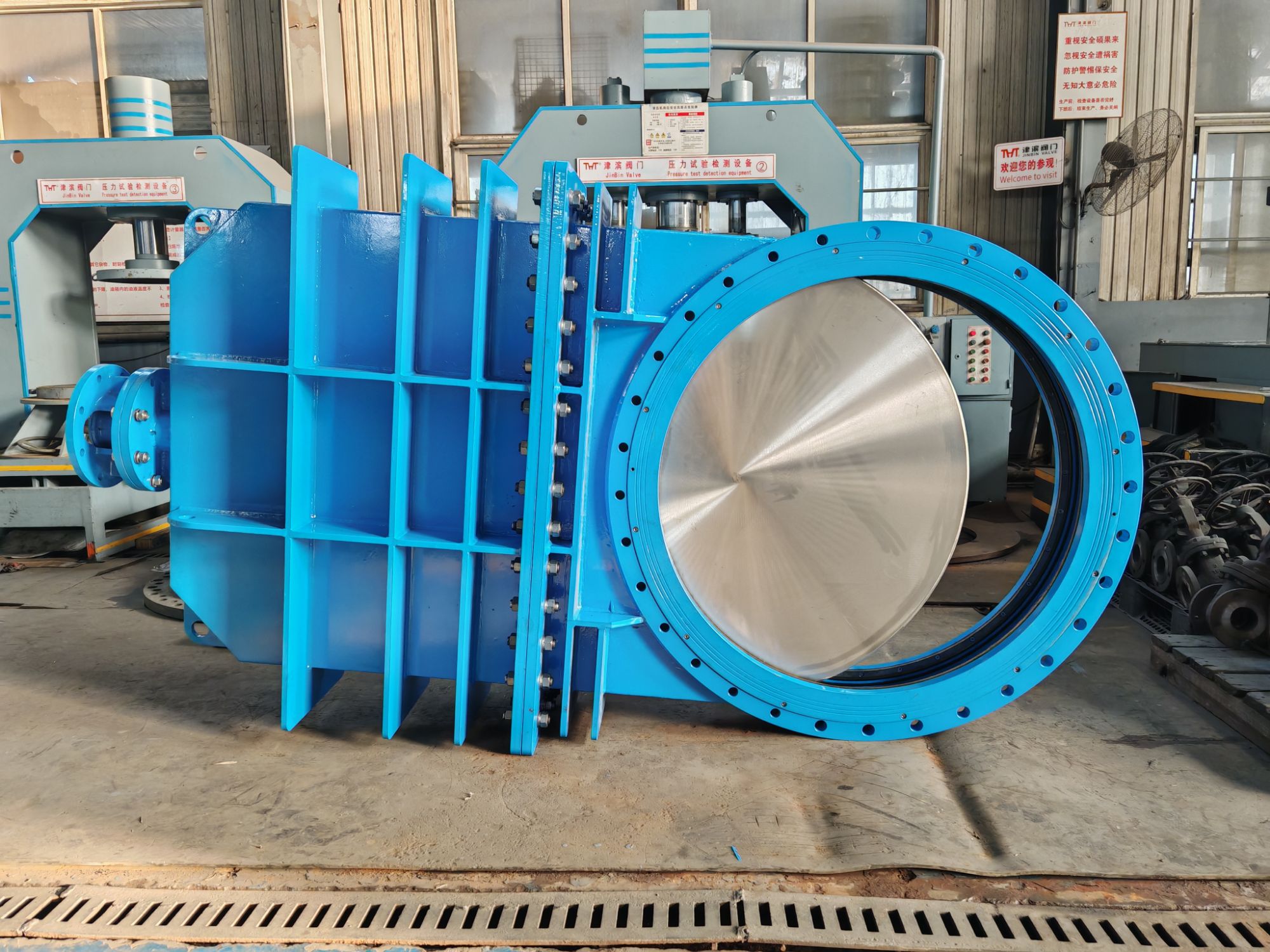
Slurry service punishes the areas where flow changes direction, so material selection usually starts at the seat, disc, and body bore rather than the outer casing. Hard overlays like tungsten carbide and Stellite have become common there because they hold an edge longer under high-velocity particle impact. Yet the same hardness that resists erosion can make a part more brittle, and cracks often appear once a coating is pushed beyond its design thickness or applied over a base metal that flexes too much.
For finer slurries and lower temperatures, elastomer linings still offer some of the best payback. Natural rubber and polyurethane absorb particle energy instead of trying to outlast it, which helps when solids are small but abrasive. They run into trouble with sharp, coarse solids, high heat, or hydrocarbons that swell the lining. Ceramic inserts and sleeves fill part of that gap, particularly in high-velocity small-bore applications, though they need careful support to avoid cracking from mechanical shock.
Coatings make more sense when the base metal is fine and only the wetted surfaces need protection. Chromium carbide and tungsten carbide applied by HVOF, or fused ceramic epoxies, can extend life on valve bodies and spools without the cost of a solid alloy part. The practical limit is usually adhesion: once a coating starts to chip at an edge or behind a seat, wear accelerates quickly. Many plants get better results by matching the coating to the specific failure mode instead of simply selecting the hardest option available.
Seat and Gate Edge Details That Prevent Early Washout
Most early washout failures trace back less to material choice than to the small edge decisions made around the seat and gate contact band. A slight radius or chamfer at the gate edge changes how flow enters the gap during throttling; a dead-sharp corner tends to peel the boundary layer and create a low-pressure zone right where the seating face ends. Keeping that transition controlled reduces localized velocity spikes and the resulting erosion that opens a leak path long before the valve sees its rated pressure cycles.
On the seat side, the width and runout of the contact land matter just as much as the surface finish. A narrow, uneven land concentrates the seating load and gives debris a place to lodge, while a slightly wider blended land distributes stress and keeps the gate from digging in during thermal swings. Some shops deliberately break the inner edge of the seat ring to avoid a thin, knife-like lip that washes out under sustained flow, especially in slurry or steam service.
The practical fix is usually in the fitting sequence rather than the drawing: lap the gate to the seat with a short, controlled stroke, check the contact pattern at partial engagement, and verify that the edge breaks are symmetrical. When those details are held, early washout becomes a rare maintenance annoyance instead of a recurring failure.
Flush Ports, Packing, and Other Slurry-Specific Design Features Worth Demanding
Flush ports often get overlooked until a seal fails at the worst possible moment. In slurry service, the flush line isn't just an accessory—it keeps abrasive fines from embedding in the packing and scoring the shaft sleeve. A properly placed flush port should direct clean water or compatible barrier fluid evenly around the stuffing box, not just dump it in from one side. If the port placement forces the operator to guess flow direction, it's already a weak point.
Packing selection is another area where generic advice falls apart. Braided graphite works until it doesn't; in dense slurries, a harder, lubricated aramid or PTFE-impregnated packing with sacrificial lantern rings often survives longer. The trick is matching the packing cross-section to the actual throat depth and making sure the flush pressure stays slightly above the slurry pressure at the seal face. Too little flush and solids pack in; too much and you wash out the lubricant.
Beyond flush and packing, look for features that reduce tear-down time: split glands, hard-faced shaft sleeves with accessible wear indicators, and drain plugs placed low enough to actually empty the casing. These aren't marketing bullet points—they're the details that determine whether a rebuild takes one shift or three. If a manufacturer can't explain how their design handles settled solids in the stuffing box, that's a sign to keep looking.
Installation and Cycling Practices That Reduce Abrasive Damage
Clean mating surfaces before assembly and keep the work area as free of dust and grit as practical. Even small particles trapped between clamp shells, flanges, or bearing seats can act as a cutting bed once the equipment starts cycling. Align shafts, rails, or mounting faces within the manufacturer's tolerance instead of using the bolts to pull parts into position. Residual angular offset concentrates contact pressure on one edge of a seal or bearing, which accelerates localized scuffing and creates debris that spreads through the interface.
During cycling, avoid short, rapid reversals that starve the contact zone before a lubricant film can re-form. Programming a slightly longer stroke or reducing reversal frequency gives grease or oil time to recover and carry heat away from the loaded surfaces. Gradual ramp-up after idle periods is also useful because immediate full-speed starts can slide components that have settled into a static contact imprint. Where equipment has been idle, a brief slow-cycle sequence helps redistribute lubricant and exposes any stiffness before full load is applied.
Abrasive damage is rarely caused by the base material alone. Much of the continued scoring comes from wear debris generated early in service, so removing those particles is part of cycling practice. Check drain points, filters, and magnetic plugs on a schedule tied to operating hours rather than calendar days. When wipers, scrapers, or boots begin to harden or take a set, replace them before they channel fines into the interface. In dusty environments, shielded or sealed arrangements should be inspected more frequently, since a small gap in a cover can turn ordinary motion into a grinding process.
Where Upgraded Knife Gate Valves Pay Off in Mining, Minerals, and Tailings
Tailings transport is often where the fastest payback shows up. Lines carrying dense, abrasive slurry continuously scour sealing faces, and a standard valve that cannot hold a tight shutoff becomes a maintenance burden. Upgraded knife gate valves with replaceable hardened gates and reinforced seats handle the fine-particle wear common in tailings work, allowing crews to isolate a pump station without draining an entire stretch of pipe.
In grinding and flotation circuits, the real problem is often solids packing inside the valve body. Conventional knife gate valves tend to collect slurry in the gate recess, making full closure unreliable. Upgraded designs with flush ports, bevelled bodies, or scraper-style packing reduce that buildup. On cyclone feed lines and thickener underflow duties, that means fewer stuck gates, less operator intervention, and isolation that actually holds when it matters.
Chemical exposure adds another layer in leaching and reagent systems, where stem seals and internal coatings are attacked by acidic or corrosive streams. Upgraded valves using duplex stainless internals, coated bodies, and live-loaded packing keep drips and seepage under control. Around tailings dams and reclaim water networks, that tighter shutoff reduces spill risk and keeps planned maintenance from turning into an unplanned shutdown.
FAQ
Look past the basic stainless steel label. The gates that last typically have a thick blade, a hardened or chamfered leading edge, a replaceable metal seat, and a body geometry that keeps solids from packing behind the gate. If the valve has purge ports or a raised chest, that is a good sign it was designed with slurry in mind rather than adapted from a general-purpose design.
DeZURIK KSV and KGC, Orbinox EX, and SISTAG Wey are the names that appear most often on mining and mineral processing drawings. The KSV gets mentioned for its purge-friendly packing area, Orbinox EX for its metal seat choices, and Wey for heavy cast bodies that hold up in thick, coarse slurries.
Resilient seats usually seal tighter on clean water, but gritty slurry can tear or groove them quickly. Metal seats tolerate abrasion and high temperatures much better, though they may allow small leakage over time. A practical middle ground is a metal seat with a replaceable elastomer backup, so the metal takes the wear while the elastomer provides a secondary seal.
The biggest ones are a metal-to-metal shutoff point, a gate that remains guided through the full stroke, and a body with no dead zone where solids can settle. Purge or flush connections at the packing help keep grit from eating the gland. Also look at whether the valve can be opened fully without the gate projecting into the flow path, which reduces turbulence and wear.
If the line can see reverse flow or if you need to isolate from either side during maintenance, specify a bi-directional model with a seat designed to seal in both directions. Uni-directional valves are fine when pressure only comes from one direction, but reverse flow can force slurry behind the seal and shorten the seat life. On tailings and backfill lines, the extra cost of bi-directional is usually justified.
Keep the chest and gate clear of packed solids, flush purge ports if they are present, and cycle the valve periodically so settled particles do not harden. Avoid heavy grease on the gate because it traps fines and turns into a grinding paste. Inspect the gate edge and seat during planned shutdowns, and replace those wear parts before the body itself starts wearing.
They help most when applied selectively. Hardfacing the lower gate edge reduces cutting wear, and a hardened throat protects the body from high-velocity particle impingement. Coatings on surfaces that slide against soft seals need to be polished smooth, otherwise they can chew up the seal. A full hardfaced gate is often unnecessary and just adds cost, so target the areas that actually see erosion.
The most common ones are using the valve for throttling when it is designed for on-off service, selecting a seat based on clean-water performance rather than slurry behavior, and ignoring the actual solids concentration. Undersizing is also frequent because people match the valve to the nominal pipe size without accounting for lower flow capacity through the chest. If the valve has to throttle, choose a design with throttling trim or use a dedicated control valve.
Conclusion
A worn knife gate valve rarely fails in a uniform way, and reading those wear patterns before a replacement is selected often reveals more than any generic datasheet. Localized erosion along the seat face, grooves behind the gate, or washout near the bottom of the body usually points to specific flow conditions rather than simply an overly abrasive slurry. Matching the material to that pattern is the next step: high-chrome and Ni-hard bodies handle hard minerals, while tungsten carbide or ceramic coatings make sense where velocities stay high and particle size is fine. But hardness alone can work against a valve if the slurry is acidic or the particles are larger and angled at the gate edge. The seat and gate edge details matter just as much. A replaceable seat with a slight bevel, a hardened gate leading edge, and a well-supported bottom seal can delay the classic early washout that puts a valve out of service long before the body shows serious wear.
Beyond the trim, slurry-specific design features tend to separate valves that last from those that need constant attention. Flush ports placed where solids settle after shutdown, a double row of packing with a lantern ring or scraper, and a clear bonnet or drain arrangement all reduce routine maintenance. Installation habits and cycling practice also affect abrasive damage more than many operators expect. Keeping the valve out of a throttled position, fully stroking it on a schedule, and mounting it so the seat does not trap solids can add significant service life. In mining, minerals processing, and tailings service, those details show up fastest in places like cyclone feed lines, thickener underflow, and tailings headers, where an upgraded knife gate valve often pays for itself through fewer unscheduled line breaks and less wear-related replacement. The best choice is rarely the one with the hardest body; it is the one whose wear pattern, trim, sealing edges, and field practice all point in the same direction.
Contact Us
Contact Person: Su Zhang
Email: [email protected]
Tel/WhatsApp: +86-25219206
Website: https://www.tht-valve.com/