

Water Chiller Maker Guide to Selecting Efficient Cooling Systems
2026-10-25
Choosing an efficient cooling system is less about horsepower and more about fit—load profile, ambient conditions, and long-term energy costs. A water chiller maker that understands these variables can save you thousands in operating expenses. shairko brings that practical insight to this guide, cutting through spec-sheet noise to focus on what actually drives efficiency. Here’s what to look for before you commit.
Start With Your Process Heat Load, Not the Nameplate
Most engineers begin sizing a heat exchanger by pulling the nameplate duty off the existing unit. That number was calculated for a specific set of conditions—often including generous fouling factors, a particular fluid mix, and inlet temperatures that may no longer match your current operation. If your process has shifted slightly over the years, that old nameplate value could be off by ten or twenty percent without anyone noticing. Starting there locks you into whatever assumptions the original designer made, whether they still apply or not.
Instead, go back to the actual process heat load your system needs today. Measure the real flow rates, the true inlet and outlet temperatures, and the physical properties of the fluids you are actually running right now. This often reveals that you need less surface area than you thought, or sometimes more, but at least you are designing from reality rather than a faded label. When you begin with the true thermal duty, you avoid carrying forward hidden margins that silently cost you in capital and operating expense.
A common pushback is that shutting down to gather data takes time. Yet running for a few days with temporary instrumentation—or even using plant historians to pull recent steady-state trends—gives you a much more solid foundation than trusting a brass plate bolted on during startup. The goal is not to ignore the nameplate entirely; it is a useful reference for comparing how far the process has drifted. But let the measured heat load drive the design, and you will end up with a heat exchanger that fits the process you actually operate, not the one you intended to operate ten years ago.
Rethink Partial Load Efficiency Before You Oversize
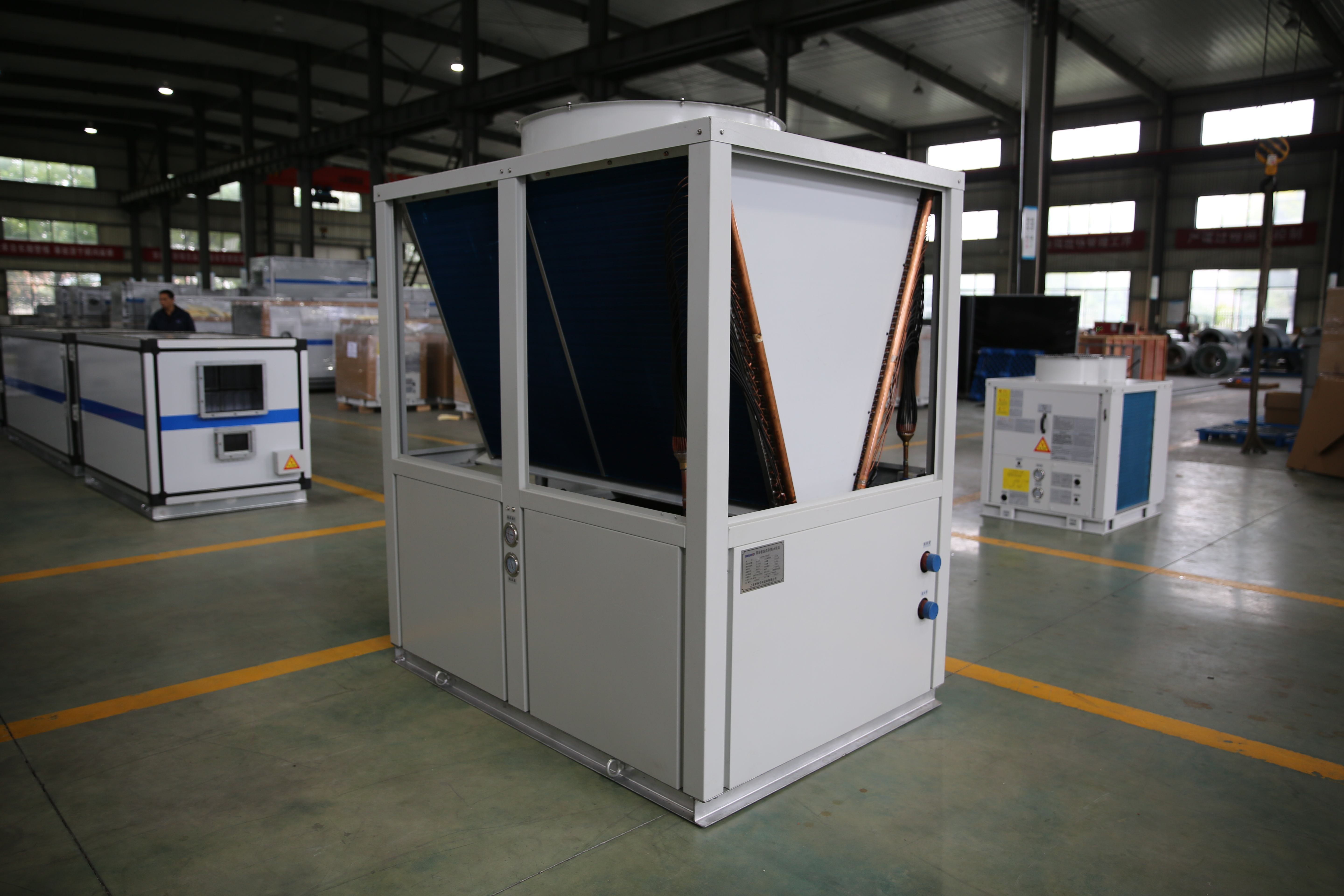
Oversizing equipment often seems like a safe bet, yet it quietly undermines energy performance when systems run at partial load most of the time. A chiller rated for peak conditions may spend ninety percent of its operating hours at a fraction of that capacity, where its efficiency can drop sharply if the unit wasn't chosen for turndown capability. Before adding extra tons or kilowatts, take a hard look at real load profiles instead of relying on rule-of-thumb safety factors.
Part load efficiency isn't just a spec sheet afterthought—it drives operating costs more directly than full-load ratings. Variable speed drives, modulated compressors, and staged heating elements each behave differently when demand falls, and some designs hold their efficiency far better than others. If you oversize blindly, you might lock in poor turndown behavior that no control strategy can fully recover.
A smarter move is to map out how many hours per year the system runs at 25%, 50%, or 75% load, then compare candidate models at those points. In many cases, a right-sized unit with strong part-load numbers outperforms a bigger one with great peak efficiency. That shift in thinking—from “bigger is safer” to “right-sized and turndown-ready”—saves energy without sacrificing comfort or reliability.
Fluid Dynamics and Temperature Differentials Worth Knowing
Most people overlook how much a few degrees can change the way a fluid behaves. In a pan of water on the stove, the bottom layer warms first, becomes less dense, and rises while cooler water sinks to take its place. That slow, rolling motion is convection, and it’s the same mechanism that drives ocean currents and weather patterns. Without temperature differentials, fluids would sit still, and heat would struggle to move beyond the surface it touches.
Temperature differences also alter viscosity in ways that matter more than you might expect. Honey flows reluctantly from a cold spoon but turns almost watery once warmed. Crude oil, molten glass, and even the Earth’s mantle follow similar rules, just over different temperature ranges. Engineers lean on this when designing pipelines or injection molds; a slight change in heat can mean the difference between a clean pour and a clogged line.
What is worth remembering is that fluid motion and temperature are never separate problems. A gust of wind, a boiling kettle, and a lava lamp all arise from the same tug-of-war between buoyancy and resistance. If you start paying attention to where a fluid is hotter and where it is cooler, a lot of otherwise puzzling flow patterns suddenly make sense.
Air-Cooled vs Water-Cooled: A Practical Split
Air-cooled setups win on simplicity: fewer hoses, no radiator, no coolant to check, and generally less weight. But that simplicity comes with a trade-off in stop-and-go conditions or high ambient heat, where cylinder head temperatures can climb unevenly and power delivery starts to feel softer.
Water-cooled designs are heavier and more complex, yet they hold temperatures in a tighter band, which matters if you push sustained loads or sit in traffic often. The practical split usually isn't about one being universally better—it's about matching the cooling method to how the machine will actually be used. If maintenance is a once-a-year afterthought and rides are short, air cooling is hard to fault. If long, hot, or high-stress runs are the norm, the extra plumbing pays for itself.
Maintenance Signals That Predict Energy Creep
Energy creep rarely announces itself with a single loud failure. It accumulates through quieter maintenance signals that are easy to dismiss in the rush of daily operations. A pump that draws slightly more current than its baseline, a compressor cycling more frequently on mild days, or a chiller taking longer to reach setpoint after a routine cleaning—these are not isolated quirks. They are the early vocabulary of a system slowly losing its efficiency edge. When maintenance logs show repeated adjustments to the same component, or when scheduled filter changes keep uncovering unusually heavy buildup, the data is already pointing toward a drift that will eventually show up on the utility bill.
Another telling signal sits in the gap between preventive maintenance intervals and actual performance. Equipment that runs fine right after service but degrades noticeably faster than expected is often masking a deeper issue: misalignment, refrigerant undercharge, or control loop tuning that has fallen out of sync. Technicians may not flag these because each individual reading still falls within “acceptable” range. But when you line up several months of vibration signatures, temperature deltas, or amp draws, the trend line bends upward before any single threshold is crossed. That bend is the real predictor—most energy creep is already measurable in maintenance data long before it becomes a cost anomaly.
The most overlooked signal, however, is not in the equipment at all. It is in the work order patterns themselves. A rise in reactive calls for minor fixes, a growing backlog of deferred calibrations, or a shift toward shorter and more frequent service visits all suggest that the maintenance team is chasing symptoms rather than preserving design efficiency. When lubrication schedules stretch, when sensors are left unverified for extra weeks, when “temporary” fixes become permanent runtime conditions, the system quietly loses its original energy profile. These organizational signals are as predictive as any mechanical parameter—and often appear months before the first upward tick on an energy dashboard.
Future-Proofing Controls Without Overpaying
Most controls get expensive when they're built around a single vendor's roadmap. The moment that vendor shifts direction or raises prices, you're stuck paying for migration or a custom patch. A better approach is to design your control layer around open, well-documented interfaces that at least two competing products already support. That way, switching costs stay low and you can negotiate from a position of real leverage.
It's easy to overbuy when a sales team promises that one integrated suite will solve every future problem. In practice, those suites often lock you into features you don't need yet and make it painful to adopt a cheaper point solution later. Instead, buy the minimum control set that covers your current risk, and build a thin abstraction in-house or through a lightweight middleware. When a new regulation or threat appears, you can swap or add components without redoing the whole architecture.
Finally, keep a rolling review cycle for every control you own. Every six to twelve months, check whether the license cost, maintenance burden, and actual risk reduction still justify the spend. If a control hasn't triggered a meaningful alert or prevented a documented incident in two years, it may be dead weight. Removing rarely used controls frees budget for the ones that actually matter and keeps your overall spend closer to the value you receive.
FAQ
Start with the actual chilled water setpoint and flow rate your process needs. Many efficiency numbers assume standard conditions that don't match your plant. A chiller rated at 7°C supply water may lose a lot of capacity if you need 2°C. So verifying the design delta-T and required glycol percentage is more useful early on than any catalog number.
Don't just add up the connected heat loads and add 30%. Instead, run a load profile for a typical day and pick a unit that fits the peak sustained load, not momentary spikes. A buffer tank can handle short surges, letting you choose a smaller chiller that runs at a better part-load efficiency.
Because the kW rating on the nameplate is often at full load and ideal ambient. Real performance depends on the compressor unloading behavior, condenser fouling, and control logic. One unit might cycle on and off while another modulates smoothly. Ask for part-load efficiency curves and how the controller targets leaving water temperature under varying loads.
Scroll and screw compressors usually beat reciprocating designs for continuous duty. Scrolls work well up to about 150 kW cooling, while screws are better above that. Magnetic bearing centrifugal compressors can offer excellent part-load efficiency but come with higher upfront cost and more complex service. Match the compressor to the load range, not just the peak.
Air-cooled is almost always the practical choice in that situation. You lose some peak efficiency compared to water-cooled, but you avoid tower water treatment, freeze protection, and extra pumping costs. If local water is scarce or expensive, air-cooled also reduces water usage. The gap narrows further if you pick a unit with electronically commutated fans.
Keep a simple log of approach temperatures on the condenser and evaporator. A rising condenser approach usually means fouling or air in the refrigerant circuit. Clean air-cooled coils more often than the manual suggests if you operate in dusty areas. Also check the refrigerant charge by subcooling, not just by pressure, and calibrate temperature sensors annually.
It should drive both the condenser type and the size. A chiller rated at 35°C ambient will lose cooling capacity at 45°C. If your location has high heat or poor airflow around the unit, ask the maker for a derate curve. Placing the chiller in a shaded but well-ventilated spot can recover several percent of lost capacity without adding cost.
Usually yes, but not always. If the chiller runs at full load most of the day, a fixed-speed fan is fine. If the load varies or ambient temperature swings widely, variable-speed condenser fans can cut electrical use by 15–25%. The payback depends on your local electricity rate and duty cycle. Ask the maker for a comparison at your expected part-load hours.
Conclusion
Many chiller selections start from the compressor's nameplate rating, but that number rarely tells you what your process actually demands. A plating line, a laser, or a chemical reactor each has a specific heat load curve that shifts with production rate, batch timing, or ambient swings. Measuring or calculating that real thermal load, ideally during representative operation, prevents you from paying for cooling capacity you'll never use. Oversizing is not a safety margin; it's an efficiency penalty. A chiller that runs at 30 to 50 percent load for most of its life often cycles on and off, losing the steady-state benefits of variable-speed compressors or condenser fan staging. Before adding 20 percent just in case, look at how your load changes hour to hour. Partial load efficiency, expressed as IPLV or NPLV, matters more than full-load COP for systems that rarely see design conditions. A smaller chiller with better part-load performance often beats a bigger unit at actual operating points.
Fluid dynamics matter just as much as the chiller itself. The temperature differential across the evaporator, typically 5 to 10 degrees F in process loops, determines required flow rate. Narrow differentials demand higher pump energy and can cause unstable control; wide differentials reduce flow but may starve some circuits. Glycol concentration, pipe sizing, and bypass valves all influence how the chiller sees the load. Then decide between air-cooled and water-cooled. Air-cooled units are simpler and skip cooling tower water treatment, but they reject heat into the surrounding space, which is bad for a hot plant. Water-cooled chillers run more efficiently at high ambient, but need condenser water, pumps, and chemicals. Your real choice often comes down to where waste heat goes and who maintains the tower. Maintenance signals can predict energy creep: rising approach temperatures, increasing compressor discharge pressure, or low refrigerant subcooling often indicate fouled heat exchangers or non-condensables. Fix those before they cost real kilowatts. For controls, you need room to grow, but skip the bloated BMS integration if your process just needs setpoint and alarms. A simple, open protocol like Modbus or BACnet with remote monitoring covers most future needs without locking you into a proprietary ecosystem.
Contact Us
Contact Person: Crystal
Email: [email protected]
Tel/WhatsApp: 8613524235353
Website: https://www.airkohvac.com